




Abuse of Househelps in Ghana: The Hidden Struggles of Child Domestic Workers

In Ghana, there exists a long-standing practice in which some parents send their children to live with other families as househelps. While this arrangement is often justified as a strategy for providing children with better opportunities, it has, in many cases, become a source of profound exploitation and suffering. Many of these children are sent…

Read More

Prejudice and Discrimination Against the Disabled in Ghana: Ableism, Ablism, and Disablism

Sociologists use the term ableism to describe prejudice, discrimination, and social exclusion directed against persons with disabilities. The terms ablism and disablism are also used in the scholarly literature to refer to the same phenomenon, namely, the systematic disadvantaging of people whose bodies or minds do not conform to socially constructed notions of “normalcy.” Although…

Read More
Cultural perspectives on suicide in Akan society of Ghana

Suicide in Akan Society of Ghana

Suicide is defined as death resulting from self-directed harmful behavior carried out with the intent to die. A suicidologist is a professional who specializes in the scientific study of suicide and suicidal behavior. Suicidologists examine the causes of suicide, develop strategies for prevention, design and evaluate intervention measures, and study postvention—the responses and supports needed…

Read More

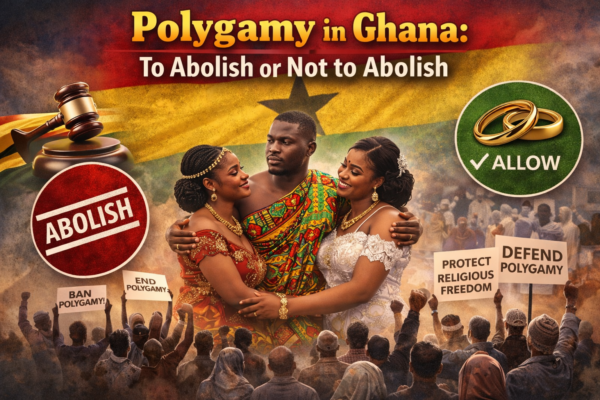
Polygamy in Ghana: To Abolish or Not to Abolish?

Polygamy refers to a marital arrangement in which a person is permitted to have two or more spouses at the same time. Although the term polygamy is often used loosely in everyday conversation, sociologists and anthropologists make important distinctions among its different forms. There are two main types of polygamy. The first, and by far…

Read More

Posthumous Treatment of Accused Witches in Ghana

In many Ghanaian communities, accusations of witchcraft generate intense moral outrage and social hostility. Persons believed to be malevolent witches are frequently subjected to verbal abuse, physical assault, forced displacement, and, in extreme cases, extrajudicial killing (Adinkrah, 2004, 2015). Crucially, however, the sanctioning of alleged witches does not necessarily terminate at biological death. Rather, death…

Read More

Causes of Child Abuse in Ghana

Every year, thousands of children in Ghana suffer abuse at the hands of those entrusted with their care—parents, guardians, and relatives. Reports of battered, neglected, and traumatized children frequently appear in the Ghanaian mass media, often accompanied by disturbing images and heartbreaking details. In many cases, the abuse results in severe physical injuries; in others,…

Read More

Why Relationships and Marriages Break Down in Ghana

Marital and relationship breakdowns occur for many reasons, and these reasons often vary from one society to another. People enter intimate relationships with specific expectations—emotional, economic, sexual, social, and cultural. When these expectations remain unmet, tensions arise, and relationships may eventually rupture. For this article, I surveyed 28 Ghanaian adults—14 men and 14 women—to better…

Read More

Cohabitation in Ghanaian Society: Living Together Without Being Married

Cohabitation refers to an intimate arrangement in which a man and a woman live together in a shared residence without being formally married. While cohabitation has become increasingly common in many contemporary societies, it is generally frowned upon in Akan society and regarded as socially improper. Within the Akan marital system, there is a strong…

Read More