









How the Akosombo Dam Changed Ghana’s Economy and Energy Future

Few infrastructure projects in the history of Ghana have had as profound an impact as the construction of the Akosombo Dam. Built in the early years of Ghana’s independence, the project symbolized the ambitious development vision of the country’s first president, Kwame Nkrumah, who believed that industrialization was essential for true economic independence. The dam…

Read More

Mensah Adinkrah: A Preeminent Kwahu Scholar of Global Distinction

Origins and Cultural Heritage Professor Dr. Mensah Adinkrah, Professor of Sociology, Criminology, and Criminal Justice, is a native of Kwahu-Nkwatia in the Eastern Region of Ghana. Kwahu (also rendered as Kwawu) refers both to a geographical area and to a distinct Akan subgroup inhabiting the region. The Kwahu are part of the larger Akan people…

Read More

How Rules Become Laws: Examples from Ghana

Rules, Laws, and Social Order All human societies are governed by rules. These rules regulate behavior by defining what individuals may do and what they must refrain from doing. Without such rules, social life would be chaotic, unpredictable, and ultimately unsustainable. Rules make social interaction possible by creating order, stability, and mutual expectations among members…

Read More

Ghana’s Quiet Strength: Understanding the Foundations of a Peaceful Nation

A Nation Defined by Peace In a region and continent that have, at various historical moments, been scarred by conflict and instability, Ghana stands out as a compelling example of relative peace. Since gaining independence in 1957, the country has largely avoided the large-scale civil wars that have afflicted some of its neighbors. While no…

Read More

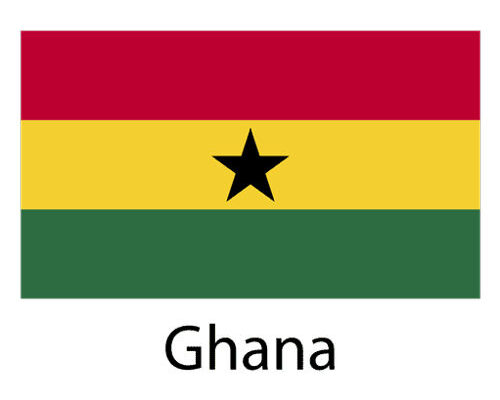
The Ghana National Flag: Symbol of Unity, Freedom, and Heritage

A Historic Emblem of Independence The Ghana national flag is more than a piece of cloth fluttering in the wind; it is a powerful symbol of the country’s history, aspirations, and identity. First officially adopted on March 6, 1957—the same day Ghana became the first African nation to gain independence from colonial rule—the flag reflects…

Read More

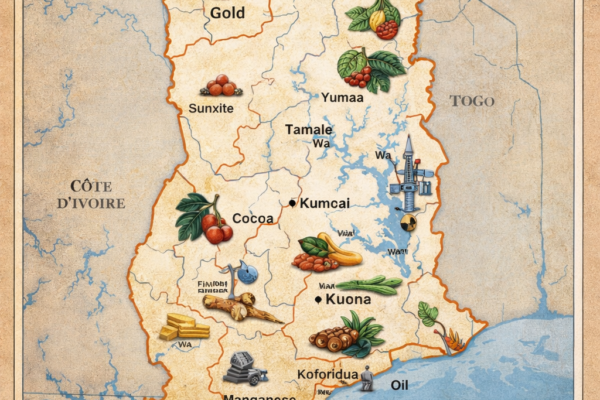
GHANA: God Has Anointed the Nation Already — A Nation Richly Blessed

Ghana stands for “God Has Anointed the Nation Already.” Many Ghanaians see their country not merely as a geographical territory in West Africa, but as a land endowed with immense natural, human, and spiritual blessings. From abundant mineral wealth to fertile agricultural lands and a vibrant population of educated citizens, Ghana possesses many of the…

Read More

When the Black Stars locked horns with the Greatest football club: Real Madrid

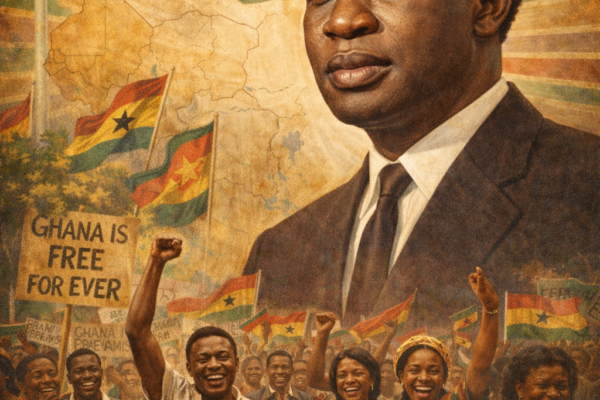
Introduction: Why March Matters Every year, the month of March occupies a sacred place in Ghana’s historical calendar. On 6 March 1957, under the leadership of Kwame Nkrumah, the Gold Coast became Ghana — the first sub-Saharan African nation to gain independence from British colonial rule. March is therefore not merely commemorative; it is reflective….

Read More

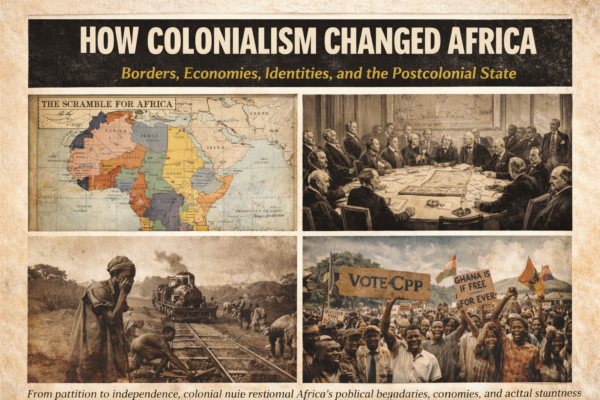
How Colonialism Changed Africa

The Slave Trade and Demographic Devastation When we talk about Africa today—its borders, its languages, its religions, its politics—we are also talking about colonialism. The Africa we know in the twenty-first century did not emerge naturally from the past. It was profoundly shaped by centuries of foreign intrusion, exploitation, and rule. To understand present-day Africa,…

Read More

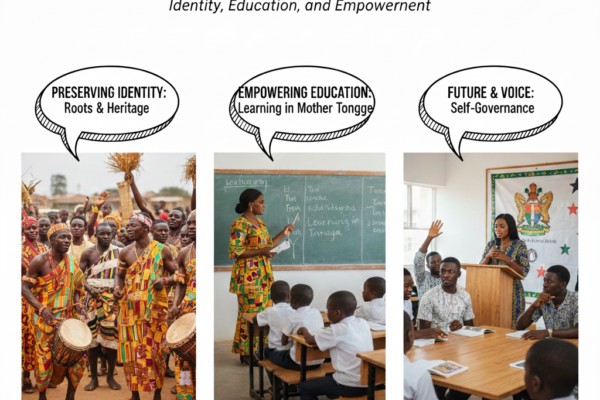
Why Cultural and Linguistic Self-Determination Is Necessary in Ghana

For a long time, Ghanaians have embraced foreign ways and ideas that have not served them well and, in many cases, have undermined national development. For this reason, some Ghanaians are increasingly calling for cultural and linguistic self-determination as a necessary step if the nation is to move forward with confidence and purpose. They question…

Read More

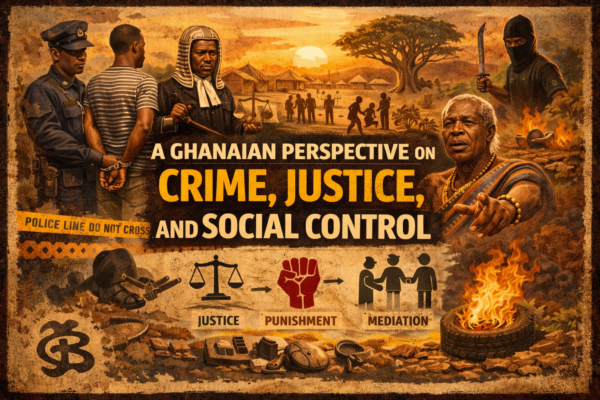
A Ghanaian Perspective on Crime, Justice, and Social Control

Punishment is a central feature of every organized society, including Ghana. While rewards are designed to encourage conformity and socially approved behavior, punishment exists to negatively sanction deviant behavior. When individuals act in ways that align with societal norms, they are often rewarded through praise, status, social recognition, or material benefits. When they violate those…

Read More

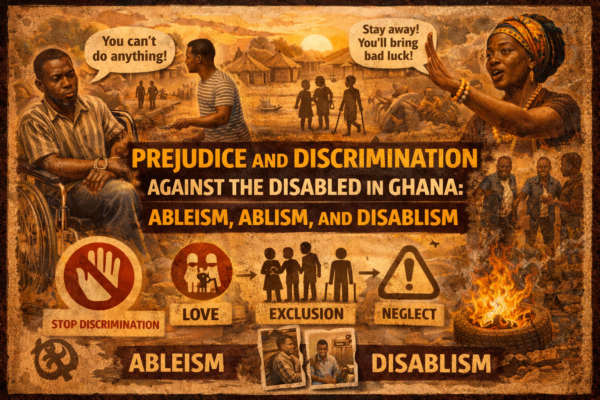
Prejudice and Discrimination Against the Disabled in Ghana: Ableism, Ablism, and Disablism

Sociologists use the term ableism to describe prejudice, discrimination, and social exclusion directed against persons with disabilities. The terms ablism and disablism are also used in the scholarly literature to refer to the same phenomenon, namely, the systematic disadvantaging of people whose bodies or minds do not conform to socially constructed notions of “normalcy.” Although…

Read More

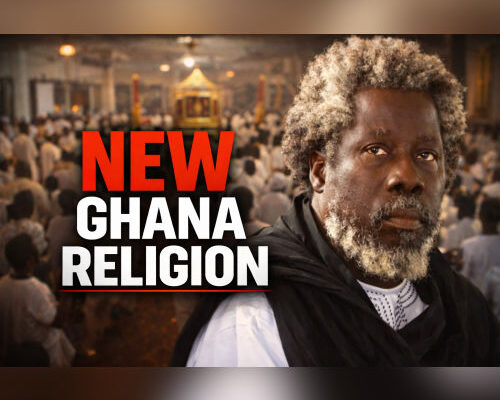
A New Religion in Ghana: Asomdwee Ntonton Som

A new religious movement has emerged in Ghana known as Asomdwee Ntonton Som, a name that translates literally as “Peace and Exaltation Religion.” Ghana is a deeply multireligious society, long accustomed to religious plurality. Christianity—represented by historic denominations such as Catholic, Presbyterian, Methodist, Anglican, and Salvation Army, as well as numerous Pentecostal and Charismatic movements—dominates…

Read More