







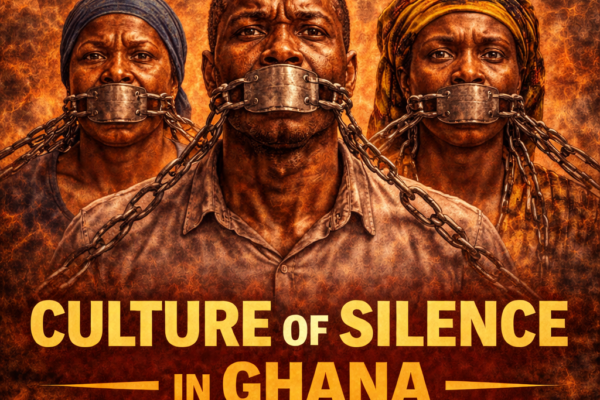
Culture of Silence and Endurance in Ghanaian Society

An observable feature of Ghanaian social life is a recurring tendency toward silence in moments that might otherwise call for resistance or confrontation. Even when individuals experience clear forms of mistreatment, there is often a strong social and cultural pull toward restraint rather than action. People are frequently encouraged to endure, to exercise patience, and…

Read More

How Colonialism, Christianity, and Missionary Education Destroyed African Culture and Transformed Africans

With colonialism came missionaries who sought to convert Africans to Christianity and, in the process, reshape African ways of life. This encounter was not culturally neutral. It involved a systematic attempt—sometimes subtle, often overt—to redefine African identity, values, and social institutions. While missionary education brought literacy and formal schooling, it also carried profound cultural consequences…

Read More

There Is No Superior Culture — And No Inferior One

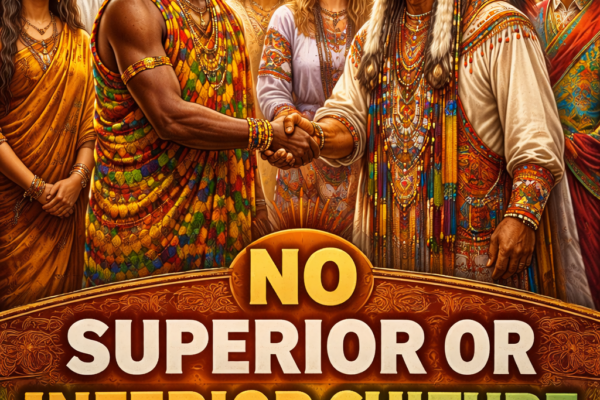
Let’s be clear from the outset: no culture is superior to another, and no culture is inferior. This should not be a controversial statement in the 21st century—yet, in practice, it still is. Culture remains one of the most misunderstood concepts in public discourse. When people misunderstand culture, they don’t just get definitions wrong—they get…

Read More

Dear Africans: Don’t Confuse “Fear” with “Respect”

Oftentimes, in Africa, people conflate respect with fear, treating them as if they are interchangeable. Yet within Akan moral language, a clear distinction is maintained between fɛreɛ (respect) and suro (fear). To say “me fɛre wo” is fundamentally different from “me suro wo.” The former connotes esteem, regard, and moral acknowledgment; the latter signals apprehension,…

Read More

What is the Adinkra Cloth in Ghana? History and Social Significance

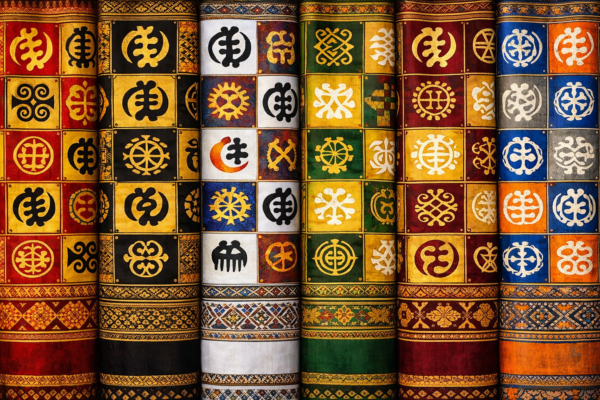
Introduction Adinkra cloth is one of the most important traditional textiles of Ghana and a significant cultural expression among the Akan people, particularly the Asante. Unlike Kente cloth, which is woven, Adinkra cloth is made by stamping symbolic designs onto fabric using special dyes. The cloth is famous for the numerous Adinkra symbols printed on…

Read More

Pouring Libation in Akan Society

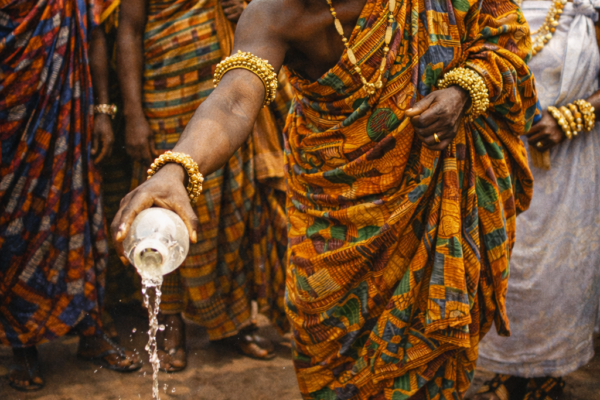
Among the Akan people of Ghana, pouring libation is one of the most important traditional religious practices. It is a solemn ritual through which people communicate with the spiritual world. The act symbolizes reverence for the ancestors, recognition of the Supreme Being, and a request for protection, blessings, and guidance in the affairs of life….

Read More

Why Akan Chiefs Are Carried in Palanquins

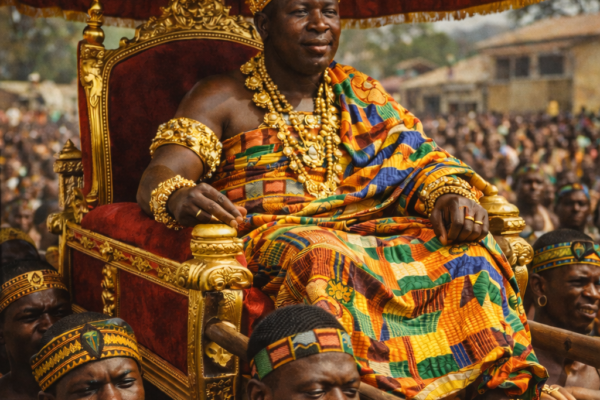
The Akan of GhanaThe Akan are an ethnic group that live in Ghana. They occupy a broad stretch of territory extending from the coastal areas to the central forest belt of the country. Historically and culturally, the Akan constitute one of the largest ethnolinguistic groups in Ghana and share closely related languages, traditions, and social…

Read More

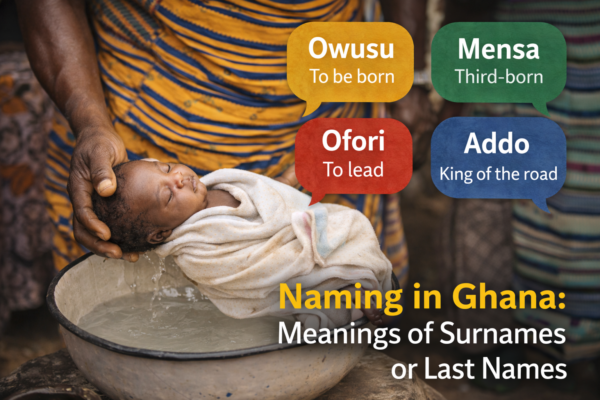
Meanings of Ghanaian Surnames or Last Names They Are More Than Labels

In Ghanaian society, names are never random. A name is a story, a memory, a prayer, a verdict on experience, or a declaration of destiny. Ghanaian surnames—particularly Akan surnames—carry deep cultural meanings that often encode family history, spiritual beliefs, social struggles, and moments of triumph. Some names appear straightforward on the surface, yet even these…

Read More

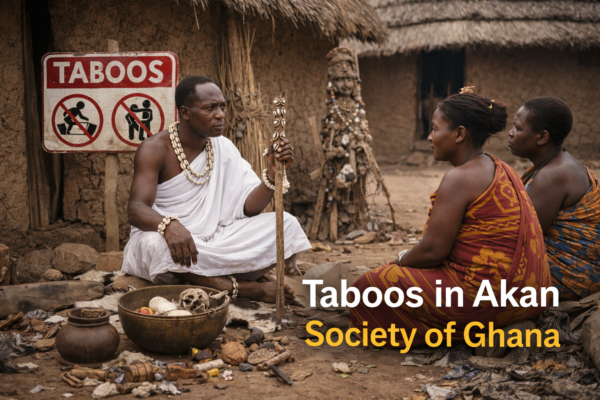
Taboos in Akan Society of Ghana

The Akan constitute one of the major ethnic groups in Ghana, accounting for approximately 46 percent of the national population. They speak Twi, a language that is understood and spoken by nearly 90 percent of the country’s population. The Akan are made up of several subgroups, including the Asante, Fante, Akuapem (Akwapim), Akyem (Akim), Brong,…

Read More

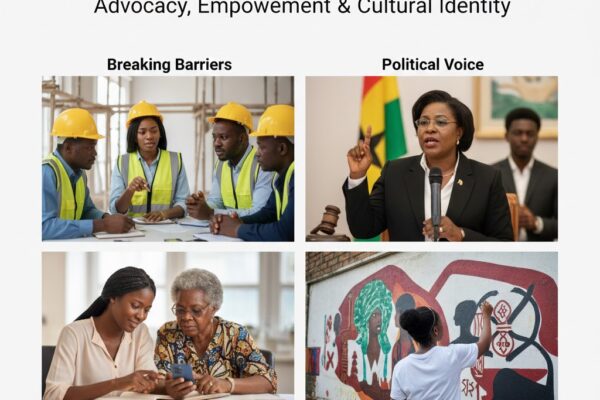
Feminism Should Not Frighten Us

Feminism Is Not a Dirty Word Sexism is wrong. It is prejudice and discrimination against people because of their sex or gender. In many societies, including Ghana, sexist attitudes are often directed at women and girls. These attitudes show up in everyday behavior—how women are spoken to, how their abilities are questioned, and how their…

Read More

Rising Divorce in Ghana: Why Many Marriages Are Failing

In the past, Ghanaian marriages were widely regarded as enduring unions. Separations were rare, and divorce was uncommon. Marriages were expected to last a lifetime, sustained not only by the couple but also by their extended families and lineages. Today, however, the situation has changed dramatically. Marital breakdowns are increasingly common, and divorce has become…

Read More

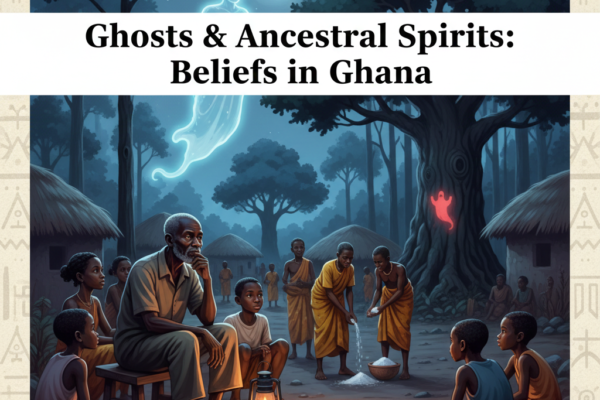
Beliefs About Ghosts in Ghana: What the Living Say About the Dead

Widespread Beliefs in GhostsAlthough no large-scale self-report study has been conducted on belief in ghosts in Ghana, it is fair to say that belief in ghosts or apparitions is widespread across the country. These beliefs are especially strong among the Akan of southern Ghana, where ideas about death, spirits, and the afterlife are deeply embedded…

Read More

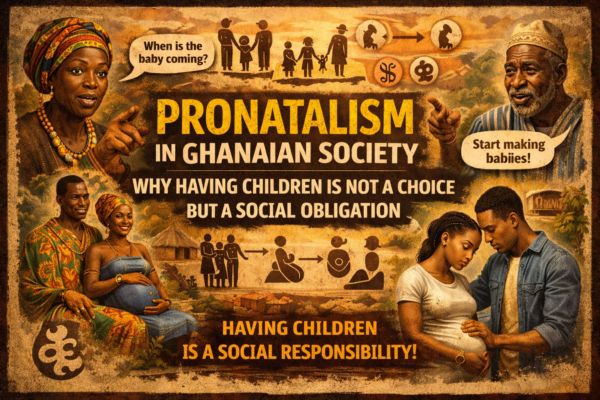
Pronatalism in Ghanaian Society: Why Having Children Is Not a Choice but a Social Obligation

Pronatalism refers to a strong cultural and social preference for having children, often accompanied by expectations that adults should reproduce as a normal and desirable life course. In Ghanaian society, having one’s own child is not merely a personal choice; it is widely regarded as a social obligation. Adulthood is culturally incomplete without parenthood, and…

Read More

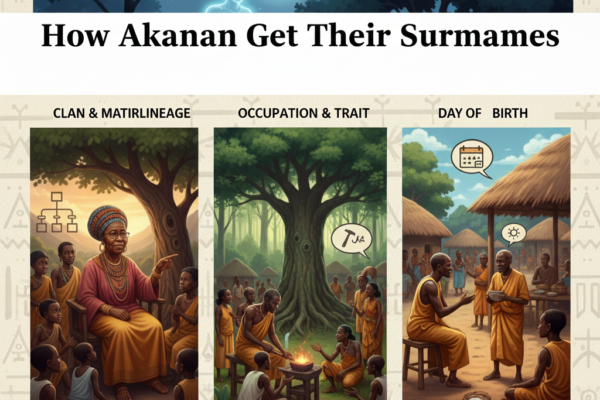
Akan Surnames: Heritage, Identity, and the Power of Names

Among the Akan people of Ghana, names are more than labels—they are living symbols of heritage, identity, social bonds, and spiritual connection. Akan naming traditions reflect a society where lineage, ancestry, and morality are woven into the very words that identify a person. Origins of Akan Surnames Although the Akans are a matrilineal society, it…

Read More