

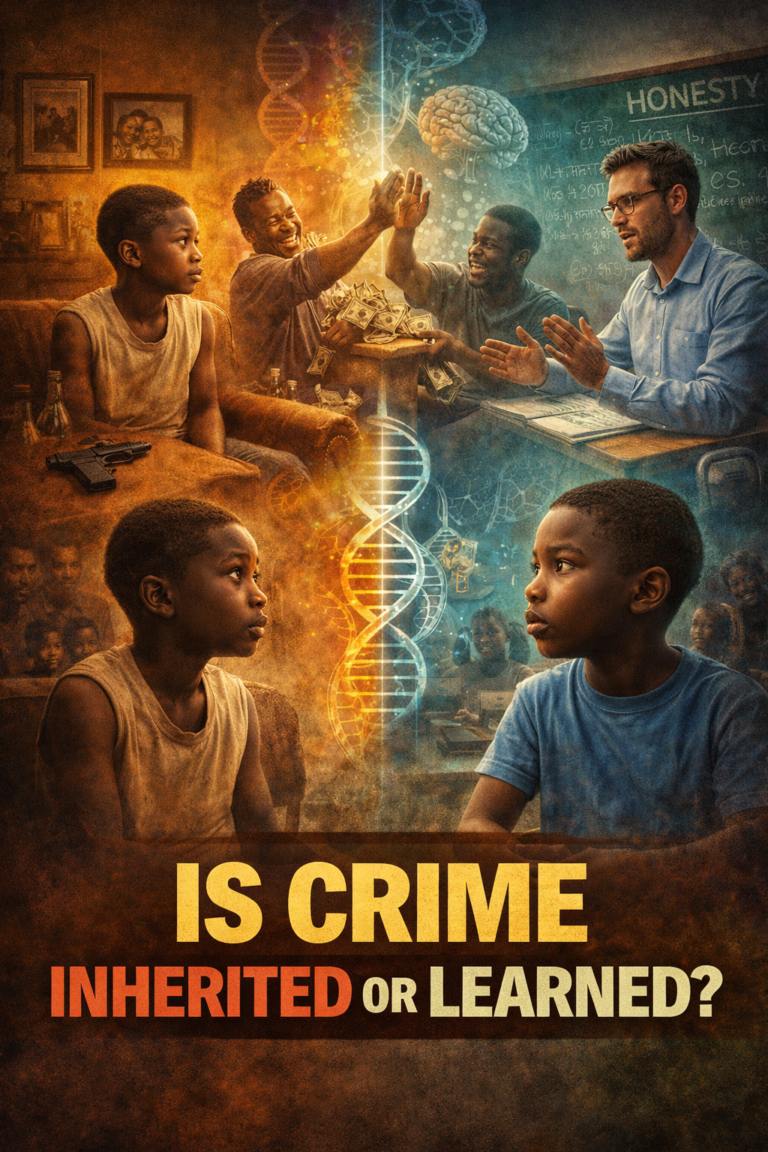




Are Criminals Born or Made?

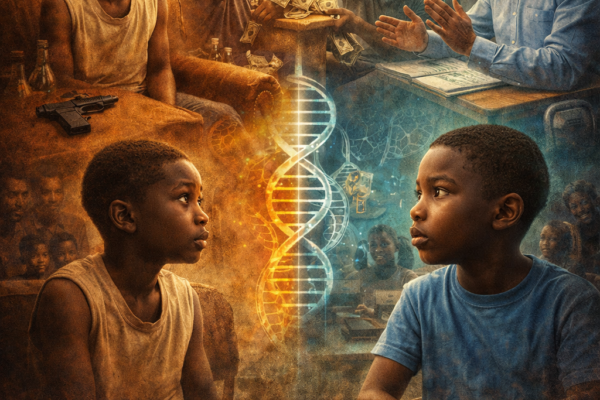
Are people born criminals, or do they learn to become criminal? Is there a “crime gene”? Can criminal behavior be inherited, or do people have control over their actions? These questions have intrigued scholars, parents, and the public for decades. Some people assume that crime is inherited. They look at families where multiple members have…

Read More

Dear Africans: Don’t Confuse “Fear” with “Respect”

Oftentimes, in Africa, people conflate respect with fear, treating them as if they are interchangeable. Yet within Akan moral language, a clear distinction is maintained between fɛreɛ (respect) and suro (fear). To say “me fɛre wo” is fundamentally different from “me suro wo.” The former connotes esteem, regard, and moral acknowledgment; the latter signals apprehension,…

Read More

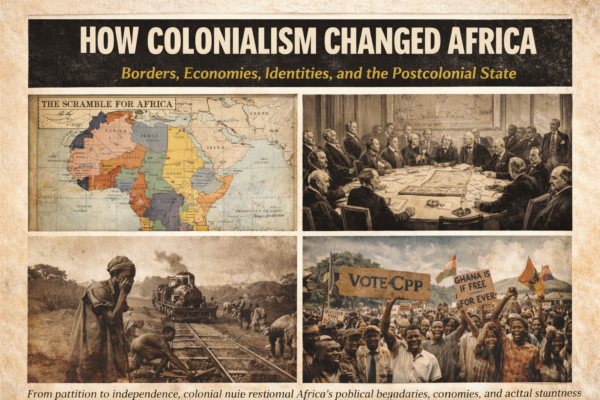
How Colonialism Changed Africa

The Slave Trade and Demographic Devastation When we talk about Africa today—its borders, its languages, its religions, its politics—we are also talking about colonialism. The Africa we know in the twenty-first century did not emerge naturally from the past. It was profoundly shaped by centuries of foreign intrusion, exploitation, and rule. To understand present-day Africa,…

Read More

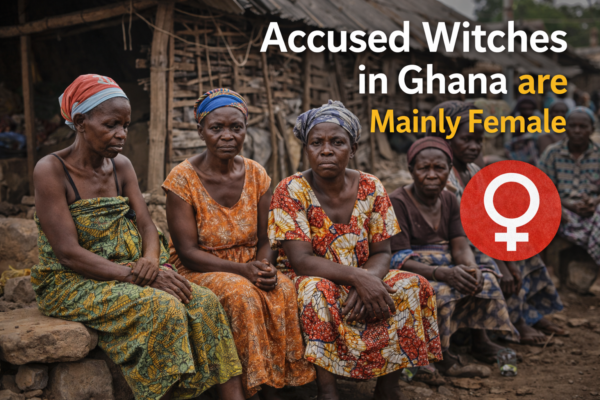
Why Are Ghanaian “Witches” 99% Female?

In Ghana, the overwhelming majority of people accused of witchcraft are women and girls. Nearly all victims killed during witch hunts are female. In the so-called “witch camps” or “outcast homes” in northern Ghana, it is rare to find a man among the residents. The population is almost entirely women—elderly women, widows, divorced women, poor…

Read More

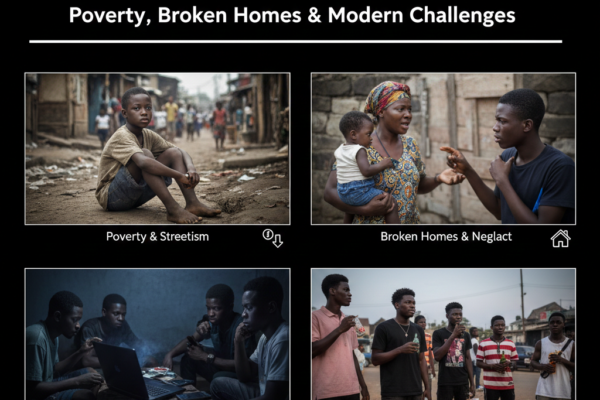
Causes of Juvenile Delinquency in Ghana

Children and the Future of the Nation Children are the future of every society. When a nation fails to nurture and guide its children properly, it mortgages its own future. Ghana today faces a troubling situation: unless deliberate efforts are made to mould children into disciplined, responsible, and law-abiding citizens, the consequences will be felt…

Read More

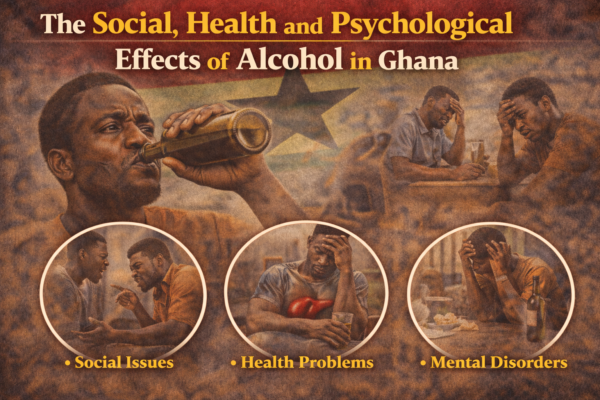
Alcohol Abuse in Ghana: Social, Economic, and Health Consequences

Irresponsible alcohol consumption has become a growing social problem in Ghana, with serious consequences for individuals, families, and communities. Some drinkers spend a large proportion of their income on alcohol, leaving little or nothing for basic necessities such as food, clothing, rent, medication, and utilities. For those with spouses and dependent children, excessive spending on…

Read More

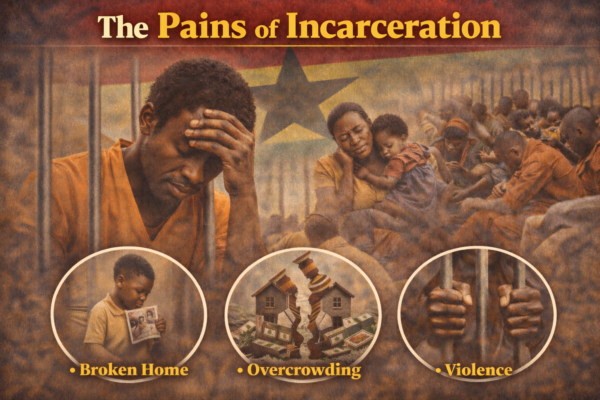
The Pains of Incarceration in Ghana: What Prison Really Means

Imprisonment, also known as incarceration, is one of the most severe penalties imposed by courts in Ghana and elsewhere. Judges and magistrates have several sentencing options at their disposal, including fines, probation, community service, and custodial sentences. Prison is usually reserved for people convicted of serious offences such as robbery, burglary, aggravated assault, and murder….

Read More

Feminism Should Not Frighten Us

Feminism Is Not a Dirty Word Sexism is wrong. It is prejudice and discrimination against people because of their sex or gender. In many societies, including Ghana, sexist attitudes are often directed at women and girls. These attitudes show up in everyday behavior—how women are spoken to, how their abilities are questioned, and how their…

Read More

Rising Divorce in Ghana: Why Many Marriages Are Failing

In the past, Ghanaian marriages were widely regarded as enduring unions. Separations were rare, and divorce was uncommon. Marriages were expected to last a lifetime, sustained not only by the couple but also by their extended families and lineages. Today, however, the situation has changed dramatically. Marital breakdowns are increasingly common, and divorce has become…

Read More

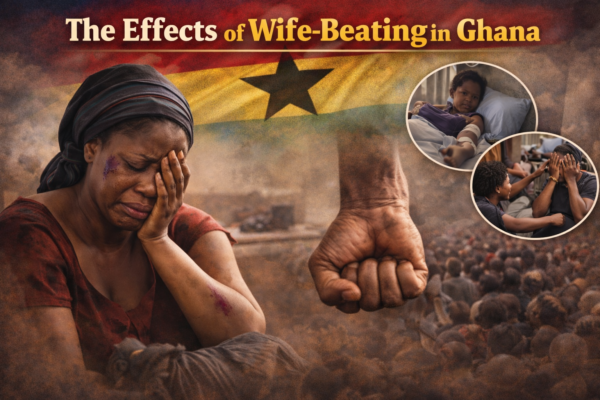
The Effects of Wife-Beating in Ghana

When Two Elephants Fight, the Earth Underneath Suffers Marriage is ideally meant to be a source of companionship, love, and emotional security between husband and wife. Yet in Ghana, as in many societies across the world, the promise of marital bliss is too often shattered by domestic violence, particularly wife-beating. While both men and women…

Read More

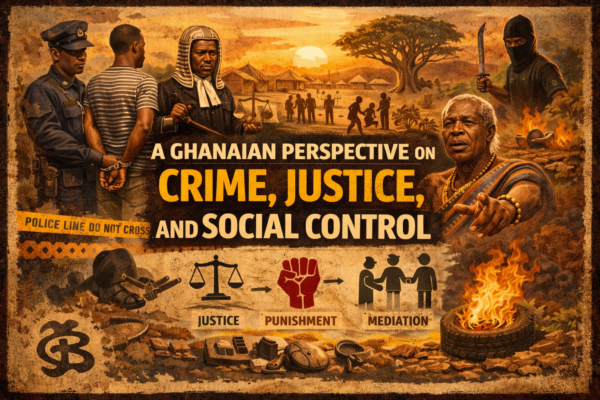
A Ghanaian Perspective on Crime, Justice, and Social Control

Punishment is a central feature of every organized society, including Ghana. While rewards are designed to encourage conformity and socially approved behavior, punishment exists to negatively sanction deviant behavior. When individuals act in ways that align with societal norms, they are often rewarded through praise, status, social recognition, or material benefits. When they violate those…

Read More

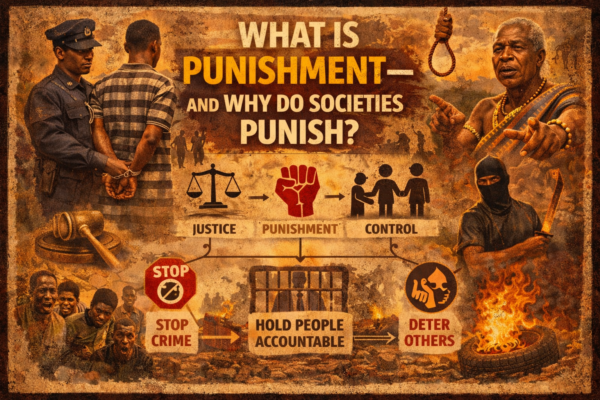
What Is Punishment—and Why Do Societies Punish?

Punishment is a central feature of every organized society. While rewards are designed to encourage conformity and socially approved behavior, punishment exists to negatively sanction deviant behavior. When individuals act in ways that align with societal norms, they are often rewarded through praise, status, or material benefits. When they violate those norms, society—or its authorized…

Read More

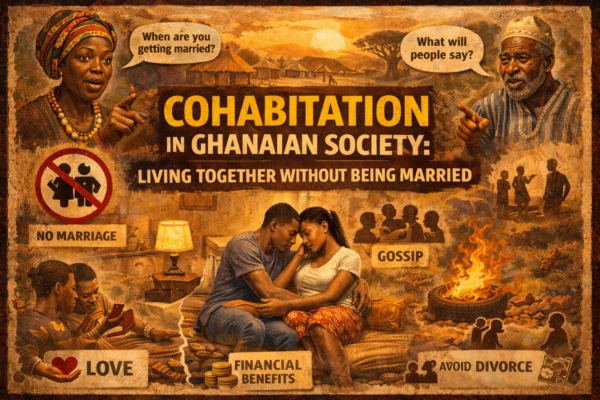
Cohabitation in Ghanaian Society: Living Together Without Being Married

Cohabitation refers to an intimate arrangement in which a man and a woman live together in a shared residence without being formally married. While cohabitation has become increasingly common in many contemporary societies, it is generally frowned upon in Akan society and regarded as socially improper. Within the Akan marital system, there is a strong…

Read More

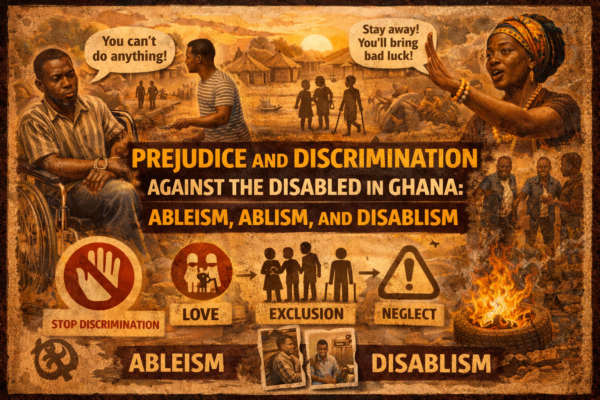
Prejudice and Discrimination Against the Disabled in Ghana: Ableism, Ablism, and Disablism

Sociologists use the term ableism to describe prejudice, discrimination, and social exclusion directed against persons with disabilities. The terms ablism and disablism are also used in the scholarly literature to refer to the same phenomenon, namely, the systematic disadvantaging of people whose bodies or minds do not conform to socially constructed notions of “normalcy.” Although…

Read More