


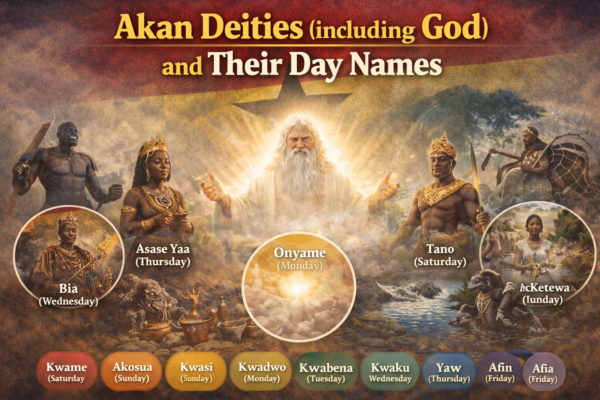
Akan Deities and Their Day Names: Onyankopɔn Kwame, Asaase Yaa, Po Abenaa and Kofi Yesu

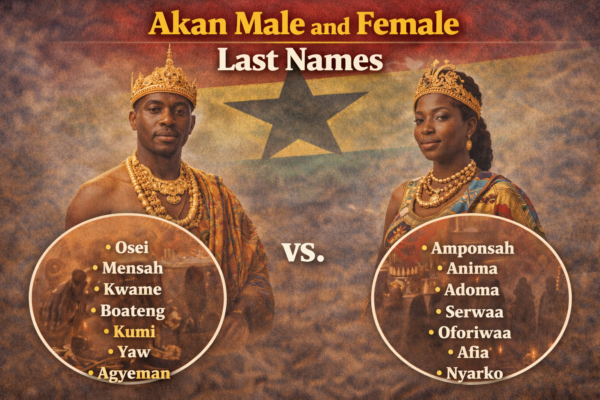
Among the Akan of Ghana, naming is never a casual act. Names locate a person in time, history, morality, and the spiritual universe. One of the most distinctive Akan naming practices is the giving of day names (kradin), assigned according to the day of the week on which a child is born. These names are…
Read More

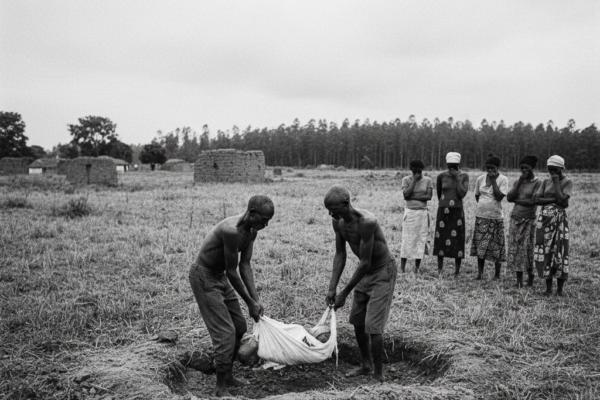
Posthumous Treatment of Accused Witches in Ghana

In many Ghanaian communities, accusations of witchcraft generate intense moral outrage and social hostility. Persons believed to be malevolent witches are frequently subjected to verbal abuse, physical assault, forced displacement, and, in extreme cases, extrajudicial killing (Adinkrah, 2004, 2015). Crucially, however, the sanctioning of alleged witches does not necessarily terminate at biological death. Rather, death…

Read More

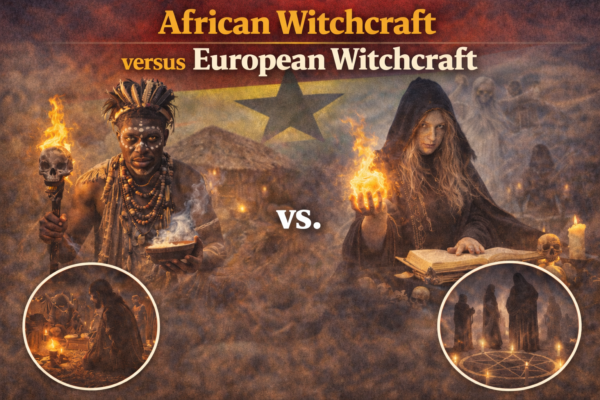
African Witchcraft Versus European and American Witchcraft

African witchcraft versus European witchcraft have been the focus of local discussions about witchcraft in Ghana for many years. During the period of European colonization, westernization, and the early stages of modernization, people in the Gold Coast (now Ghana) struggled to explain the wide gap in development between Africans and Europeans. Many ordinary people asked…

Read More

How Your Ascribed Status Affects Your Progress in Life

In every society, people occupy different positions called statuses. A status is simply the position a person holds in society. Throughout life, one person can have many statuses at the same time—for example, being a child, a parent, a worker, a student, or a citizen. Sociologists talk about two main types of status: ascribed status…

Read More

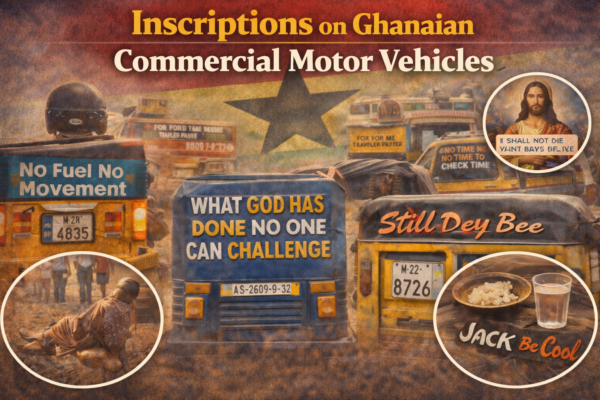
Inscriptions on Ghanaian Commercial Vehicles

A visitor to Ghana will quickly notice something striking on the roads: commercial motor vehicles speak. Tro-tros, buses, taxis, and long-distance vehicles often carry inscriptions—short messages painted boldly on the body of the vehicle. These inscriptions may appear on the back of the vehicle, across the windscreen, or on a signboard fixed to the front….

Read More

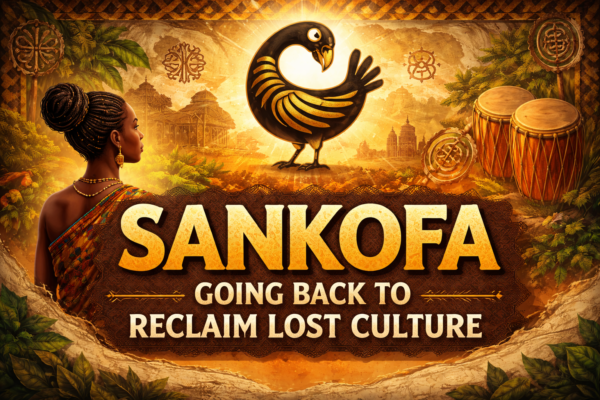
Sankofa: Going Back to Reclaim Lost Culture

Culture refers to the total way of life of a people. It encompasses both material and non-material elements. Material culture consists of tangible aspects that can be seen and touched, such as cooking practices, eating utensils, earthenware, palanquins, drums, and idiophones. Non-material culture, by contrast, includes intangible elements such as language, music, art, religion, dance,…

Read More

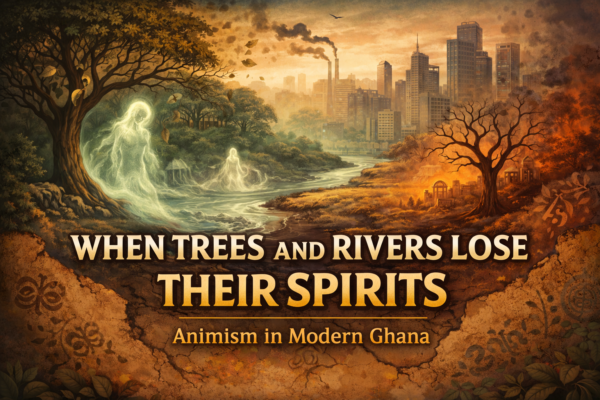
When Trees and Rivers Lose Their Spirits: Animism in Modern Ghana

Animism is the belief that the environment and society are populated with spirits. Many Ghanaians hold animistic beliefs, maintaining that their surroundings are inhabited by spiritual beings. Some of these spirits are believed to be benevolent, while others are considered malevolent. Animistic beliefs are widespread across Ghana’s ethnic groups. Even Ghanaians who identify as Christian…

Read More

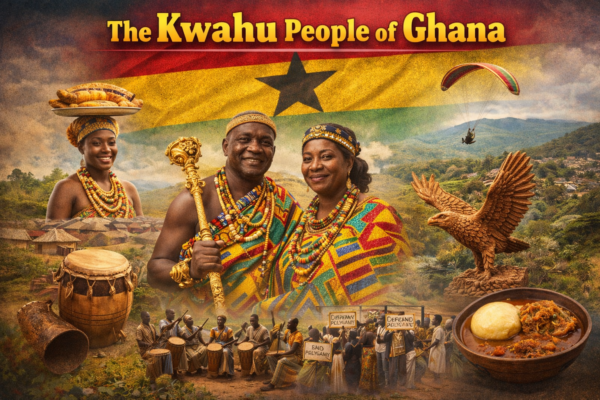
The Kwahu People of Ghana

Ghana is a multiethnic and multilingual country, home to numerous ethnic groups with distinct histories and cultural traditions. Among these groups are the Kwahu people, one of the many subgroups within the larger Akan ethnic group. The Kwahu are primarily located in the Eastern Region of Ghana. Their largest town, Nkawkaw, lies approximately 66 miles…

Read More