




Rising Divorce in Ghana: Why Many Marriages Are Failing

In the past, Ghanaian marriages were widely regarded as enduring unions. Separations were rare, and divorce was uncommon. Marriages were expected to last a lifetime, sustained not only by the couple but also by their extended families and lineages. Today, however, the situation has changed dramatically. Marital breakdowns are increasingly common, and divorce has become…
Read More

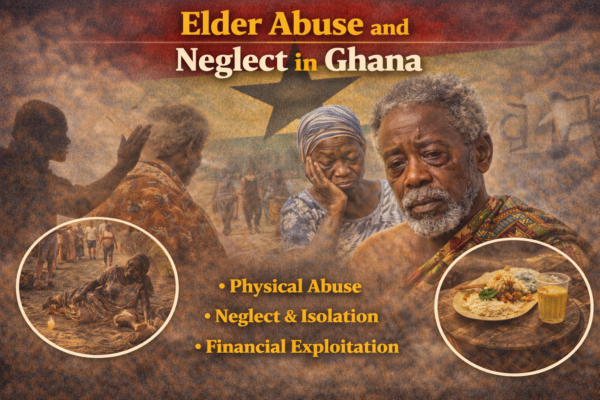
Neglect and Abuse of the Elderly in Ghana

Ghanaian society traditionally values respect for the elderly. Older people are regarded as repositories of wisdom, custodians of tradition, and moral anchors of the family. Yet beneath this ideal lies a troubling reality: many elderly persons in Ghana experience neglect, abuse, and profound social vulnerability. Elderly neglect refers to the failure of family members, caregivers,…

Read More

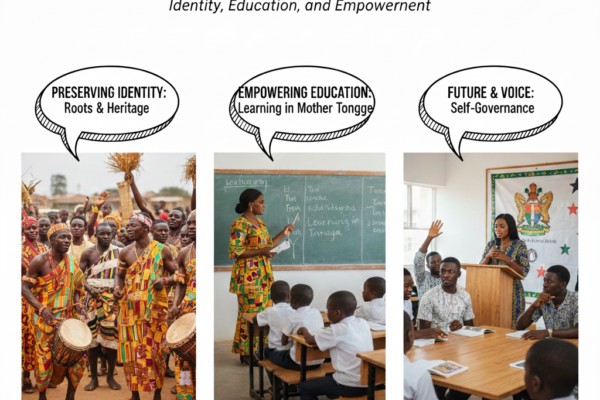
Why Cultural and Linguistic Self-Determination Is Necessary in Ghana

For a long time, Ghanaians have embraced foreign ways and ideas that have not served them well and, in many cases, have undermined national development. For this reason, some Ghanaians are increasingly calling for cultural and linguistic self-determination as a necessary step if the nation is to move forward with confidence and purpose. They question…

Read More

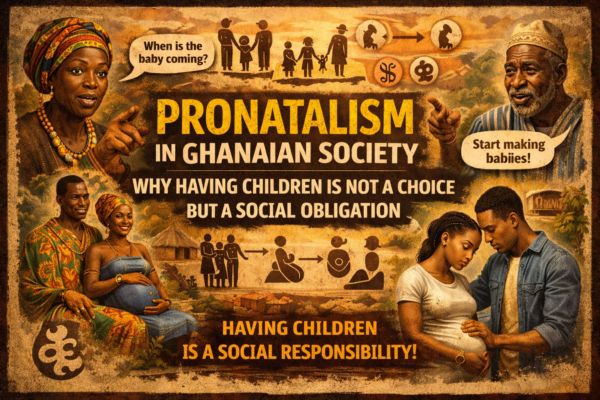
Pronatalism in Ghanaian Society: Why Having Children Is Not a Choice but a Social Obligation

Pronatalism refers to a strong cultural and social preference for having children, often accompanied by expectations that adults should reproduce as a normal and desirable life course. In Ghanaian society, having one’s own child is not merely a personal choice; it is widely regarded as a social obligation. Adulthood is culturally incomplete without parenthood, and…

Read More

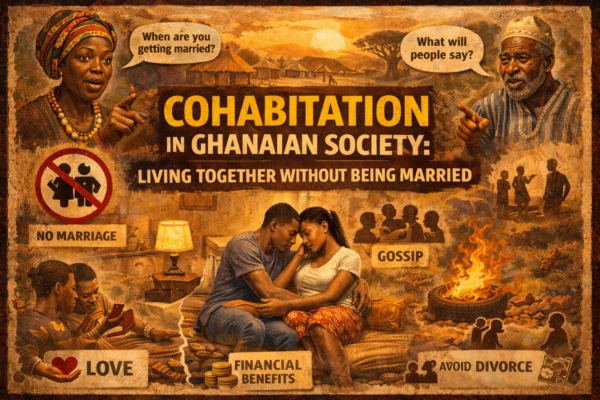
Cohabitation in Ghanaian Society: Living Together Without Being Married

Cohabitation refers to an intimate arrangement in which a man and a woman live together in a shared residence without being formally married. While cohabitation has become increasingly common in many contemporary societies, it is generally frowned upon in Akan society and regarded as socially improper. Within the Akan marital system, there is a strong…

Read More

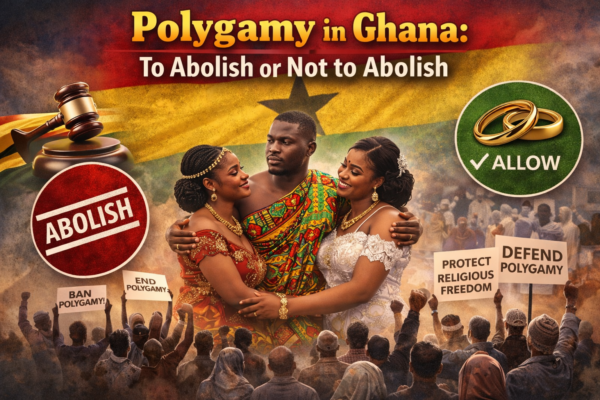
Polygamy in Ghana: To Abolish or Not to Abolish?

Polygamy refers to a marital arrangement in which a person is permitted to have two or more spouses at the same time. Although the term polygamy is often used loosely in everyday conversation, sociologists and anthropologists make important distinctions among its different forms. There are two main types of polygamy. The first, and by far…

Read More

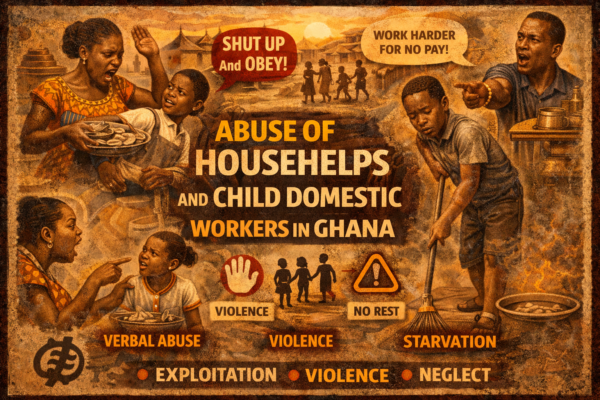
Abuse of Househelps in Ghana: The Hidden Struggles of Child Domestic Workers

In Ghana, there exists a long-standing practice in which some parents send their children to live with other families as househelps. While this arrangement is often justified as a strategy for providing children with better opportunities, it has, in many cases, become a source of profound exploitation and suffering. Many of these children are sent…

Read More

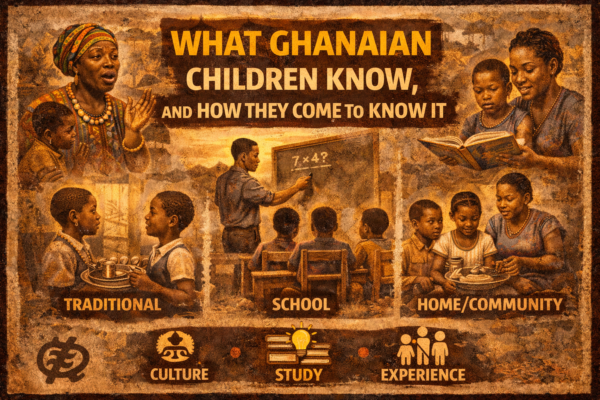
What Ghanaian Children Know, and How They Come to Know It

No one is born with knowledge. Human beings are born with the capacity to learn, but what they eventually know—how they speak, think, behave, believe, and interpret the world—is acquired from society. Knowledge, values, attitudes, and skills are socially produced and socially transmitted. By the time a Ghanaian child reaches the age of eighteen, that…

Read More

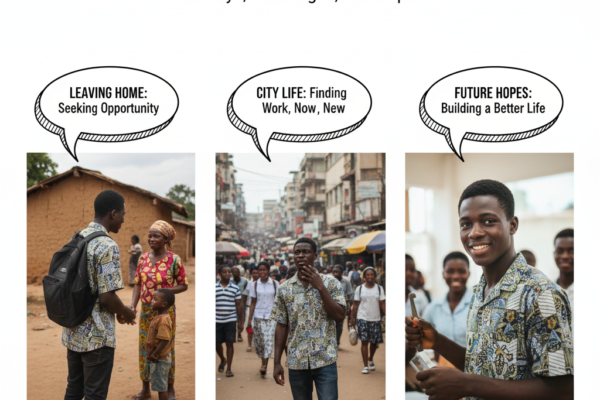
Causes of Rural–Urban Migration in Ghana and Other African Countries

The causes of Rural–Urban Migration are major concerns of African governments like Ghana. Across Ghana and much of Africa, a defining social transformation of the 21st century is the movement of people from the countryside to towns and cities. Every year, thousands of young people leave rural communities—villages and small towns—and migrate to urban centers…

Read More

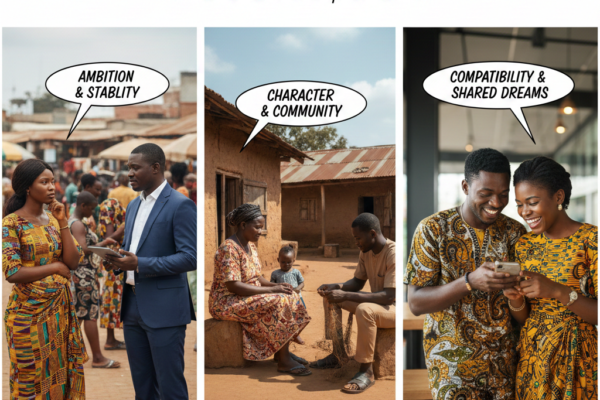
Selecting a Marital Partner: What People Look for and How Sociologists Explain It

For many people, choosing a marital partner is a deliberate decision. Individuals often consider several factors before deciding who to marry. Sociologists study these choices and use specific terms to describe the different patterns people follow when selecting a spouse. Marrying Up and Marrying Down Some people seek to “marry up,” meaning they look for…

Read More

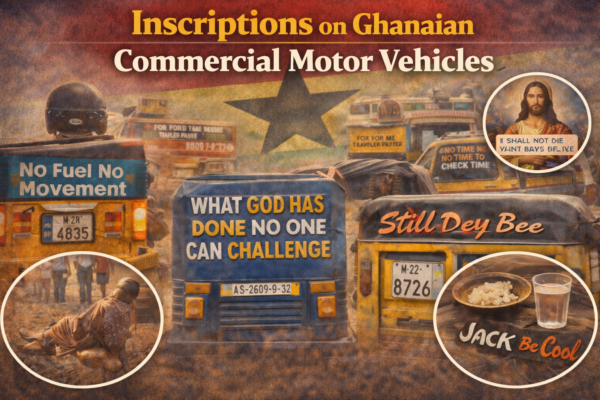
Inscriptions on Ghanaian Commercial Vehicles

A visitor to Ghana will quickly notice something striking on the roads: commercial motor vehicles speak. Tro-tros, buses, taxis, and long-distance vehicles often carry inscriptions—short messages painted boldly on the body of the vehicle. These inscriptions may appear on the back of the vehicle, across the windscreen, or on a signboard fixed to the front….

Read More

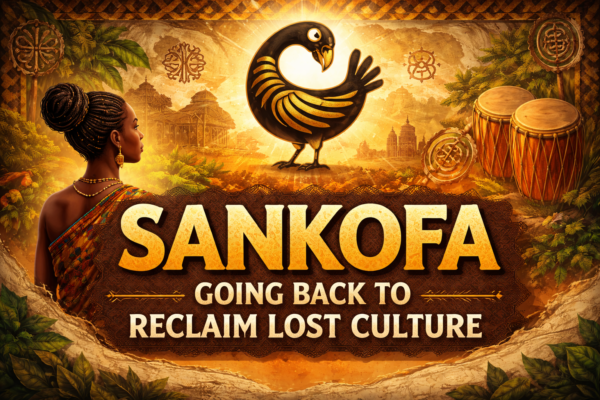
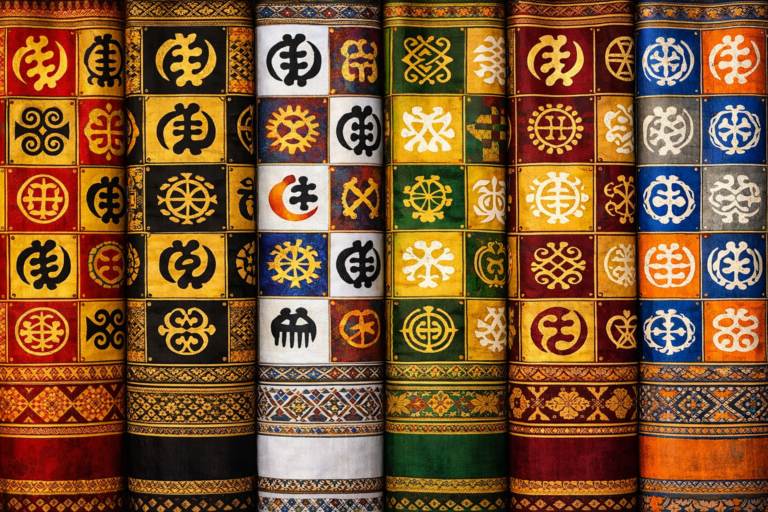
Sankofa: Going Back to Reclaim Lost Culture

Culture refers to the total way of life of a people. It encompasses both material and non-material elements. Material culture consists of tangible aspects that can be seen and touched, such as cooking practices, eating utensils, earthenware, palanquins, drums, and idiophones. Non-material culture, by contrast, includes intangible elements such as language, music, art, religion, dance,…

Read More

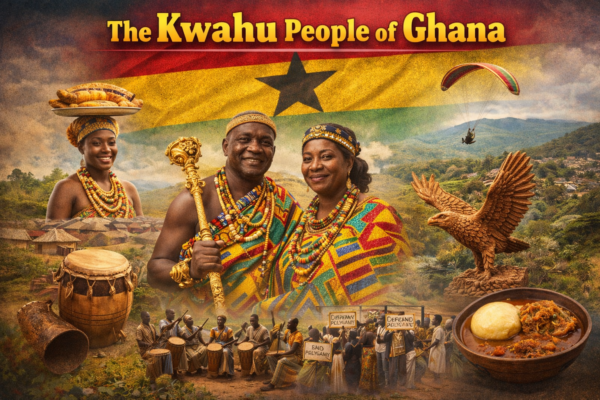
The Kwahu People of Ghana

Ghana is a multiethnic and multilingual country, home to numerous ethnic groups with distinct histories and cultural traditions. Among these groups are the Kwahu people, one of the many subgroups within the larger Akan ethnic group. The Kwahu are primarily located in the Eastern Region of Ghana. Their largest town, Nkawkaw, lies approximately 66 miles…

Read More