








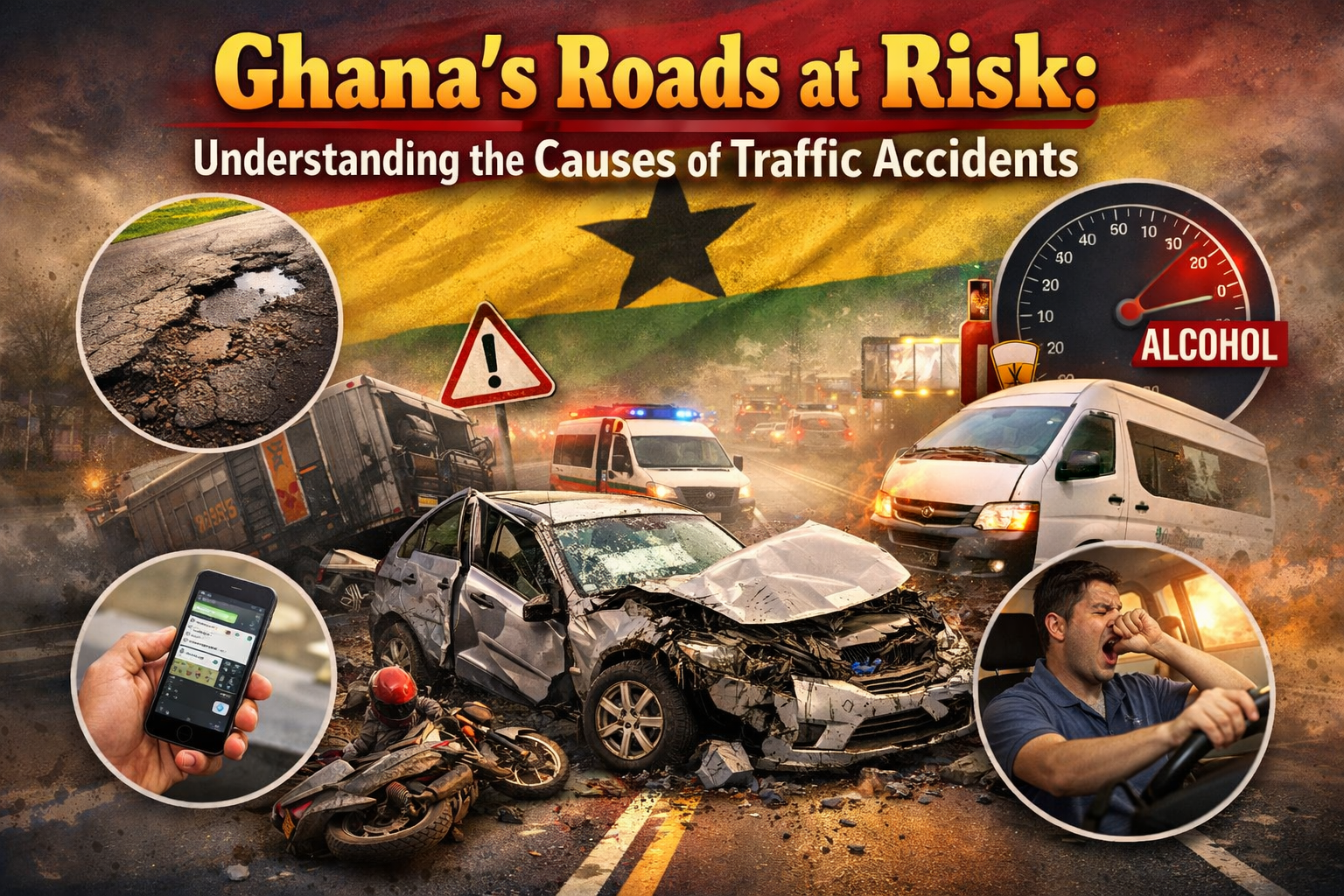
Traffic accidents in Ghana are more than statistics—they are daily tragedies that claim lives, ruin families, and leave survivors with lifelong injuries. Beyond the loss of life, road crashes lead to pain, suffering, disability, and economic hardship for individuals and communities alike.
Recent data from the National Road Safety Authority (NRSA) and other reports show the scale of the problem. Between January and June 2024 alone, Ghana recorded 6,653 road traffic crashes, involving more than 11,000 vehicles, resulting in 1,237 deaths and over 7,500 injuries. GBC Ghana Online
In the first half of 2025, provisional records indicate that Ghana experienced 7,289 crashes and 1,504 deaths, with pedestrians and passengers among the hardest hit. Graphic Online
These figures highlight a national crisis: on average, hundreds of Ghanaian families mourn a loved one every year due to road accidents.
Why Accidents Happen
Experts agree that the causes of crashes in Ghana are complex but largely preventable. Below are the most common contributors:
- Inexperienced Drivers – Many drivers lack adequate training, and some even drive without valid licenses, increasing the risk of dangerous mistakes.
- Poor Eyesight – Drivers who need prescription lenses but do not use them are unable to react quickly to hazards.
- Speeding – Excessive speed remains the leading contributor to fatal collisions. In some regions, speeding accounts for an estimated 60% of all road crashes. Ghana Business News
- Careless Driving – Distractions, such as mobile phone use behind the wheel, reduce attentiveness and increase crash risk.
- Dangerous Overtaking – Reckless overtaking on highways is a frequent cause of head‑on collisions.
- Driver Fatigue – Long journeys without rest, especially at night, reduce alertness and judgment.
- Drink Driving – Alcohol impairs reflexes and decision‑making, making crashes more likely.
- Faulty Vehicles – Mechanical issues such as bad brakes, worn tires, or broken wipers undermine vehicle control.
- Animals on Roads – Sudden attempts to avoid animals like goats or sheep often lead to loss of control and crashes.
Regional and Daily Realities
Some regions bear the brunt of the road safety crisis more than others. In the Ashanti Region, for example, traffic crashes have accounted for over a quarter of all national fatalities, with thousands injured over the past five years. LRC Ghana
According to NRSA reports, road accidents occur so frequently that at times there are an average of nearly 40 crashes daily across the country, with pedestrians and vulnerable road users especially at risk. Graphic Online
Expert Insight
Road safety specialists emphasize the human factor in most crashes. Tony Dickson Afriford, Executive Director of the Global Road Safety Media Foundation, notes:
“Human errors such as poor judgment, speeding beyond regulated limits, and general neglect of road signs are among the leading causes of accidents in Ghana. This underscores the need for rigorous driver education and enforcement of safety rules.” Africa Press Arabic
Similarly, professional voices in road safety advocacy highlight infrastructure and behaviour:
“Many drivers lack basic knowledge of road signs and safe driving practices,” says Divine Kafui Domor of the Ghana Private Road Transport Union. “Without strong training and enforcement, dangerous driving habits will continue to claim lives.” Ghana Business News
The Human Cost
The toll of traffic accidents goes beyond numbers. Each death represents a family in mourning, a breadwinner lost, or a child orphaned. Injuries sustained in crashes often lead to permanent disability, economic strain, and psychological trauma for survivors and their loved ones.
Moreover, road accidents have a significant economic impact, costing Ghana an estimated 1.6% of its gross domestic product annually—money that could otherwise support health care, education, and community development. Ghana Business News
Road Safety Is Everyone’s Responsibility
While statistics tell a sobering story, they also point to solutions. Speed enforcement, rigorous driver training, regular vehicle maintenance, drink‑driving laws, and public education can all reduce crashes. Stricter enforcement of traffic laws and better road infrastructure are urgently needed.
As citizens, drivers, passengers, and pedestrians, we all have a role to play in making Ghana’s roads safer. Slowing down, respecting traffic rules, maintaining vehicles, and avoiding risky behaviours like drunk driving are simple steps that can save lives.
Only through collective action—combined with strong leadership and public awareness—can we turn the tide on road accidents and protect the lives of Ghanaians everywhere.