





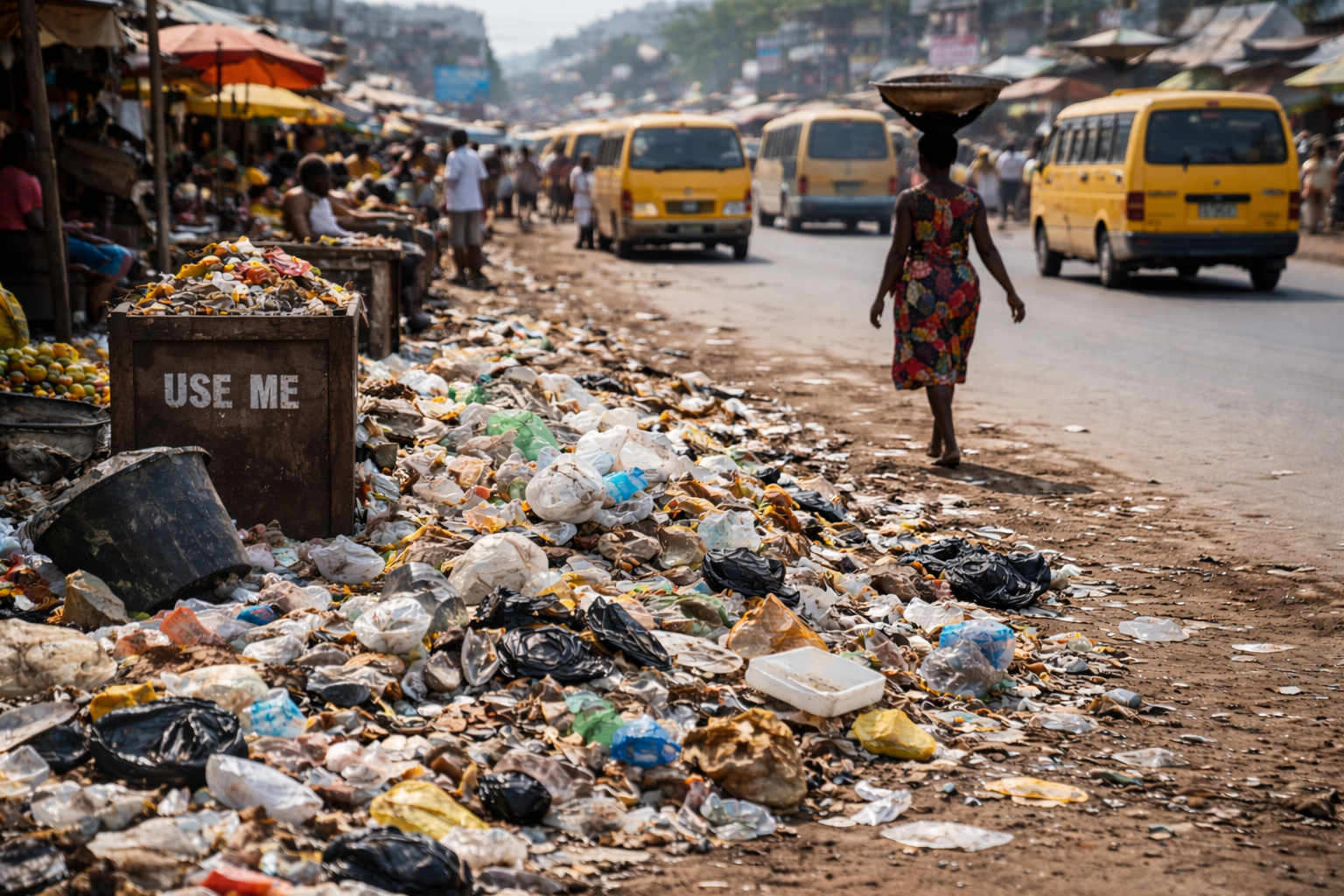
Littering is a serious problem in Ghana. Across cities, towns, and rural communities, many people indiscriminately throw away empty drink bottles, plastic containers, plastic wraps, paper, and leftover food on the ground. Streets, gutters, open spaces, and markets are increasingly turned into informal dumping grounds.
Beyond its environmental impact, littering is an aesthetic blight. It creates an eyesore that diminishes the beauty of our cities and communities. Visitors who encounter streets strewn with garbage often carry away a negative impression of Ghana, reinforcing damaging stereotypes and harming the country’s international image.
More critically, littering poses a grave public health risk. Discarded containers and plastic waste collect stagnant water, creating ideal breeding grounds for mosquitoes. These mosquitoes transmit malaria, a disease that continues to kill thousands of Ghanaians each year and places a heavy burden on families, hospitals, and the national economy. In this sense, littering is not merely careless behavior—it is a contributor to preventable illness and death.
Recommendations
To address the growing menace of littering, decisive action is required:
- Public education: The public must be continuously educated about the health, environmental, and social consequences of littering through schools, media campaigns, community meetings, and religious institutions.
- Provision of waste infrastructure: Government and municipal authorities should provide adequate garbage bins at major street corners, markets, transport terminals, and public spaces, and clearly instruct the public to use them.
- Enforcement of sanitation laws: Financial penalties and fines should be imposed on individuals who violate sanitation regulations. Laws without enforcement lose their deterrent power.
- Use of surveillance and community service penalties: Cameras may be installed in high-traffic areas to identify offenders. Those caught littering could be fined or required to perform public sanitation work, such as cleaning large public areas, as a form of corrective and deterrent punishment.
Littering is not a minor offense—it undermines public health, environmental sustainability, and national pride. A cleaner Ghana requires not only government action but also responsible citizenship. Keeping our environment clean is a collective duty we owe to ourselves and future generations.