

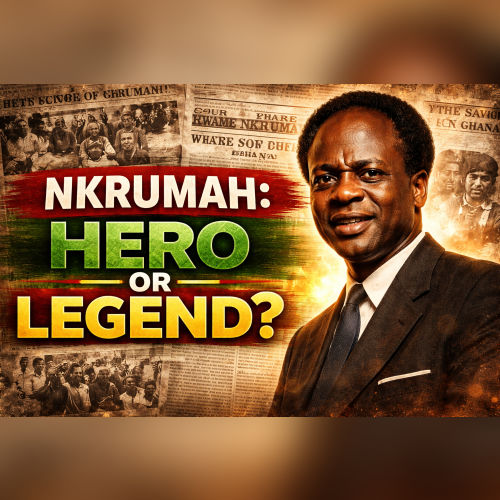
The portrayal of Kwame Nkrumah as a national hero was not simply a spontaneous public perception—it was carefully shaped, amplified, and sustained through newspapers and other media channels during the late colonial and early post-independence periods. In the Gold Coast, now Ghana, the press played a decisive role in constructing Nkrumah’s public image as a liberator, visionary leader, and symbol of African unity. Through strategic framing, political messaging, and repeated symbolic storytelling, newspapers transformed Nkrumah from a political activist into a legendary national figure whose image became deeply embedded in Ghana’s historical consciousness.
Early Media Visibility During Political Activism
Nkrumah first gained media attention in the late 1940s after his return from studies abroad in the United States and Britain. Newspapers reported extensively on his involvement with the United Gold Coast Convention (UGCC), where he served as general secretary.
Early coverage portrayed him as a dynamic and outspoken political organizer capable of mobilizing mass support. His speeches, public rallies, and grassroots campaigns attracted widespread press attention, particularly because they differed from the more moderate approaches of earlier elite political leaders.
The media’s fascination with his charisma and populist appeal helped establish his public visibility long before independence became a realistic political goal.
The Press and the “Positive Action” Campaign
During the early 1950s, newspapers played a crucial role in publicizing Nkrumah’s “Positive Action” campaign, which involved strikes, boycotts, and civil resistance against colonial authorities. Coverage of these activities framed him as a courageous leader willing to challenge imperial power.
When Nkrumah was imprisoned by the British colonial government in 1950, nationalist newspapers portrayed him as a martyr for freedom. Headlines emphasized his sacrifice, resilience, and unwavering commitment to self-governance.
This narrative significantly strengthened his heroic image among the public, transforming his imprisonment into a symbol of national struggle.
Media Coverage of Electoral Victories
Nkrumah’s electoral victories in the early 1950s further reinforced his heroic portrayal. Newspapers widely reported his landslide victory in the 1951 legislative elections, presenting it as proof of overwhelming public support.
Press coverage often emphasized dramatic elements such as his release from prison to assume the role of Leader of Government Business. These stories framed him as a triumphant figure whose rise reflected the will of the people.
Through repeated reporting of his political successes, newspapers contributed to constructing a narrative of inevitability surrounding his leadership.
Independence and the Heroic Narrative
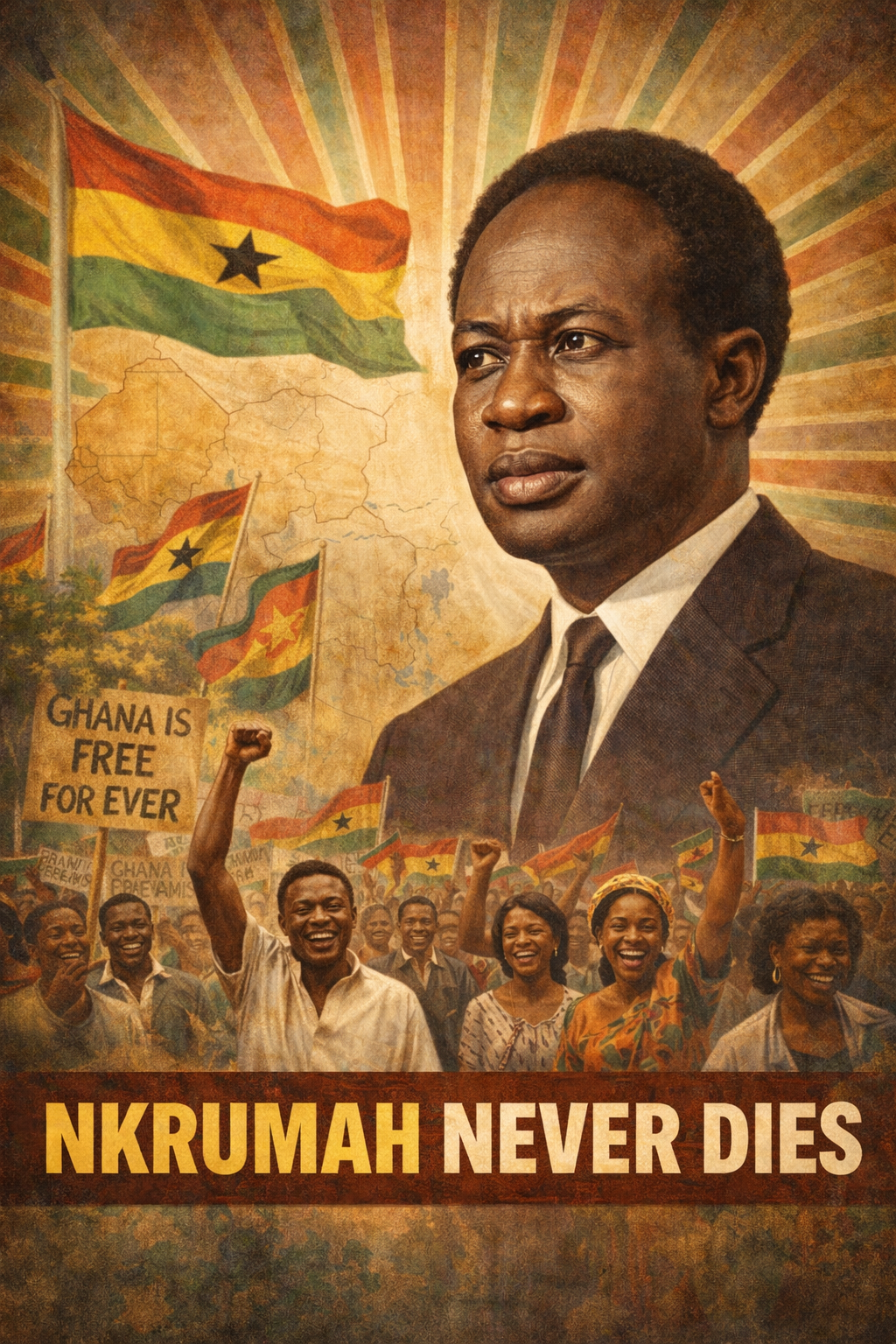
The peak of Nkrumah’s heroic portrayal came during Ghana’s independence celebrations in 1957. Newspapers documented his central role in negotiations, his leadership of the Convention People’s Party, and his symbolic presence at independence ceremonies.
Media reports of his famous declaration—“Ghana is free forever”—were widely circulated and became iconic representations of national liberation. Photographs of Nkrumah addressing jubilant crowds were reproduced in newspapers across Africa and internationally.
This coverage solidified his status not only as a national hero but also as a continental symbol of African independence.
State Media and Institutionalized Heroism
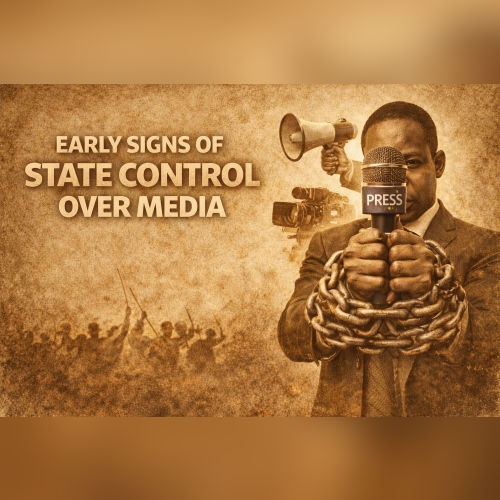
After independence, state-controlled media actively reinforced Nkrumah’s heroic image. Government newspapers and radio broadcasts highlighted his achievements in infrastructure development, industrialization, education expansion, and Pan-African diplomacy.
Articles frequently depicted him as a visionary modernizer guiding Ghana toward economic progress and global influence. His international engagements, including leadership in African unity movements, received extensive positive coverage.
This sustained media emphasis helped institutionalize his heroic status within national narratives.
Symbolism and Cult of Personality
Over time, newspapers contributed to the development of a symbolic political culture centered around Nkrumah. Media coverage frequently used titles such as “Osagyefo” (Redeemer), reinforcing his image as a savior figure.
Photographs, commemorative articles, and anniversary features consistently portrayed him as the embodiment of Ghana’s independence struggle. This portrayal went beyond political reporting to create a broader cultural mythology around his leadership.
Such media framing played a significant role in shaping public perception during his presidency.
Shifts After the 1966 Coup
Following Nkrumah’s overthrow in 1966, media portrayals became more complex. Some newspapers, particularly those aligned with the new military government, criticized aspects of his leadership, including authoritarian tendencies and economic challenges.
However, over time, retrospective media coverage gradually restored his heroic status. Historical reassessments emphasized his role in independence, Pan-Africanism, and global anti-colonial movements.
Modern Ghanaian media generally presents a balanced view that recognizes both his achievements and controversies while maintaining his position as a foundational national figure.
Long-Term Influence on National Memory
The media’s portrayal of Nkrumah has had enduring effects on Ghana’s national identity. Newspaper archives, documentaries, and commemorative publications continue to reinforce his legacy as a central figure in the country’s history.
His image remains closely associated with themes of liberation, unity, and visionary leadership, demonstrating the long-term power of media framing in shaping collective memory.
Conclusion
Newspapers played a crucial role in constructing and sustaining the portrayal of Kwame Nkrumah as a national hero. Through strategic framing of his activism, political victories, independence leadership, and post-colonial achievements, the press transformed him into a symbolic figure representing Ghana’s struggle for freedom and national development.
This media-driven heroic narrative continues to influence how Nkrumah is remembered today, illustrating the profound role of journalism in shaping historical legacy and national identity.