








NEWS

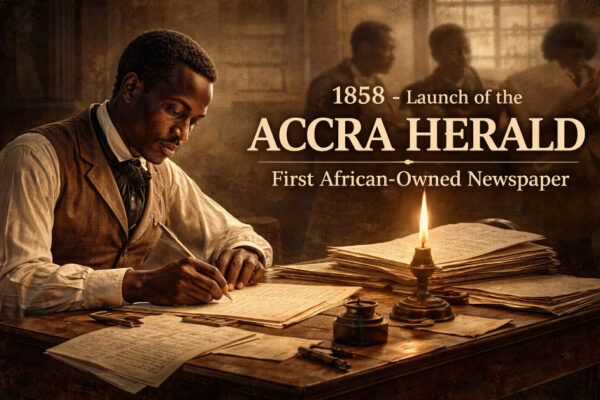
Mid-19th Century Press Expansion (1858–1874)

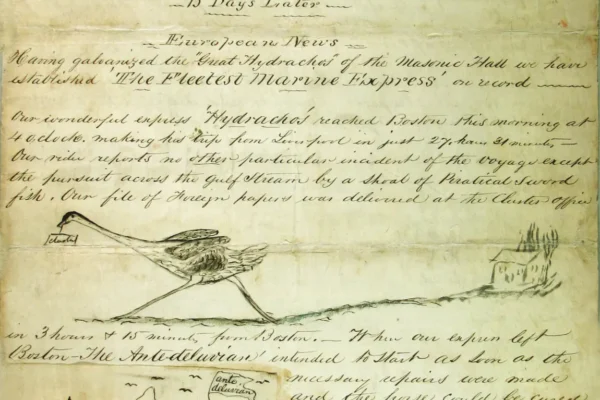
In 1858, Charles Bannerman — the son of a British lieutenant governor and an Asante princess — founded the Accra Herald, recognized as the first African-produced newspaper in West Africa. Unlike the colonial-run press, this handwritten paper reached primarily African readers, circulating among some 300 subscribers. It focused on local issues, social commentary, and matters…

Read More
Cultural perspectives on suicide in Akan society of Ghana

Suicide in Akan Society of Ghana

Suicide is defined as death resulting from self-directed harmful behavior carried out with the intent to die. A suicidologist is a professional who specializes in the scientific study of suicide and suicidal behavior. Suicidologists examine the causes of suicide, develop strategies for prevention, design and evaluate intervention measures, and study postvention—the responses and supports needed…

Read More

Early newspapers in Africa

The first English newspaper on the continent of Africa was published in Cape Town in 1800. The following year in Sierra Leone, The Royal Gazette and Sierra Leone Advertiser were published in Freetown. Both were European undertakings concerned with matters of government. In 1826, Charles Force, an American freed slave, published the Liberia Herald. He…

Read More

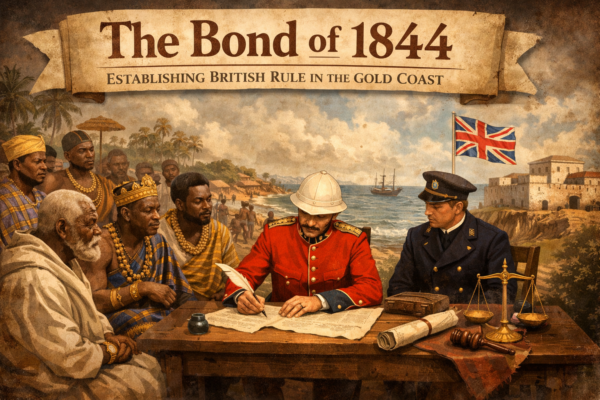
The Bond of 1844 and the Establishment of British Judicial Authority in the Gold Coast

📰 Covered later by: Gold Coast Gazette, missionary newsletters The signing of the Bond of 1844 between Fante chiefs and the British Crown formalized colonial judicial authority in the Gold Coast. Though newspapers were limited at the time, later colonial press publications referenced the Bond as the legal cornerstone of British rule, shaping editorial narratives…

Read More

1822 — Birth of the Gold Coast Press

Royal Gold Coast Gazette & Commercial Intelligencer 📰 Newspaper: Royal Gold Coast Gazette📍 Location: Cape Coast In 1822, the British colonial administration introduced the Royal Gold Coast Gazette & Commercial Intelligencer, marking the birth of journalism in the Gold Coast. The handwritten paper served colonial officers, merchants, and missionaries, publishing shipping schedules, trade notices, and…

Read More

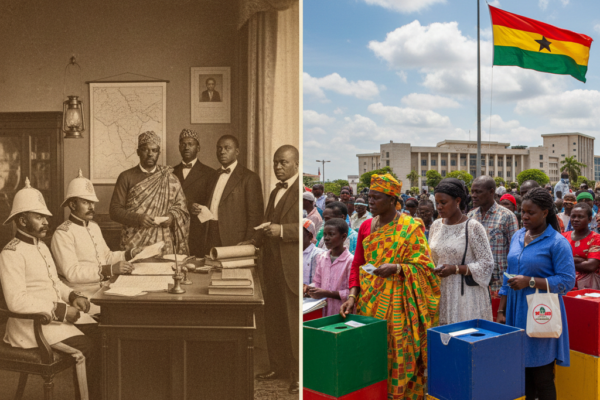
The Struggle for Self-Governance — Ghana’s Most Important Idea from the Gold Coast Era to Today

If there is one idea that has mattered more to Ghana than any other from the Gold Coast era to the present, it is the struggle for self-governance and accountable leadership. From colonial domination to modern democracy, Ghana’s history has been shaped by a single, powerful question: Who governs us, and in whose interest? This…

Read More

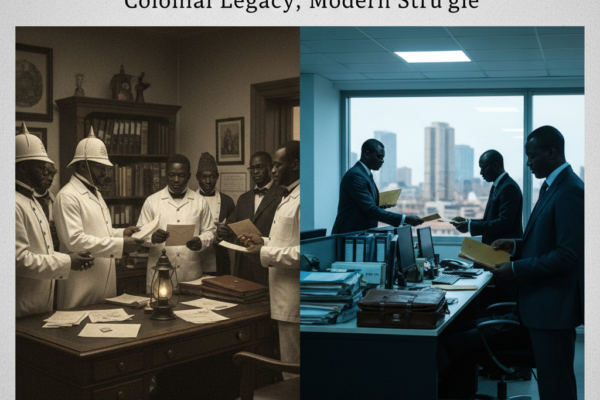
Corruption: A Lingering Social Issue from the Gold Coast Era to Modern Ghana

Corruption remains one of the most enduring social challenges confronting Ghana. Its roots stretch back to the colonial Gold Coast era (1821–1957) and continue to influence governance, public trust, and national development today. Understanding this long history is essential to appreciating why corruption has proven so difficult to eradicate. Corruption During the Gold Coast Era…

Read More

How Communication Technology Transformed Ghana from the Gold Coast Era to the Digital Age

Few technological developments have reshaped Ghana as profoundly as the Advancement of communication technology. From the first telegraph lines laid by colonial authorities to today’s smartphones and internet-driven economy, communication has changed how Ghanaians trade, govern, organize, and connect with the world. The Telegraph and Postal Revolution (1870s–1900s) Modern communication in the Gold Coast began in the 1870s,…

Read More

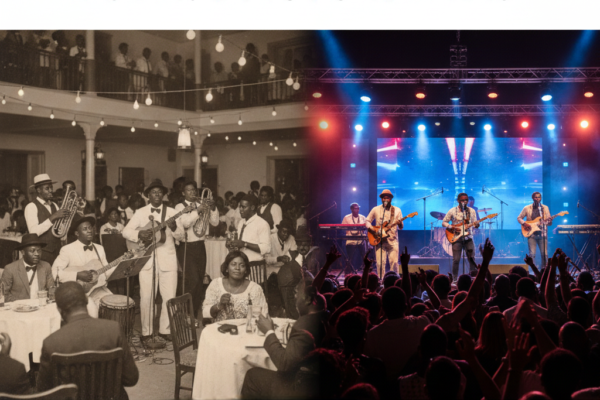
How Highlife Music Became Ghana’s Soundtrack from the Gold Coast Era to Today

Long before Ghana had a film industry or digital streaming platforms, music was the country’s most powerful form of entertainment—and Highlife became its loudest voice. From colonial ballrooms to roadside bars and global stages, Highlife music has shaped Ghana’s cultural identity for more than a century. The Birth of Highlife in the Gold Coast (1890s–1920s)…

Read More