





Why Yaa Asantewaa, A Woman, Led the Ashantis to War Against the British Colonialists

The leadership of Yaa Asantewaa in the 1900 war against British colonial rule remains one of the most extraordinary and symbolically powerful episodes in African resistance history. Her decision to lead the Ashanti (Asante) in armed rebellion was not an accident of circumstance—it emerged from a complex intersection of political tradition, colonial provocation, gender roles…

Read More

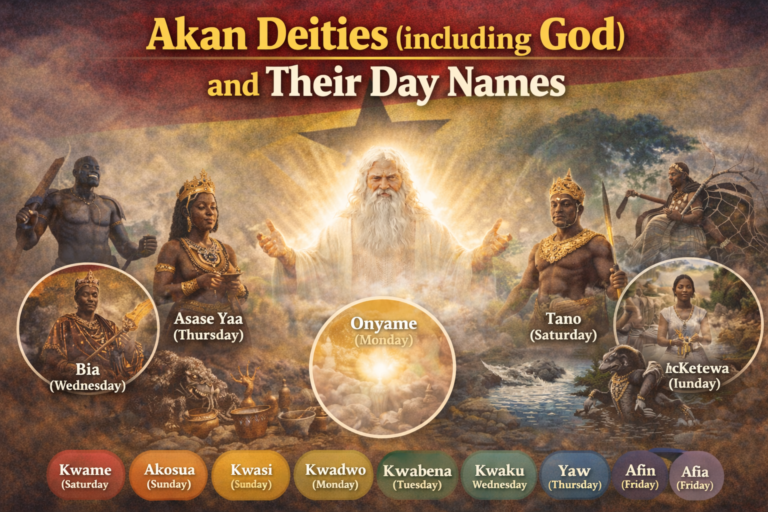
Earth Taboos Among the Akans of Ghana: Asaase Yaa Must Not Be Defiled

A taboo is an act so deeply forbidden that it provokes moral outrage, fear, or spiritual anxiety when violated. Taboos are cultural universals: every society draws invisible lines that must not be crossed. Yet these lines are not the same everywhere. What one society condemns as unthinkable may be ordinary or morally neutral in another….

Read More

How Communication Technology Transformed Ghana from the Gold Coast Era to the Digital Age

Few technological developments have reshaped Ghana as profoundly as the Advancement of communication technology. From the first telegraph lines laid by colonial authorities to today’s smartphones and internet-driven economy, communication has changed how Ghanaians trade, govern, organize, and connect with the world. The Telegraph and Postal Revolution (1870s–1900s) Modern communication in the Gold Coast began in the 1870s,…

Read More

Slavery, Abolition, and How Newspapers Framed the Narrative

The history of slavery and abolition in the area now known as Ghana is deeply intertwined with global economic systems, imperial expansion, African political structures, and the emergence of print journalism as a powerful instrument of public opinion. From the fifteenth century through the nineteenth century, slavery evolved from localized systems of servitude into a…

Read More

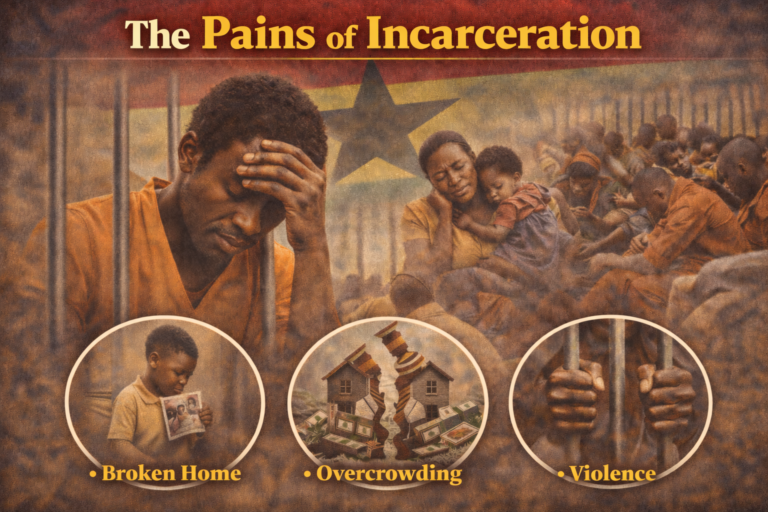
The Pains of Imprisonment

Imprisonment is one of the most common punishments for crime in many societies, including Ghana. It is also known as incarceration. While courts have several options for punishing offenders—such as fines, probation, or community service—prison sentences are usually reserved for serious crimes like robbery, burglary, aggravated assault, and murder. Incarceration is often misunderstood. People sometimes…

Read More

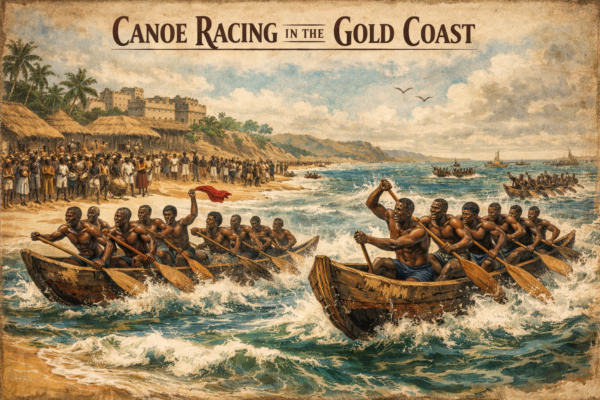
Recreational Canoe Racing Among Early Coastal Settlements in the Pre-Colonial Gold Coast

The Atlantic as Living Arena Along the Atlantic edge of the pre-colonial Gold Coast, long before European forts punctuated the shoreline, the sea was already a theatre of movement, daring, and communal pride. The coastal societies of present-day Ghana—particularly the Fante, Ga, and related Akan maritime communities—did not encounter the ocean as a boundary. They…

Read More

Traditional Wrestling Competitions in Coastal Gold Coast Communities: A Window into Social Power and Cultural Identity (1820–1900)

Long before colonial stadium lights and organised leagues, the sandy shores and village squares of the Gold Coast—today’s Ghana—were vibrant arenas where traditional wrestling was among the most respected cultural practices. From the early 19th century up to the turn of the 20th century, indigenous grappling contests were not mere entertainment; they were deeply embedded…

Read More

Abuse of Househelps in Ghana: The Hidden Struggles of Child Domestic Workers

In Ghana, there exists a long-standing practice in which some parents send their children to live with other families as househelps. While this arrangement is often justified as a strategy for providing children with better opportunities, it has, in many cases, become a source of profound exploitation and suffering. Many of these children are sent…

Read More

What Is Punishment—and Why Do Societies Punish?

Punishment is a central feature of every organized society. While rewards are designed to encourage conformity and socially approved behavior, punishment exists to negatively sanction deviant behavior. When individuals act in ways that align with societal norms, they are often rewarded through praise, status, or material benefits. When they violate those norms, society—or its authorized…

Read More

Early Signs of State Control Over Media

The early years of Ghana’s independence, particularly between 1957 and the mid-1960s, reveal the gradual emergence of state control over the media. While independence initially generated optimism about press freedom, archival newspaper records, government policies, and editorial patterns show that signs of state influence appeared almost immediately. These early developments shaped the long-term trajectory of…

Read More

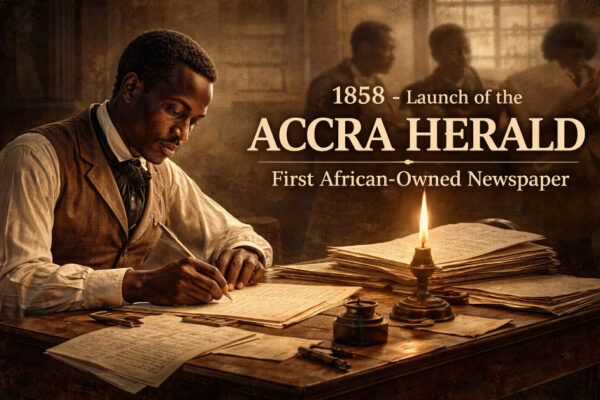
Early newspapers in Africa

The first English newspaper on the continent of Africa was published in Cape Town in 1800. The following year in Sierra Leone, The Royal Gazette and Sierra Leone Advertiser were published in Freetown. Both were European undertakings concerned with matters of government. In 1826, Charles Force, an American freed slave, published the Liberia Herald. He…

Read More

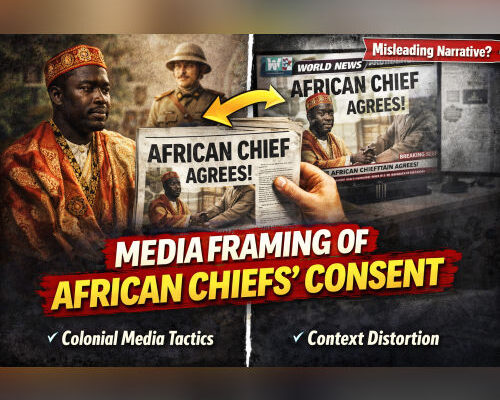
Media Framing of African Chiefs’ Consent

The concept of “chiefs’ consent” occupies a central place in the colonial history of the Gold Coast, present-day Ghana. Throughout the nineteenth and early twentieth centuries, colonial authorities frequently claimed that African chiefs willingly agreed to treaties, land concessions, and administrative reforms that facilitated British control. Newspapers—both colonial and African-run—played a decisive role in shaping…

Read More

How Colonialism Changed Africa

The Slave Trade and Demographic Devastation When we talk about Africa today—its borders, its languages, its religions, its politics—we are also talking about colonialism. The Africa we know in the twenty-first century did not emerge naturally from the past. It was profoundly shaped by centuries of foreign intrusion, exploitation, and rule. To understand present-day Africa,…

Read More