


Taboos in Akan Society of Ghana

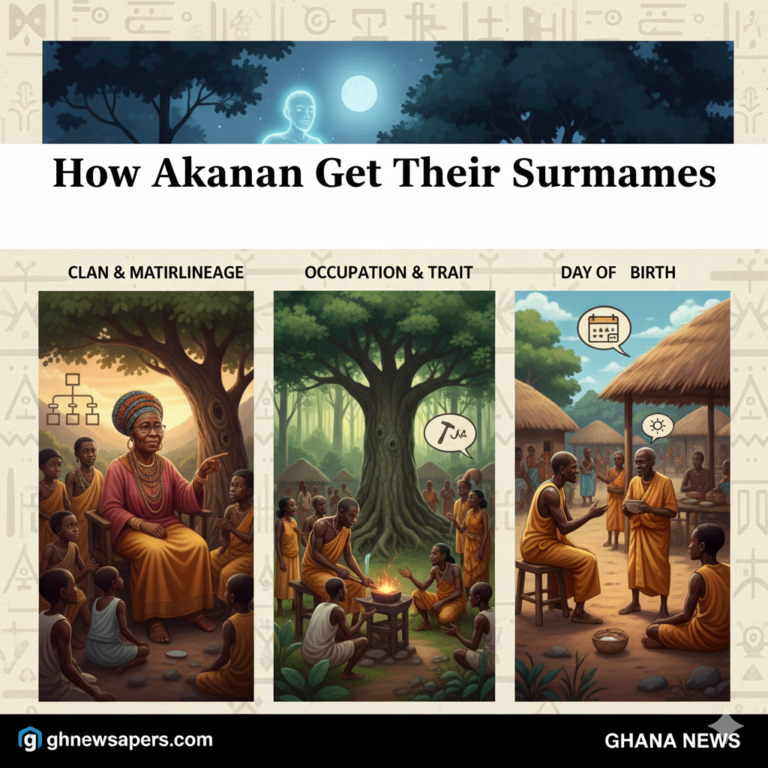
The Akan constitute one of the major ethnic groups in Ghana, accounting for approximately 46 percent of the national population. They speak Twi, a language that is understood and spoken by nearly 90 percent of the country’s population. The Akan are made up of several subgroups, including the Asante, Fante, Akuapem (Akwapim), Akyem (Akim), Brong,…

Read More

What is the Adinkra Cloth in Ghana? History and Social Significance

Introduction Adinkra cloth is one of the most important traditional textiles of Ghana and a significant cultural expression among the Akan people, particularly the Asante. Unlike Kente cloth, which is woven, Adinkra cloth is made by stamping symbolic designs onto fabric using special dyes. The cloth is famous for the numerous Adinkra symbols printed on…

Read More

The Birth of a Free African Press?

The question of whether independence in 1957 marked the true birth of a free African press in the Gold Coast—now Ghana—is both historically complex and deeply debated. While Ghana’s independence symbolized political liberation from colonial rule, the evolution of press freedom was far more gradual and contested. Newspapers had played a crucial role in anti-colonial…

Read More

Africa 101: Facts Everyone Should Know about Africa

Africa is one of the most misunderstood places in the world. Popular myths—often repeated in classrooms, media, and casual conversation—have distorted global understanding of the continent. Below are some common falsehoods about Africa, alongside the facts. False: Africa Is a Country True: Africa is a continent.Africa is the world’s second-largest continent and is made up…

Read More

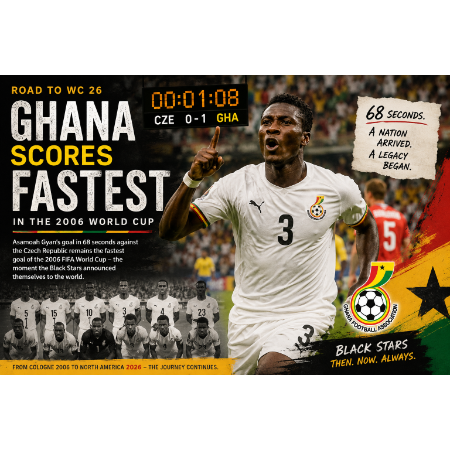
Black Stars Qualifying for the 2006 FIFA World Cup: The Full Historical Journey

The qualification of the Ghana national football team — popularly known as the Black Stars — for the 2006 FIFA World Cup stands as one of the most transformative milestones in Ghana’s sporting and national history. It was not merely a football achievement; it was the culmination of decades of ambition, near misses, institutional reforms,…

Read More

Newspapers and Ghana’s Independence Day Celebrations

The relationship between newspapers and Ghana’s Independence Day celebrations is deeply rooted in the country’s political history and media evolution. From the late colonial period through the attainment of independence in 1957 and into the post-colonial era, newspapers played a central role in documenting, shaping, and amplifying the meaning of national freedom. In the Gold…

Read More

A Ghanaian Perspective on Crime, Justice, and Social Control

Punishment is a central feature of every organized society, including Ghana. While rewards are designed to encourage conformity and socially approved behavior, punishment exists to negatively sanction deviant behavior. When individuals act in ways that align with societal norms, they are often rewarded through praise, status, social recognition, or material benefits. When they violate those…

Read More

GHANA: God Has Anointed the Nation Already — A Nation Richly Blessed

Ghana stands for “God Has Anointed the Nation Already.” Many Ghanaians see their country not merely as a geographical territory in West Africa, but as a land endowed with immense natural, human, and spiritual blessings. From abundant mineral wealth to fertile agricultural lands and a vibrant population of educated citizens, Ghana possesses many of the…

Read More

Books Written by Kwame Nkrumah, the Pan-Africanist

Kwame Nkrumah is one of the foremost Pan-Africanists Africa has ever produced. He devoted his life to the political, economic, and cultural liberation of the African continent. He played a leading role in the establishment of the Organization of African Unity (OAU), now known as the African Union (AU), and actively supported liberation movements across…

Read More

Neglect and Abuse of the Elderly in Ghana

Ghanaian society traditionally values respect for the elderly. Older people are regarded as repositories of wisdom, custodians of tradition, and moral anchors of the family. Yet beneath this ideal lies a troubling reality: many elderly persons in Ghana experience neglect, abuse, and profound social vulnerability. Elderly neglect refers to the failure of family members, caregivers,…

Read More

Dear Africans: Don’t Confuse “Fear” with “Respect”

Oftentimes, in Africa, people conflate respect with fear, treating them as if they are interchangeable. Yet within Akan moral language, a clear distinction is maintained between fɛreɛ (respect) and suro (fear). To say “me fɛre wo” is fundamentally different from “me suro wo.” The former connotes esteem, regard, and moral acknowledgment; the latter signals apprehension,…

Read More

The Ghana National Flag: Symbol of Unity, Freedom, and Heritage

A Historic Emblem of Independence The Ghana national flag is more than a piece of cloth fluttering in the wind; it is a powerful symbol of the country’s history, aspirations, and identity. First officially adopted on March 6, 1957—the same day Ghana became the first African nation to gain independence from colonial rule—the flag reflects…

Read More

When the Black Stars locked horns with the Greatest football club: Real Madrid

Introduction: Why March Matters Every year, the month of March occupies a sacred place in Ghana’s historical calendar. On 6 March 1957, under the leadership of Kwame Nkrumah, the Gold Coast became Ghana — the first sub-Saharan African nation to gain independence from British colonial rule. March is therefore not merely commemorative; it is reflective….

Read More

Slavery, Abolition, and How Newspapers Framed the Narrative

The history of slavery and abolition in the area now known as Ghana is deeply intertwined with global economic systems, imperial expansion, African political structures, and the emergence of print journalism as a powerful instrument of public opinion. From the fifteenth century through the nineteenth century, slavery evolved from localized systems of servitude into a…

Read More