








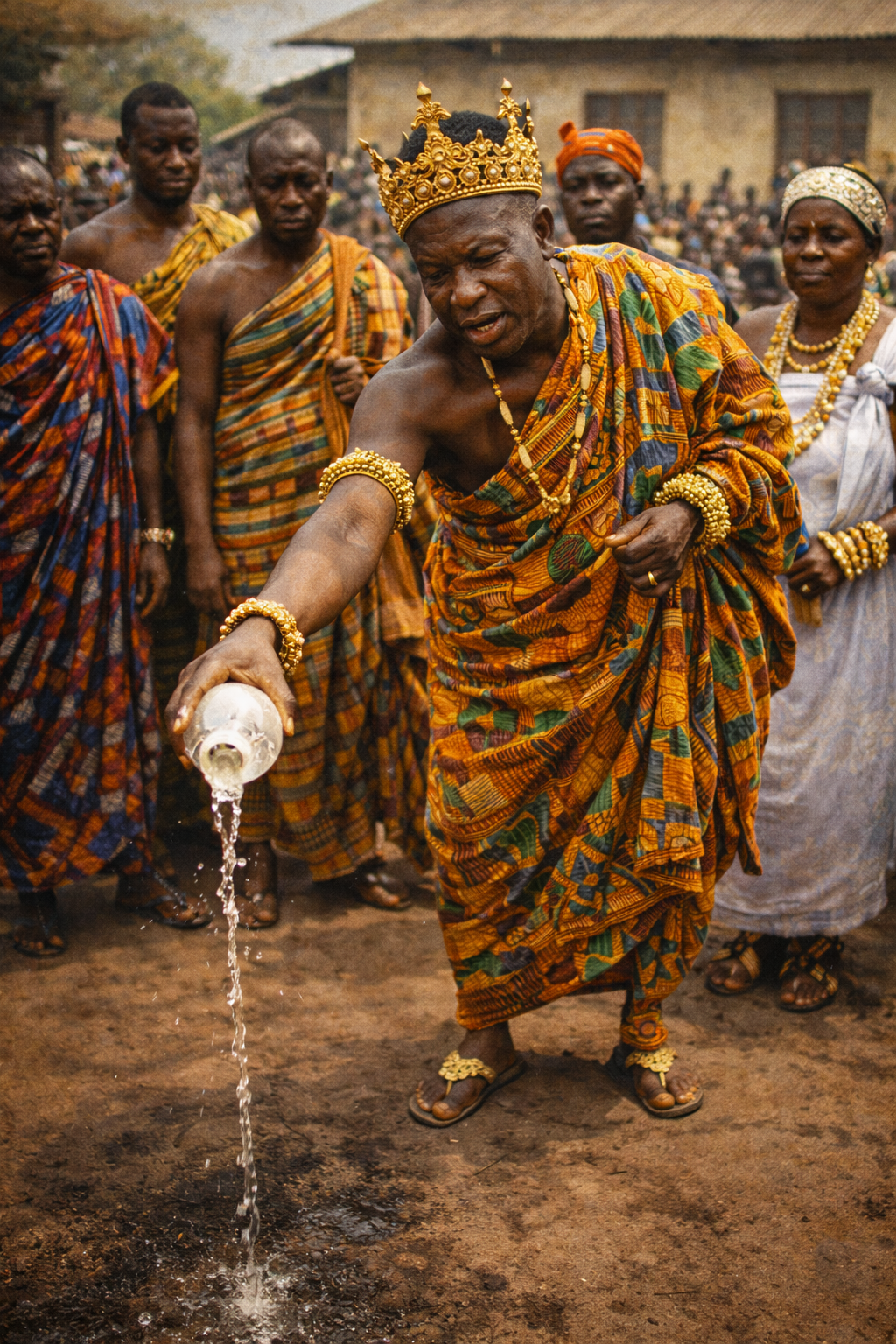
Among the Akan people of Ghana, pouring libation is one of the most important traditional religious practices. It is a solemn ritual through which people communicate with the spiritual world. The act symbolizes reverence for the ancestors, recognition of the Supreme Being, and a request for protection, blessings, and guidance in the affairs of life.
What Pouring Libation Is
Pouring libation is a ritual in which a liquid—commonly water, palm wine, or alcohol—is poured slowly onto the ground while invoking spiritual beings. During the ritual, the person performing it calls upon the Supreme God, the ancestors, and sometimes lesser spiritual beings to witness an event, accept an offering, or bless a gathering.
Among the Akan, libation is both a religious and social practice. It is performed during important events such as funerals, festivals, marriages, naming ceremonies, and traditional court proceedings. The ritual serves as a formal way of inviting the ancestors to participate spiritually in human affairs.
Why Akans Pour Libation
Akans pour libation primarily because of their belief in the continued existence of the ancestors and their influence in the lives of the living. The ancestors are believed to act as intermediaries between human beings and the Supreme Being.
By pouring libation, Akans acknowledge their dependence on spiritual forces and affirm the continuity between the living, the dead, and those yet to be born. The ritual is therefore a way of maintaining harmony between the visible and invisible worlds.
Libation is also poured to seek blessings, protection, fertility, prosperity, and peace. During disputes or important deliberations, the ritual is used to invite truth and justice, since the ancestors are believed to punish falsehood and wrongdoing.
How Libation Is Performed
The ritual usually begins with the person holding a bottle or calabash containing the drink. A small portion is poured onto the ground while invocations are recited. The invocation typically begins with the mention of the Supreme Being, often referred to as Nyame, followed by the earth deity, ancestral spirits, and other spiritual forces.
The officiant calls the names of important ancestors and invites them to partake in the drink symbolically. The language used in libation prayers is often rich in proverbs and traditional expressions.
As the liquid is poured, the officiant petitions the spiritual world for blessings, protection, health, long life, and success for the people present. The ritual usually ends with a collective affirmation from those gathered, often responding with expressions such as “Yoo” or “Ameen,” signifying agreement with the prayer.
Spiritual Benefits of Pouring Libation
Pouring libation is believed to produce several spiritual benefits. It strengthens the relationship between the living and their ancestors, ensuring that the ancestors continue to guide and protect their descendants.
The ritual also invites spiritual protection against misfortune, illness, and evil forces. Many Akans believe that when the ancestors are remembered and honored through libation, they intervene on behalf of the living.
Another benefit is the promotion of unity and moral order. Because the ancestors are regarded as guardians of tradition and morality, invoking them reminds the living to behave honorably and uphold community values.
Who Cannot Pour Libation
In Akan society, not everyone is permitted to pour libation. Traditionally, the ritual is performed by elders, chiefs, family heads, or designated ritual specialists who possess the authority and knowledge required for the invocation.
Certain individuals may be restricted from performing the ritual. For example, very young people who have not yet attained social maturity are generally not allowed to pour libation. In some communities, women undergoing menstruation are also restricted from performing the ritual because of ritual purity norms.
Individuals who are intoxicated, morally compromised, or unfamiliar with the appropriate invocations may also be discouraged from performing libation, since the ritual requires seriousness, respect, and knowledge of ancestral lineage.
Conclusion
Pouring libation remains one of the most enduring religious traditions in Akan society. It reflects the Akan worldview that life is interconnected across the physical and spiritual realms. Through this ritual, the living acknowledge the authority of the ancestors, seek divine blessings, and reaffirm their place within the moral and spiritual order of the community.