


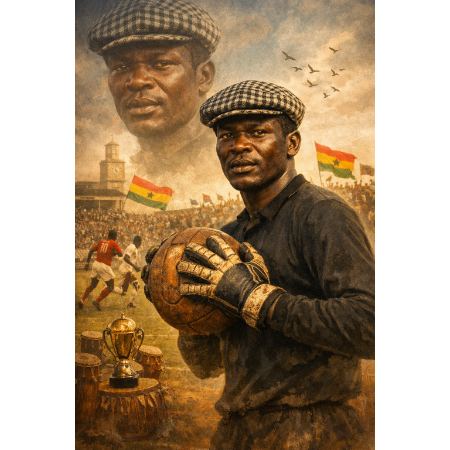

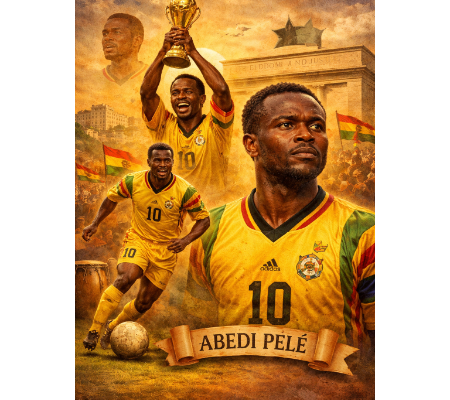
Abedi Pele: The name, myth and legend in Ghanaian football

Introduction: A Name That Became a Symbol In the sociological imagination of the Gold Coast—what is today Ghana—names are never merely labels; they are identities, narratives, and sometimes prophecies. The name Abedi Pele transcends the ordinary. It is a fusion of biography, mythmaking, and cultural symbolism that reflects both indigenous values and global influences. To…

Read More
The Professor

The Making of “The Professor”: Strategy, Skill, and the Legacy of Azumah Nelson

Few names in African sport command as much reverence as Azumah Nelson. In the annals of global boxing history, Nelson stands not merely as a champion but as an embodiment of discipline, intellect, and tactical brilliance. His nickname—“The Professor”—suggests a fighter whose victories were not only won by strength but by strategy. To understand Nelson’s…

Read More

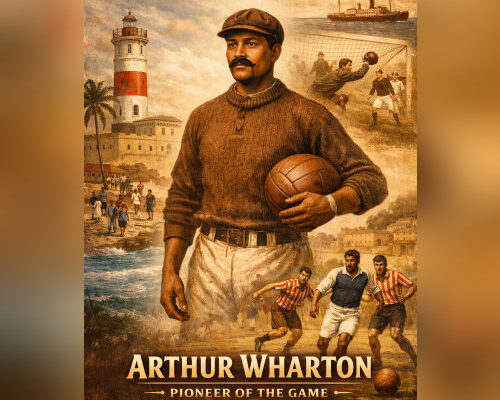
From Jamestown to the World: The Ghanaian Roots of the First Black Football Pioneer

When people discuss the early history of football, the narrative often begins in Britain and gradually expands to the rest of the world. Rarely, however, does the conversation turn toward West Africa—particularly the historic Gold Coast, present-day Ghana. Yet one of the most remarkable pioneers of the sport, widely regarded as the first Black professional…

Read More

GHANA: God Has Anointed the Nation Already — A Nation Richly Blessed

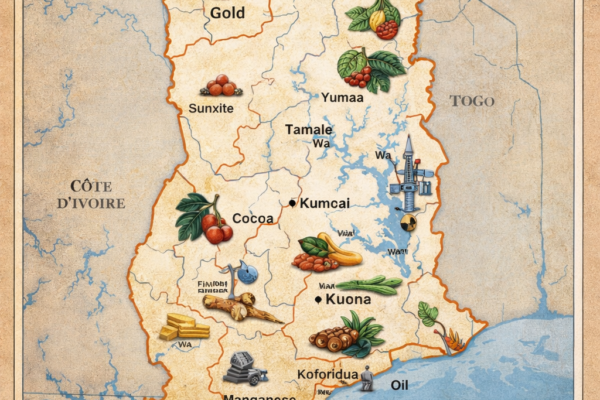
Ghana stands for “God Has Anointed the Nation Already.” Many Ghanaians see their country not merely as a geographical territory in West Africa, but as a land endowed with immense natural, human, and spiritual blessings. From abundant mineral wealth to fertile agricultural lands and a vibrant population of educated citizens, Ghana possesses many of the…

Read More

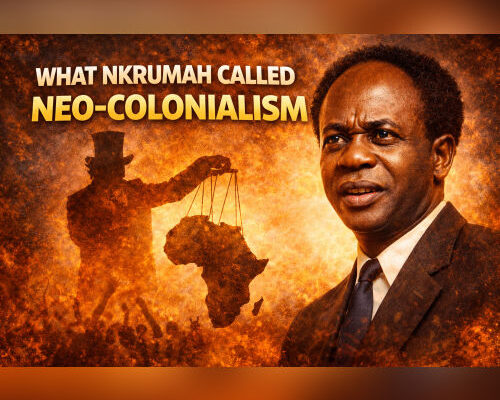
What Nkrumah Liked to refer to as Neo-colonialism

In the years following Ghana’s independence in 1957, one of the most influential political and intellectual concepts articulated by Kwame Nkrumah was “neo-colonialism.” For Nkrumah, independence did not mark the end of foreign domination in Africa. Instead, he argued that a new, more subtle form of control had emerged—one that operated through economic power, political…

Read More

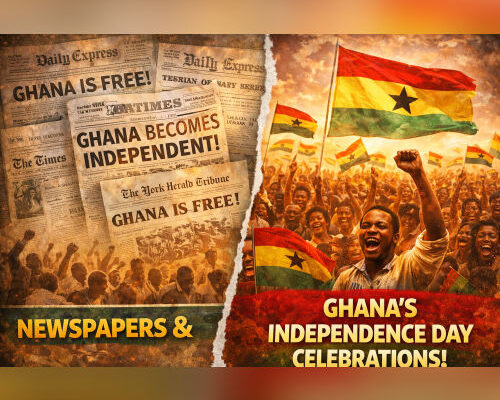
Newspapers and Ghana’s Independence Day Celebrations

The relationship between newspapers and Ghana’s Independence Day celebrations is deeply rooted in the country’s political history and media evolution. From the late colonial period through the attainment of independence in 1957 and into the post-colonial era, newspapers played a central role in documenting, shaping, and amplifying the meaning of national freedom. In the Gold…

Read More

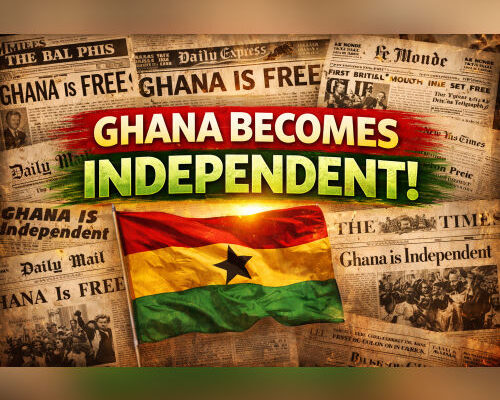
How the Press Announced Ghana to the World

The emergence of Ghana as an independent nation in 1957 was not only a political milestone but also a global media event. Newspapers—both local and international—played a decisive role in announcing the birth of the new state to the world. Through headlines, editorials, photographs, and diplomatic reporting, the press transformed Ghana’s independence from a regional…

Read More

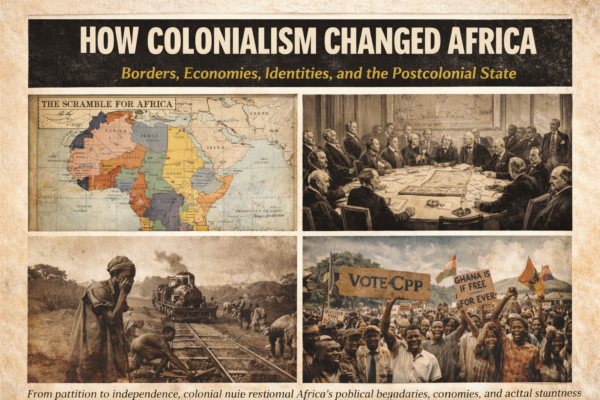
How Colonialism Changed Africa

The Slave Trade and Demographic Devastation When we talk about Africa today—its borders, its languages, its religions, its politics—we are also talking about colonialism. The Africa we know in the twenty-first century did not emerge naturally from the past. It was profoundly shaped by centuries of foreign intrusion, exploitation, and rule. To understand present-day Africa,…

Read More

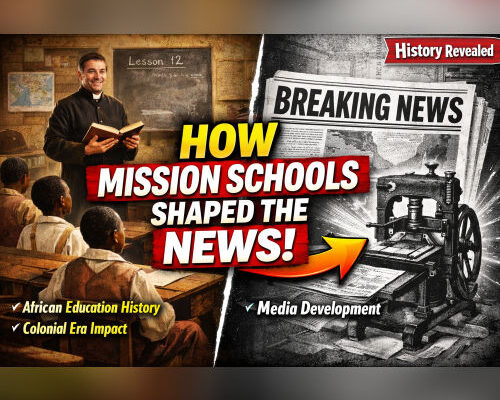
Mission Schools and Their Influence on Newspaper Readership

The growth of newspaper readership in the Gold Coast—modern-day Ghana—cannot be understood without examining the critical role played by nineteenth-century mission schools. These educational institutions, established by European Christian missions, were not only centers of religious instruction but also engines of literacy, intellectual transformation, and political awareness. By producing a new class of literate Africans,…

Read More

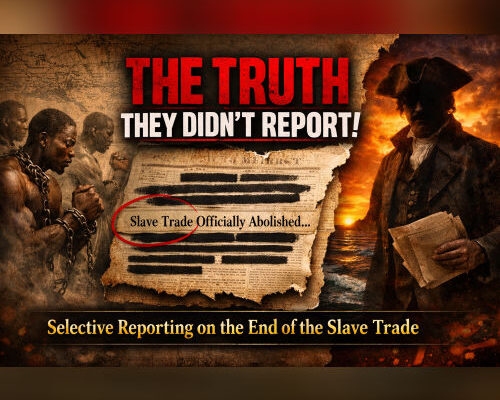
Selective Reporting on the End of the Slave Trade

The end of the trans-Atlantic slave trade in the nineteenth century is often presented in historical narratives as a clear moral victory led by European abolitionists. However, in reality, the process was complex, uneven, and frequently misrepresented—particularly in early newspapers and colonial reports. In the region now known as Ghana, selective reporting played a crucial…

Read More

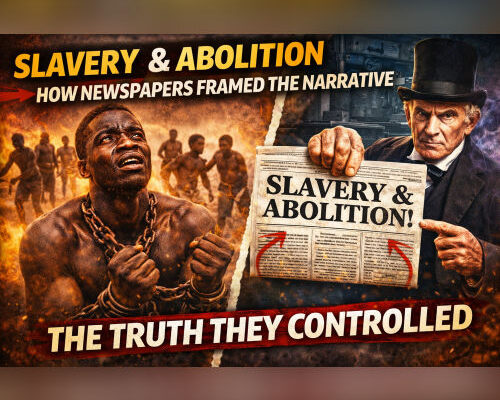
Slavery, Abolition, and How Newspapers Framed the Narrative

The history of slavery and abolition in the area now known as Ghana is deeply intertwined with global economic systems, imperial expansion, African political structures, and the emergence of print journalism as a powerful instrument of public opinion. From the fifteenth century through the nineteenth century, slavery evolved from localized systems of servitude into a…

Read More

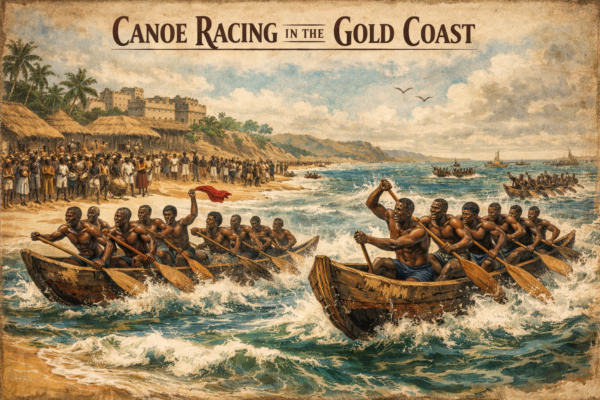
Recreational Canoe Racing Among Early Coastal Settlements in the Pre-Colonial Gold Coast

The Atlantic as Living Arena Along the Atlantic edge of the pre-colonial Gold Coast, long before European forts punctuated the shoreline, the sea was already a theatre of movement, daring, and communal pride. The coastal societies of present-day Ghana—particularly the Fante, Ga, and related Akan maritime communities—did not encounter the ocean as a boundary. They…

Read More