



Long before colonial stadium lights and organised leagues, the sandy shores and village squares of the Gold Coast—today’s Ghana—were vibrant arenas where traditional wrestling was among the most respected cultural practices. From the early 19th century up to the turn of the 20th century, indigenous grappling contests were not mere entertainment; they were deeply embedded in social structures, rites of passage, intercommunal rivalries, and the very fabric of coastal community life.
Origins and Cultural Weight
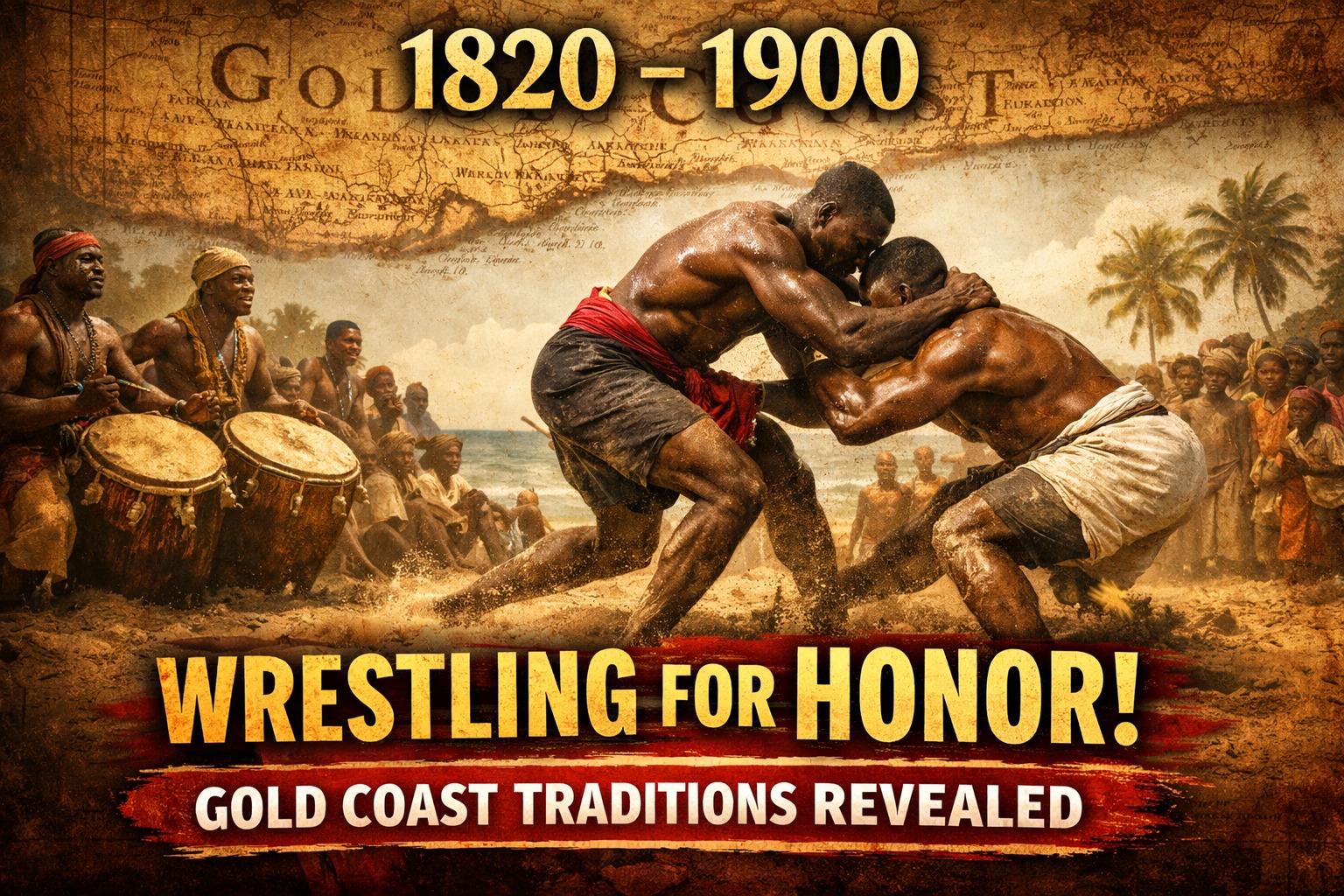
In coastal communities such as Jamestown and Usshertown in Accra, Saltpond and Winneba in the Central Coast, and Asebu and Anomabu further west, wrestling was known by varied names and forms, often linked to local languages and ages-old traditions. Among the Ga of Accra, the proto wrestling form of asafo atwele was practised by age sets and militia groups as a symbolic continuation of martial preparedness and bravery. These contests, taking place on beach sands or open squares, involved grappling, throws, balance holds, and endurance challenges. Victory was not just about physical dominion—it demonstrated courage, strategic wit, and eligibility for leadership roles within the community.
Fante fishermen of Saltpond and Winneba similarly viewed traditional grappling matches as markers of personal prestige and communal reputation. Young men trained from adolescence, learning not only technical throws and holds but also discipline and honour—thin lines separating sport from society’s governing ethos. Elders often presided over matches during major festivals like homowo in Teshie and Aboakyer in Winneba, choosing winners who earned food gifts, ceremonial cloth, and even facilitated marriage negotiations.
The Arbiters of Strength: Villages and Villagers
By the 1820s, villages such as James Town (Accra), Usshertown, Saltpond, Winneba, and Anomabu were already noted for hosting annual wrestling contests concurrent with fishing and harvest seasons. These events drew crowds from surrounding areas, turning quiet coastal settlements into thronged cultural centres. In Jamestown, youth groups from quarters like Bukom engaged in highly anticipated inter-quarter bouts, forging reputations that would resonate for years in oral histories.
One celebrated figure from the mid 19th century was Kofi “Brofo” Mensah of Winneba (circa 1851–1884), a wrestler famed for his unorthodox grip and ability to throw opponents twice his size. Oral tradition recounts his 1873 victory in Winneba’s fishing festival bout, where Brofo’s win elevated his village’s standing among coastal networks of trade and alliance. Though not widely documented in written colonial archives, local storytellers preserved his legend—testimony to how wrestlers embodied village pride and honour.
In the 1880s and 1890s, competitors like Kwame “Asibuo” Ahanta from the Ahanta West coast and Yaw “Nana Nyame” of Saltpond were lauded not just for strength but for ceremonial prowess. They embodied the community’s cultural cosmology: wrestlers were seen as mediators between ancestral protection and living social order, called upon to symbolise resilience during periods of conflict with inland groups such as the Asante Kingdom.
Festivals and Social Integration
Traditional wrestling competitions were often anchored in homowo, Kundum, and Aboakyer cycles—festivals that affirmed both agricultural rhythms and social hierarchies. During these periods, ritual drumming, libations, and elders’ proclamations framed each contest as not just entertainment, but communal affirmation. Winners and even respected contestants were granted symbolic titles, resolved disputes without bloodshed and often received special status among chiefs’ entourages.
For example, the Asebu area hosted an annual gathering where fishermen and wrestlers engaged in an inter ethnic festival of challenge and friendship, fostering intricate networks of collaboration across the coastal belt. Stories from elders recall how wrestling success could influence marriage alliances, diplomatic agreements, and even age-set responsibilities in defending the village.
Colonial Encounters and the Transition to Modernity
By the late 19th century, the arrival of British colonial governance and Christian missions began reshaping sports culture in the Gold Coast. While colonial administrators introduced European sports that later formalised into organised boxing and football, traditional wrestling did not vanish. Instead, it adapted. Elders continued organising matches during festivals, and these contests remained central to identity preservation in places like Jamestown, Saltpond, and Winneba well into the early 20th century.
Traditional wrestling competitions in Gold Coast coastal communities from 1820 to 1900 were far more than physical bouts; they were rituals of community affirmation, rites of passage, and social governance. The wrestlers—be they Kofi “Brofo” Mensah, Kwame “Asibuo” Ahanta, or Yaw “Nana Nyame”—are remembered not merely as strongmen, but as embodiments of cultural resilience and local pride. Their legacies endure in today’s cultural festivals and the ongoing efforts to preserve Ghana’s indigenous sporting heritage.
Watch the full video on YouTube – https://youtu.be/VNkKJdLjUMk