


For many years, this question has generated curiosity, debate, and speculation. But the answer lies not only in romance. It lies in politics, diplomacy, and a bold continental vision during one of the most transformative periods in African history.
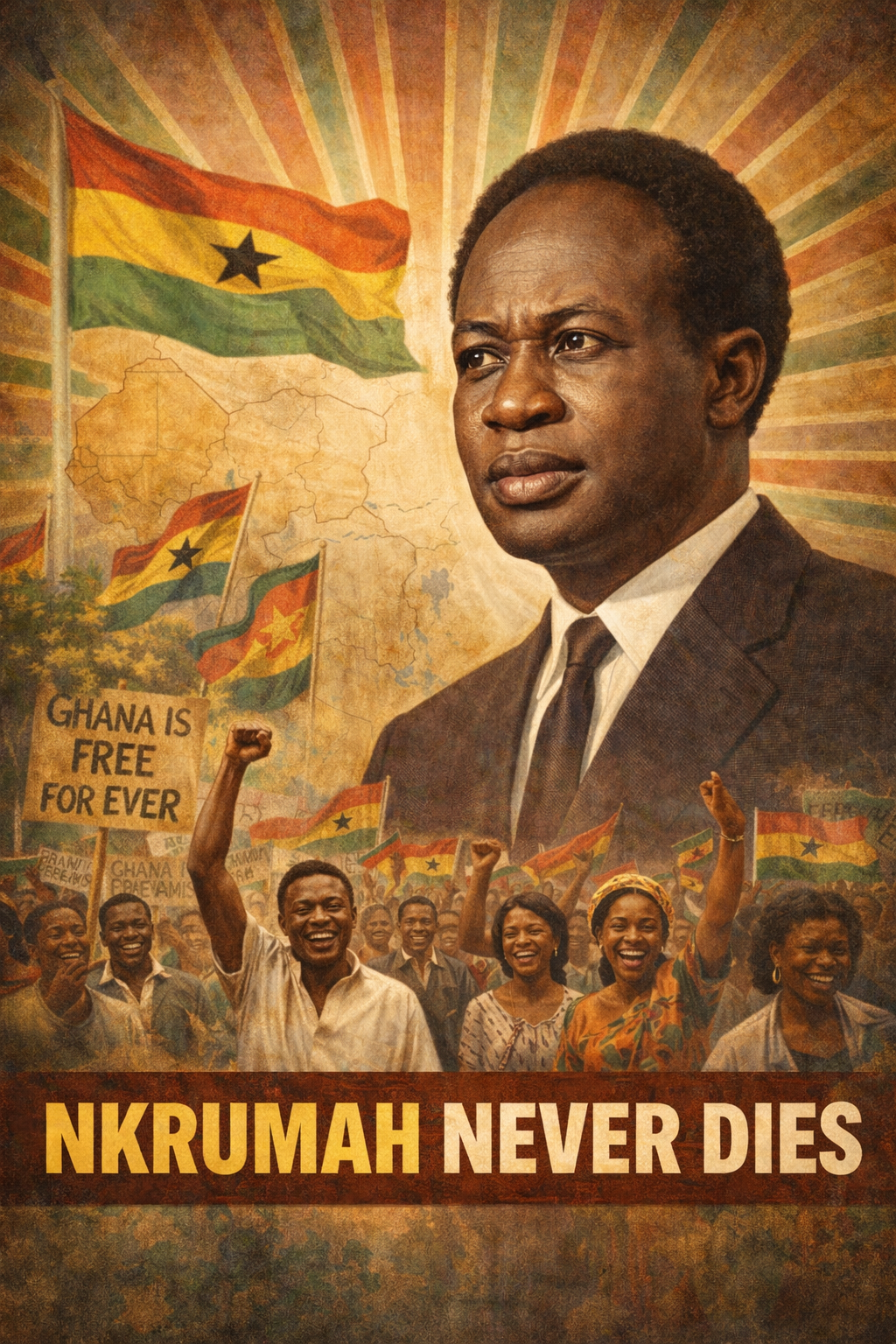
When Ghana gained independence from Britain on March 6, 1957, Kwame Nkrumah stood at the center of a global wave of decolonization. He was not just leading Ghana into freedom. He was positioning the country as a beacon for Africa and the developing world. Nkrumah believed strongly that political independence alone was not enough. Without unity among African nations, he argued, freedom would remain fragile and vulnerable to external interference.
At that time, one of the most powerful voices in the global anti-colonial movement was President Gamal Abdel Nasser of Egypt. Nasser had risen to prominence after the 1952 Egyptian revolution and became internationally known following the Suez Crisis of 1956, when he nationalized the Suez Canal in defiance of Britain, France, and Israel. Like Nkrumah, Nasser championed sovereignty, anti-imperialism, and solidarity among newly independent states.
The two leaders shared similar ideological positions. Both rejected domination by Western colonial powers. Both were wary of becoming pawns in the Cold War rivalry between the United States and the Soviet Union. And both would later become leading figures in what became known as the Non-Aligned Movement, a coalition of nations that refused to formally align with either superpower bloc.
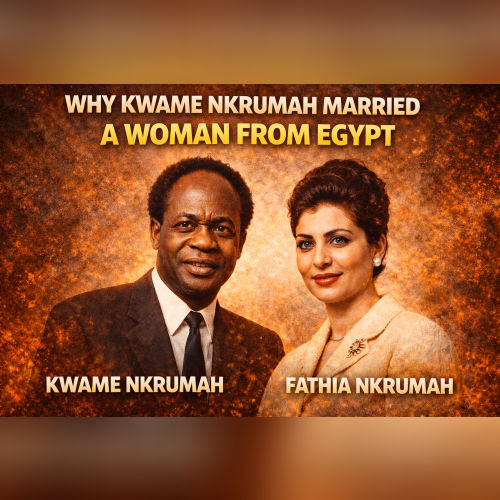
Within this political climate, the marriage between Kwame Nkrumah and Fathia Rizk in 1957 took place. Fathia, a young Egyptian woman from Alexandria, came from a respected middle-class family. Reports indicate that President Nasser himself encouraged the idea of the marriage, seeing it as a powerful symbol of Afro-Arab unity. With the approval of her family and Egyptian authorities, Fathia agreed to the union and traveled to Ghana only months after the country had declared independence.
For Nkrumah, the marriage was not merely a personal decision. It was deeply symbolic. Africa at the time was divided not only by colonial borders but also by cultural and regional distinctions between North Africa and sub-Saharan Africa. Nkrumah believed strongly that these divisions were artificial and harmful. He envisioned a continent united politically, economically, and culturally. By marrying an Egyptian woman, he demonstrated in a personal way his belief that Africa was one interconnected civilization.
The marriage sent a diplomatic message to the world. It signaled that Ghana and Egypt stood together in the struggle against imperialism. It also reinforced cooperation between Accra and Cairo. During Nkrumah’s presidency, Ghana and Egypt maintained close political ties. Egypt supported Ghana’s Pan-African initiatives, and Ghana, in turn, aligned itself with broader anti-colonial efforts across Africa and the Middle East.
This partnership contributed to the growing momentum that eventually led to the formation of the Organization of African Unity in 1963, an institution designed to promote solidarity and cooperation among African states. Nkrumah’s vision for continental unity was ambitious, and although full political union was never realized, his ideas helped shape the direction of post-colonial African diplomacy.
Despite its political symbolism, the marriage was also a genuine family union. Kwame Nkrumah and Fathia Nkrumah had three children together. As Ghana’s First Lady, Fathia became a visible figure during the early years of independence. She participated in official events, represented Ghana internationally, and adapted to life in a newly independent African nation undergoing rapid transformation.
However, the marriage also unfolded during a turbulent political era. Nkrumah’s government faced increasing opposition at home and economic pressures abroad. In 1966, while Nkrumah was on a state visit to Asia, his government was overthrown in a military coup. Following the coup, Fathia and her children eventually returned to Egypt, marking a dramatic shift in their lives.
Looking back, the marriage between Kwame Nkrumah and Fathia Nkrumah stands as a powerful example of how personal decisions and political strategy were intertwined during the era of African liberation. For Nkrumah, who often declared that “Africa must unite,” the union symbolized his determination to bridge regions, cultures, and histories in pursuit of a shared continental destiny.
Today, historians continue to interpret the marriage through multiple lenses. Some emphasize its diplomatic significance. Others highlight its symbolic message of unity between Arab and Black Africa. Still others focus on the personal dimensions of the relationship. Whatever the perspective, the marriage remains one of the most distinctive episodes in Ghana’s early post-independence history.
In marrying Fathia, Nkrumah was making a statement to Africa and to the world. He was asserting that the struggle for freedom did not end at national borders. It extended across the continent and into the global South. His decision reflected a belief that Africa’s future depended not on isolation, but on solidarity.
More than six decades later, the story of their union continues to spark discussion about identity, diplomacy, and the ambitions of early African leadership. It reminds us that in the formative years of independence, symbolism mattered. Leadership choices carried international meaning. And in the case of Kwame Nkrumah, even marriage became part of a larger political vision.