






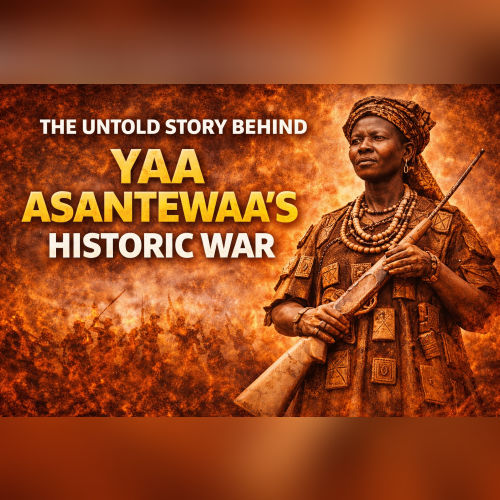
The leadership of Yaa Asantewaa in the 1900 war against British colonial rule remains one of the most extraordinary and symbolically powerful episodes in African resistance history. Her decision to lead the Ashanti (Asante) in armed rebellion was not an accident of circumstance—it emerged from a complex intersection of political tradition, colonial provocation, gender roles within Asante society, and the deep spiritual significance of sovereignty embodied in the Golden Stool.
Understanding why a woman led this war requires examining both the internal structures of the Ashanti Empire and the escalating tensions between the Asante state and the British Empire at the turn of the twentieth century.
The Political Role of Women in Asante Society
One of the most crucial factors explaining Yaa Asantewaa’s leadership was the political structure of Asante governance, which differed significantly from European patriarchal norms. In the Asante political culture, women—especially queen mothers—held substantial authority.
The queen mother (Ohemaa) was not merely ceremonial. She:
- Participated in selecting chiefs and kings
- Advised on political and military decisions
- Served as a guardian of lineage legitimacy
- Acted as a stabilizing figure in times of crisis
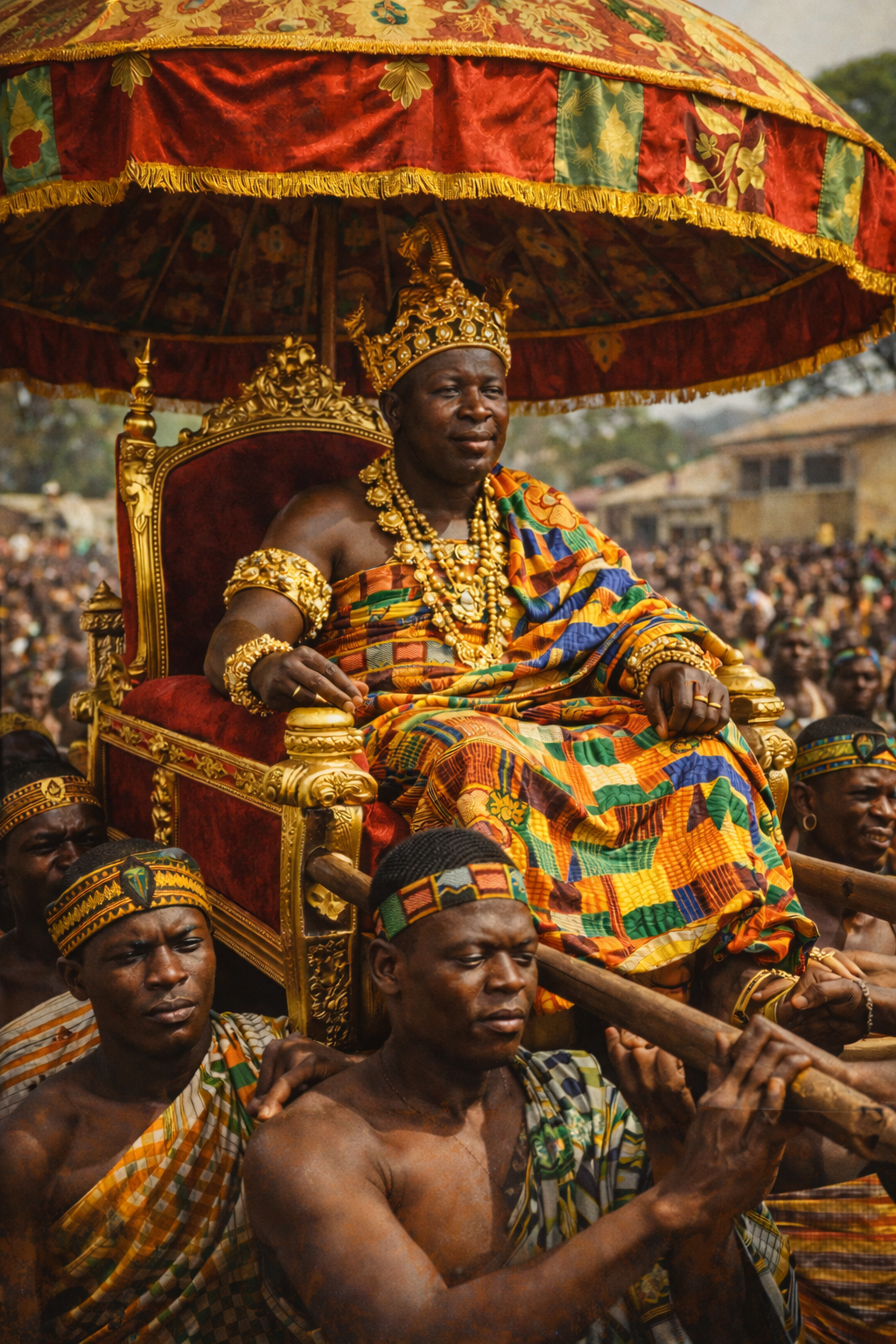
Yaa Asantewaa was the Queen Mother of Ejisu, a key Asante state. When the Asantehene (king) and many male leaders were exiled by the British in 1896, the traditional chain of authority left her as one of the highest-ranking leaders still present in the region.
Thus, her rise to leadership was not unusual within Asante political norms—even though it shocked European observers unfamiliar with African governance systems.
British Colonial Provocation and the Golden Stool Crisis
The immediate cause of the war lay in British demands concerning the sacred Golden Stool (Sika Dwa Kofi). The Golden Stool was not merely a royal seat—it symbolized the spiritual essence, unity, and sovereignty of the Asante people.
In 1900, British Governor Sir Frederick Hodgson made a grave political miscalculation. He demanded to sit on the Golden Stool, asserting British authority over Asante territory. This act was viewed as:
- A direct insult to Asante’s spirituality
- A threat to political independence
- An attempt to destroy cultural sovereignty
The demand triggered outrage across Asante communities.
At a council meeting of chiefs debating how to respond, many male leaders hesitated to confront British military power. It was at this moment that Yaa Asantewaa delivered her famous speech challenging their reluctance.
The Legendary Call to Resistance
According to oral histories and colonial records, Yaa Asantewaa declared:
“If you men of Asante will not go forward, then we will. We, the women, will fight.”
This statement carried enormous weight culturally and politically. In Asante tradition, women were expected to defend the continuity of the nation, especially when male leadership faltered.
Her speech did several things simultaneously:
- Shamed hesitant chiefs into action
- Reframed the conflict as a sacred duty
- Mobilized both men and women for resistance
This moment transformed her into the symbolic and operational leader of the uprising.
The War of the Golden Stool (1900)
The conflict that followed is historically known as the War of the Golden Stool, or the Yaa Asantewaa War.
Under her leadership, the Asante forces:
- Laid siege to the British fort at Kumasi
- Cut supply routes
- Organized guerrilla-style resistance
- Mobilized widespread civilian support
The siege lasted several months and demonstrated remarkable coordination and resilience despite British military superiority.
Ultimately, the British reinforced their troops and suppressed the rebellion using heavy weaponry and scorched-earth tactics.
Exile and Aftermath
After the war’s defeat, Yaa Asantewaa and other leaders were captured and exiled to the Seychelles Islands in the Indian Ocean, where she died in 1921.
The war marked a turning point:
- It ended the final major armed resistance of the Asante against British rule
- It led to the formal incorporation of Ashanti into the Gold Coast colony in 1902
- It cemented her legacy as the last major leader of armed anti-colonial resistance in the region
Hidden Historical Dimensions Often Overlooked
Several deeper aspects of this story are often underemphasized:
1. Gender and Colonial Misinterpretation
British officials initially underestimated the rebellion partly because they did not expect a woman to lead a war. This miscalculation allowed the Asante forces to mobilize effectively in the early stages.
2. Women’s Participation in Warfare
Women did not merely support logistics—they acted as intelligence gatherers, supply coordinators, and sometimes fighters.
3. Spiritual Authority
Yaa Asantewaa’s legitimacy was rooted not only in political office but also in her role as a guardian of ancestral traditions tied to the Golden Stool.
4. Symbol of Cultural Resistance
Her leadership represented resistance not just to political domination but to cultural erasure.
Long-Term Historical Legacy
Today, Yaa Asantewaa is remembered as:
- A symbol of African resistance to colonialism
- A pioneer of women’s political leadership
- A national heroine in Ghanaian history
Her story has inspired:
- Ghanaian nationalism movements
- Women’s empowerment narratives
- Pan-African anti-colonial scholarship
Monuments, schools, and cultural institutions in Ghana bear her name, ensuring that her legacy remains central to national historical consciousness.
Conclusion
Yaa Asantewaa led the Ashanti to war not because of an extraordinary exception to social norms, but because Asante’s political traditions empowered women to defend national sovereignty. Her leadership emerged from a combination of colonial provocation, spiritual symbolism, and institutional authority within Asante governance.
Her role in the 1900 uprising demonstrates that African resistance to colonialism was not only widespread but also deeply inclusive—drawing strength from both male and female leadership structures.
Her story remains one of the most powerful examples in global history of how cultural authority, political courage, and national identity can converge in a single leader to challenge imperial domination.