









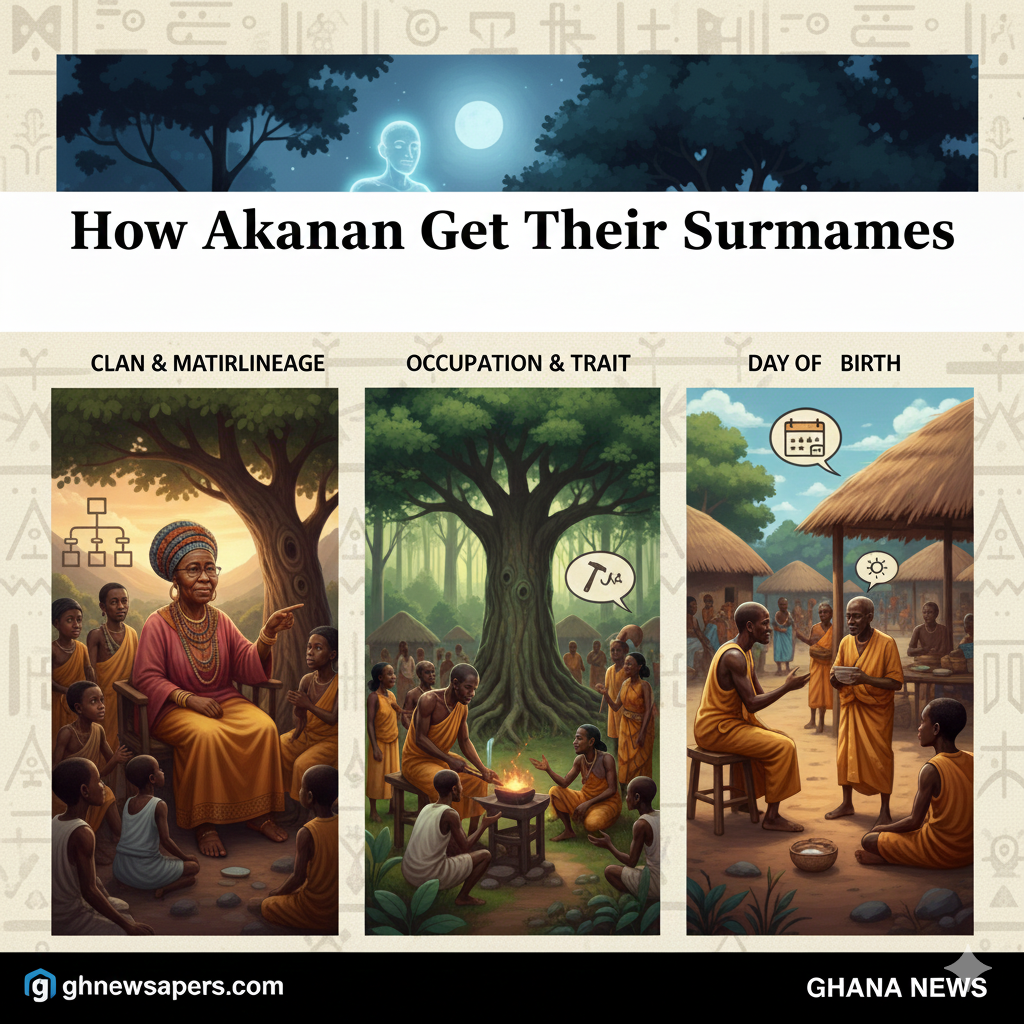
Among the Akan people of Ghana, names are more than labels—they are living symbols of heritage, identity, social bonds, and spiritual connection. Akan naming traditions reflect a society where lineage, ancestry, and morality are woven into the very words that identify a person.
Origins of Akan Surnames
Although the Akans are a matrilineal society, it is often the father who gives the child their name. But unlike in many Western cultures, Akan surnames are not strictly inherited from the father. In fact, there are documented cases where a man’s 21 children all bore different surnames, with only one carrying the father’s name.
Akan surnames may derive from multiple sources:
- Paternal relatives: Children may be named after uncles, grandparents, or other significant male relatives.
- Maternal relatives: Names may honor the mother’s lineage, reflecting matrilineal inheritance and ancestral continuity.
- Friends of the father: Sometimes, a child is named after a close friend of the father, symbolizing social alliances and communal ties.
This diversity highlights the Akan principle that identity is both individual and collective, connecting a person to their lineage, their community, and the spiritual world.
Gender Distinctions in Akan Surnames
Akan surnames also encode gender in subtle, culturally rich ways. In many Akan communities:
- Female names often end in “-waa”, signaling the bearer’s gender.
- Among the Akwapim subgroup, female surnames may end in “-bea”, from obaa, meaning “woman.”
Examples of Male and Female Akan Surnames:
| Male | Female |
|---|---|
| Adom | Adomaa |
| Agyei | Agyeiwaa |
| Amoako | Amoakowaa |
| Ansong | Ansomaa |
| Boadi | Boadiwaa |
| Boakye | Boakyewaa |
| Darko | Darkoa |
| Kissi | Kissiwaa |
| Kye | Kyewaa |
| Kyei | Kyeiwaa |
| Osei | Serwaa |
| Obeng | Obenewaa |
| Oduro | Durowaa |
| Ofori | Oforiwaa |
| Ofosu | Ofosua |
| Ohene | (O)Henewaa |
| Safo | Safowaa / Safoa |
| Takyi | Takyiwa / Takyiwaa |
Akwapim Examples:
| Male | Female |
|---|---|
| Offei | Offeibea |
| Larteh | Lartebea |
| Addo | Addobea |
| Ayeh | Ayebea |
| Okyere | Okyerebea |
| Otu | Otubea |
These distinctions celebrate gender identity and social roles while maintaining deep respect for ancestry and family heritage.
The Cultural and Spiritual Significance of Names
In Akan society, a surname is not merely functional; it carries moral, spiritual, and social weight:
- Lineage and Ancestry: Names connect children to both maternal and paternal ancestors, reminding them of their roots.
- Social Bonds: Names honor family, friends, and community ties, reinforcing networks of loyalty and respect.
- Spiritual Protection: Certain surnames are believed to invoke blessings, protection, or ancestral guidance for the bearer.
Through these sayings, the Akans teach that a name is inseparable from character and reputation, shaping how the world sees a person and how they move through life.
Conclusion
Akan surnames are at once personal, familial, and spiritual. They reflect a society where identity is deeply rooted in community, lineage, and moral order. Every name tells a story—of ancestry, social bonds, and the hopes and expectations placed upon a child.
In a rapidly changing world, Akan naming traditions endure as a powerful testament to the culture’s respect for heritage, gender, and spirituality. To bear an Akan name is to carry a piece of history, a connection to ancestors, and a moral compass that guides one’s life.