



Mensah Adinkrah

Mensah Adinkrah, Ph.D., holds advanced academic degrees in sociology and has received extensive training in military sociology, victimology, criminology, penology, thanatology, and suicidology. His current research interests centre on comparative criminology and criminal justice, as well as suicide, homicide, and witchcraft accusations and persecution in Africa. He was born and raised in Ghana and is fluent in Twi.

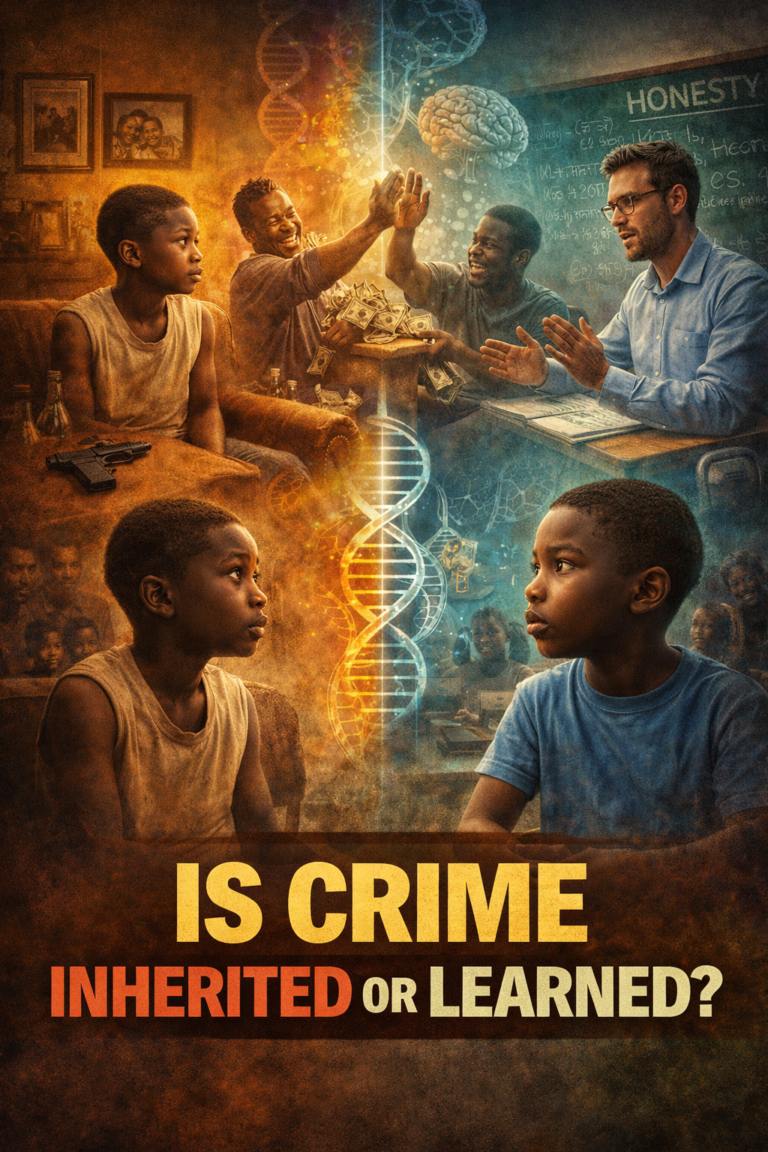
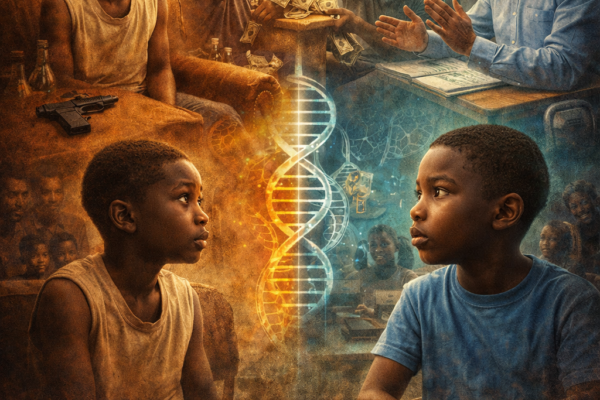
Are Criminals Born or Made?

Are people born criminals, or do they learn to become criminal? Is there a “crime gene”? Can criminal behavior be inherited, or do people have control over their actions? These questions have intrigued scholars, parents, and the public for decades. Some people assume that crime is inherited. They look at families where multiple members have…
Read More

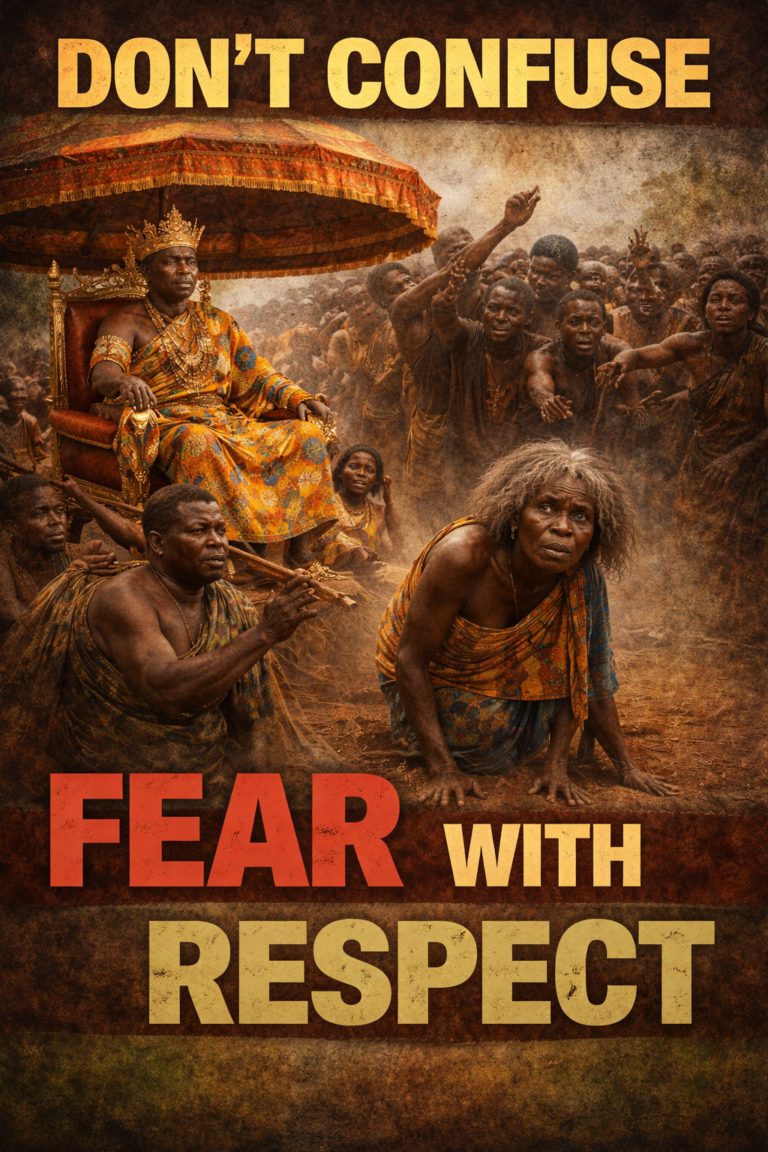
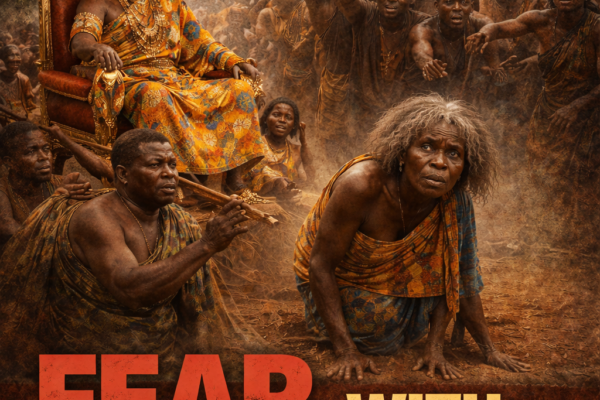
Dear Africans: Don’t Confuse “Fear” with “Respect”

Oftentimes, in Africa, people conflate respect with fear, treating them as if they are interchangeable. Yet within Akan moral language, a clear distinction is maintained between fɛreɛ (respect) and suro (fear). To say “me fɛre wo” is fundamentally different from “me suro wo.” The former connotes esteem, regard, and moral acknowledgment; the latter signals apprehension,…

Read More

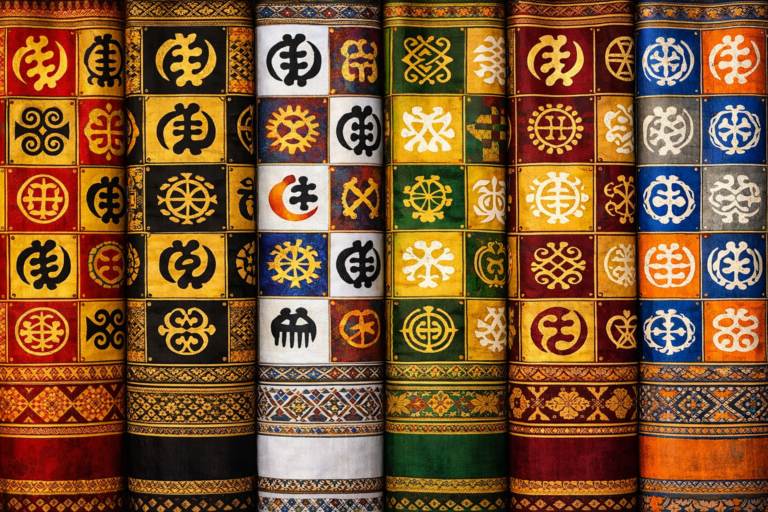
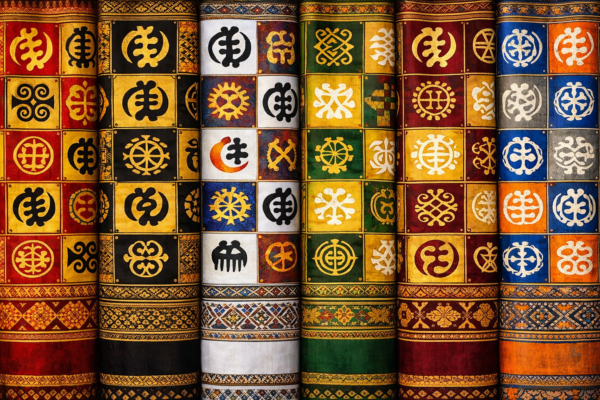
What is the Adinkra Cloth in Ghana? History and Social Significance

Introduction Adinkra cloth is one of the most important traditional textiles of Ghana and a significant cultural expression among the Akan people, particularly the Asante. Unlike Kente cloth, which is woven, Adinkra cloth is made by stamping symbolic designs onto fabric using special dyes. The cloth is famous for the numerous Adinkra symbols printed on…

Read More

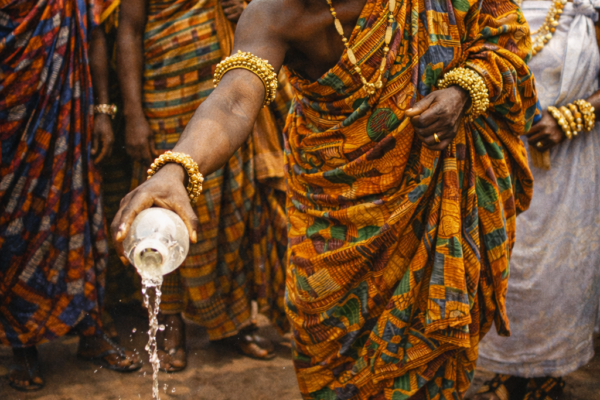
Pouring Libation in Akan Society

Among the Akan people of Ghana, pouring libation is one of the most important traditional religious practices. It is a solemn ritual through which people communicate with the spiritual world. The act symbolizes reverence for the ancestors, recognition of the Supreme Being, and a request for protection, blessings, and guidance in the affairs of life….

Read More

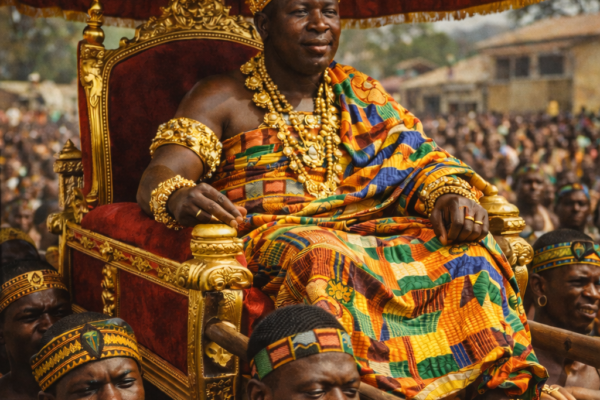
Why Akan Chiefs Are Carried in Palanquins

The Akan of GhanaThe Akan are an ethnic group that live in Ghana. They occupy a broad stretch of territory extending from the coastal areas to the central forest belt of the country. Historically and culturally, the Akan constitute one of the largest ethnolinguistic groups in Ghana and share closely related languages, traditions, and social…

Read More

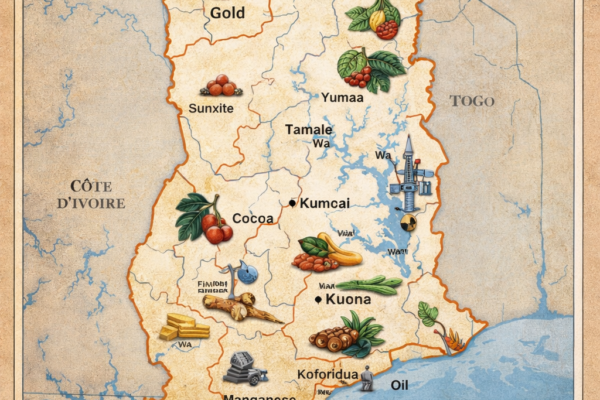
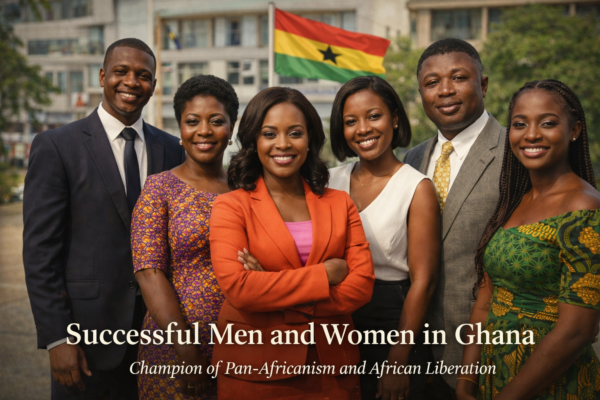
GHANA: God Has Anointed the Nation Already — A Nation Richly Blessed

Ghana stands for “God Has Anointed the Nation Already.” Many Ghanaians see their country not merely as a geographical territory in West Africa, but as a land endowed with immense natural, human, and spiritual blessings. From abundant mineral wealth to fertile agricultural lands and a vibrant population of educated citizens, Ghana possesses many of the…

Read More

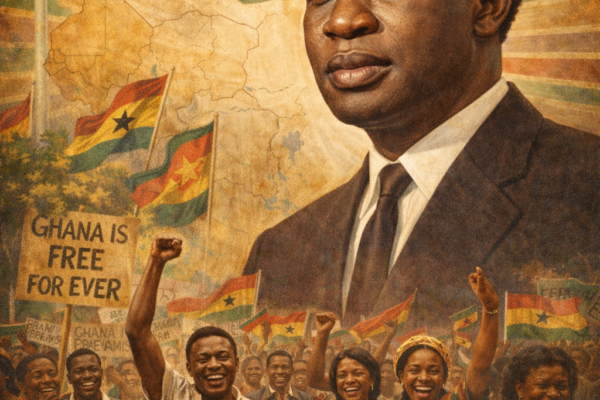
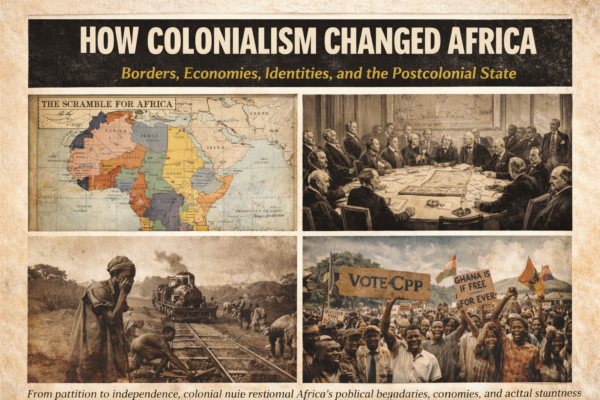
How Colonialism Changed Africa

The Slave Trade and Demographic Devastation When we talk about Africa today—its borders, its languages, its religions, its politics—we are also talking about colonialism. The Africa we know in the twenty-first century did not emerge naturally from the past. It was profoundly shaped by centuries of foreign intrusion, exploitation, and rule. To understand present-day Africa,…

Read More

Allegations of Witchcraft Are Not a Matter for Northern Ghanaians Alone

Recent reports in the Ghanaian media have once again drawn attention to a disturbing and persistent problem: the murder, attempted murder, and lynching of women accused of practicing witchcraft. These incidents are often shocking in their brutality and tragic in their consequences. They also raise an important question: Are witchcraft accusations a problem confined to…

Read More

Africa: Myths and Realities

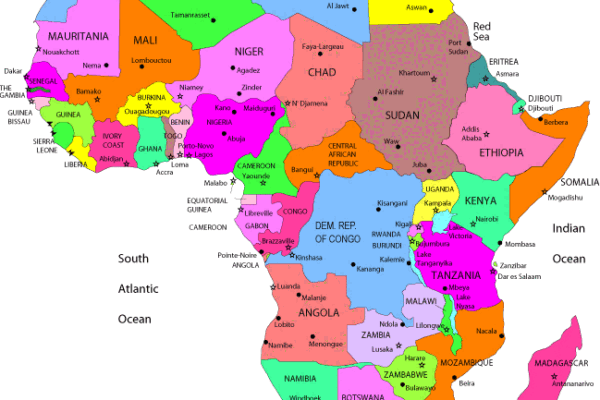
Africa is still the “dark continent” to many people. In spite of its immense size, large population, vast mineral and agricultural resources, militarily strategic location, and tremendous development potential, Africa is undeniably the most misunderstood continent. Very few non-natives of the continent know much about its geography, its peoples, its culture, or its politics. What…

Read More

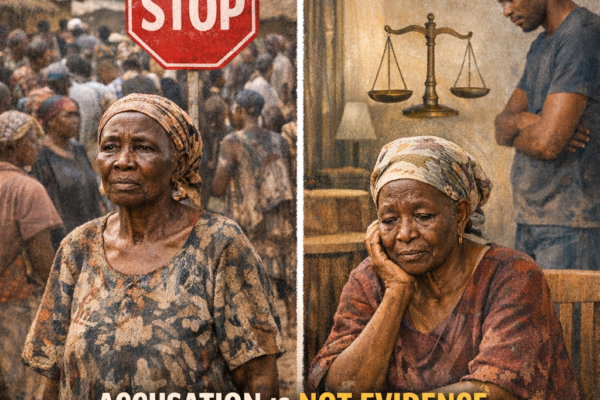
Killing and Lynching of Women Accused of Witchcraft is a Crime

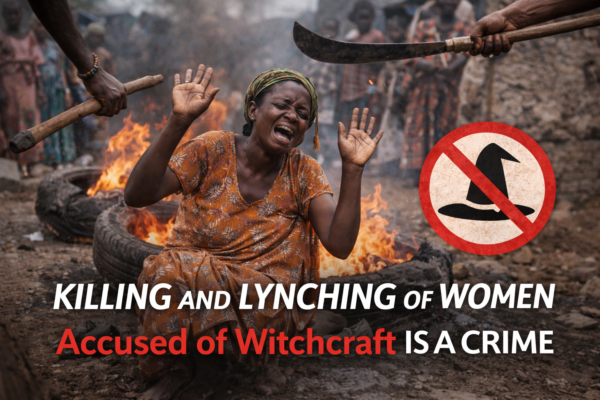
Violence against persons accused of witchcraft remains a troubling reality in parts of Ghana. Although our nation prides itself on hospitality, communal solidarity, and deep respect for human dignity, allegations of witchcraft too often trigger acts of cruelty that contradict these cherished values. It is time to speak plainly: killing or lynching a person accused…

Read More

Why Are Ghanaian “Witches” 99% Female?

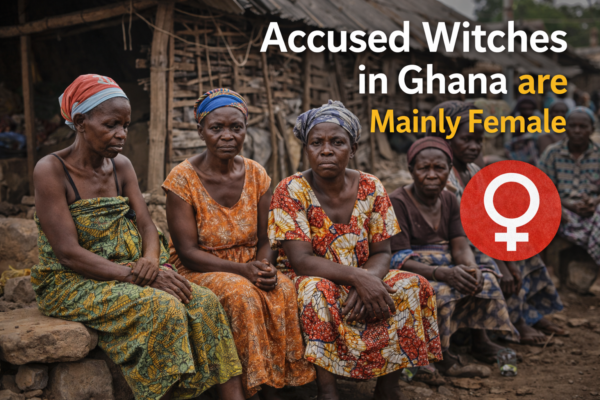
In Ghana, the overwhelming majority of people accused of witchcraft are women and girls. Nearly all victims killed during witch hunts are female. In the so-called “witch camps” or “outcast homes” in northern Ghana, it is rare to find a man among the residents. The population is almost entirely women—elderly women, widows, divorced women, poor…

Read More

Meanings of Ghanaian Surnames or Last Names They Are More Than Labels

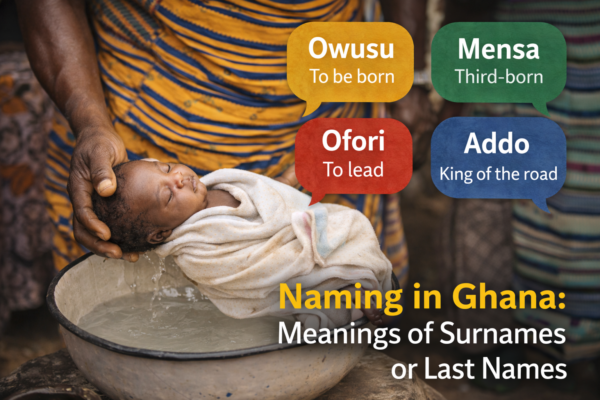
In Ghanaian society, names are never random. A name is a story, a memory, a prayer, a verdict on experience, or a declaration of destiny. Ghanaian surnames—particularly Akan surnames—carry deep cultural meanings that often encode family history, spiritual beliefs, social struggles, and moments of triumph. Some names appear straightforward on the surface, yet even these…

Read More