









Mensah Adinkrah

Mensah Adinkrah, Ph.D., holds advanced academic degrees in sociology and has received extensive training in military sociology, victimology, criminology, penology, thanatology, and suicidology. His current research interests centre on comparative criminology and criminal justice, as well as suicide, homicide, and witchcraft accusations and persecution in Africa. He was born and raised in Ghana and is fluent in Twi.

The Deadly Side of Masculinity: Male Victims, Male Killers

Men and boys are frequently victims of homicide, yet discussions of lethal violence often overlook the specific contexts in which they are targeted. Scholars of homicide and lethal violence have developed a range of terms to describe killings based on the relationship between victim and offender, as well as the broader social context in which…

Read More

Femicide: When Females Are Victims of Homicide

Femicide refers to the intentional killing of females because they are female. It is widely recognized within criminology and gender studies as a distinct form of homicide, shaped by gender inequality, power imbalances, and cultural norms. Scholars of homicide and lethal violence use several related terms to describe gender-based killings. One such term is gynocide,…

Read More

Politically-Motivated Homicides: Understanding Violence in the Pursuit of Power

Politics, at its core, is a struggle over resources, influence, and authority. While much of political competition is expressed through negotiation, elections, and policymaking, history shows that the pursuit of power can also result in extreme acts, including the deliberate taking of human life. Homicide—the act of one person killing another—assumes particular significance when it…

Read More

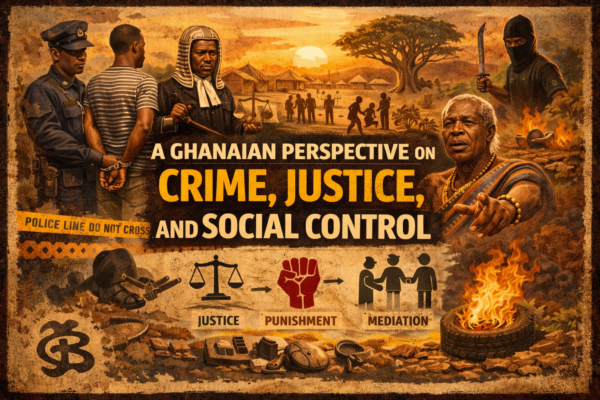
How Rules Become Laws: Examples from Ghana

Rules, Laws, and Social Order All human societies are governed by rules. These rules regulate behavior by defining what individuals may do and what they must refrain from doing. Without such rules, social life would be chaotic, unpredictable, and ultimately unsustainable. Rules make social interaction possible by creating order, stability, and mutual expectations among members…

Read More

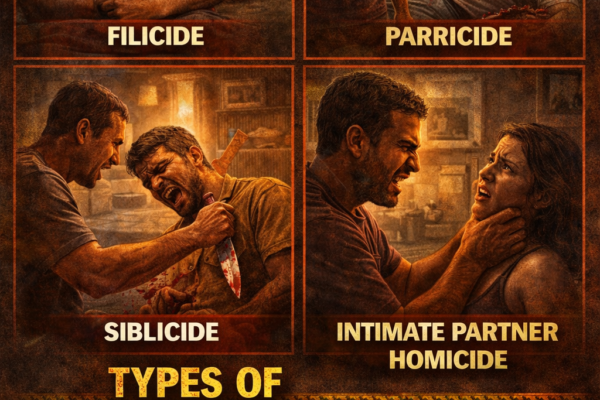
When Home Turns Deadly: Understanding Types of Family Homicide

Introduction: The Hidden Face of Family ViolenceHomicide refers to the killing of one person by another, and within this broad category lies a deeply troubling subset known as family homicide, which involves the killing of one family member by another. Although the family is often idealized as a haven of care, protection, and emotional support,…

Read More

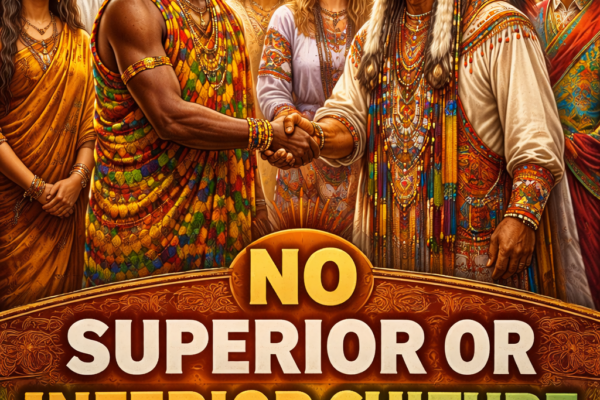
There Is No Superior Culture — And No Inferior One

Let’s be clear from the outset: no culture is superior to another, and no culture is inferior. This should not be a controversial statement in the 21st century—yet, in practice, it still is. Culture remains one of the most misunderstood concepts in public discourse. When people misunderstand culture, they don’t just get definitions wrong—they get…

Read More

Ghana’s Quiet Strength: Understanding the Foundations of a Peaceful Nation

A Nation Defined by Peace In a region and continent that have, at various historical moments, been scarred by conflict and instability, Ghana stands out as a compelling example of relative peace. Since gaining independence in 1957, the country has largely avoided the large-scale civil wars that have afflicted some of its neighbors. While no…

Read More

Are Criminals Born or Made?

Are people born criminals, or do they learn to become criminal? Is there a “crime gene”? Can criminal behavior be inherited, or do people have control over their actions? These questions have intrigued scholars, parents, and the public for decades. Some people assume that crime is inherited. They look at families where multiple members have…

Read More

Dear Africans: Don’t Confuse “Fear” with “Respect”

Oftentimes, in Africa, people conflate respect with fear, treating them as if they are interchangeable. Yet within Akan moral language, a clear distinction is maintained between fɛreɛ (respect) and suro (fear). To say “me fɛre wo” is fundamentally different from “me suro wo.” The former connotes esteem, regard, and moral acknowledgment; the latter signals apprehension,…

Read More

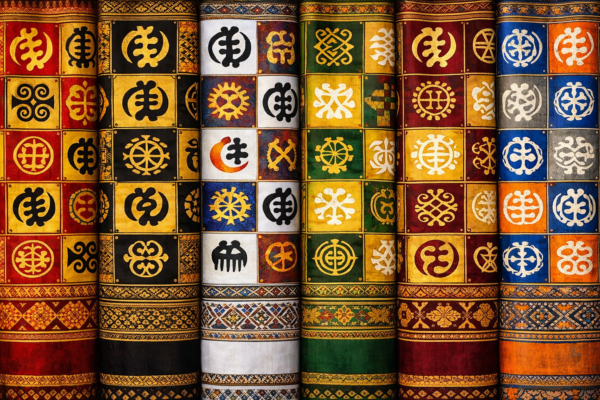
What is the Adinkra Cloth in Ghana? History and Social Significance

Introduction Adinkra cloth is one of the most important traditional textiles of Ghana and a significant cultural expression among the Akan people, particularly the Asante. Unlike Kente cloth, which is woven, Adinkra cloth is made by stamping symbolic designs onto fabric using special dyes. The cloth is famous for the numerous Adinkra symbols printed on…

Read More

Who Hunts the Witch? Comparing Europe’s Witch Trials and Africa’s Witch Hunts

Witch hunts in contemporary Africa differ markedly from the witch persecutions that occurred in Early Modern Europe. In Europe between the fifteenth and seventeenth centuries, accusations of witchcraft were typically handled through formal legal institutions. Suspected witches were arrested, tried in courts of law, and, if convicted, executed by state authorities. Witchcraft persecution was therefore…

Read More

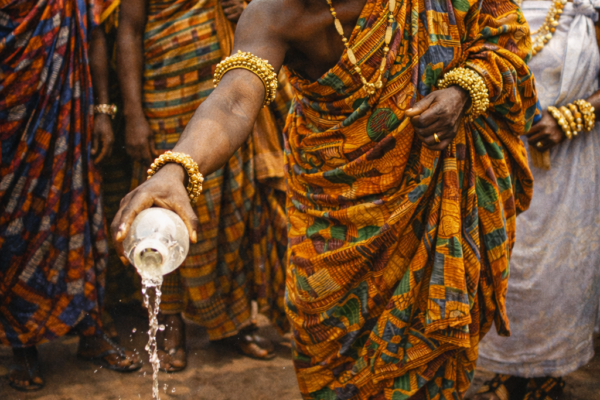
Pouring Libation in Akan Society

Among the Akan people of Ghana, pouring libation is one of the most important traditional religious practices. It is a solemn ritual through which people communicate with the spiritual world. The act symbolizes reverence for the ancestors, recognition of the Supreme Being, and a request for protection, blessings, and guidance in the affairs of life….

Read More

Why Akan Chiefs Are Carried in Palanquins

The Akan of GhanaThe Akan are an ethnic group that live in Ghana. They occupy a broad stretch of territory extending from the coastal areas to the central forest belt of the country. Historically and culturally, the Akan constitute one of the largest ethnolinguistic groups in Ghana and share closely related languages, traditions, and social…

Read More