




Politics Before the State Called Ghana
Long before the name Ghana was adopted in 1957, the land and peoples of the Gold Coast had already developed sophisticated political systems. Politics in Ghana did not begin with Europeans or colonial rule; it evolved from indigenous governance structures, customary laws, military leadership, and trade diplomacy spanning centuries.
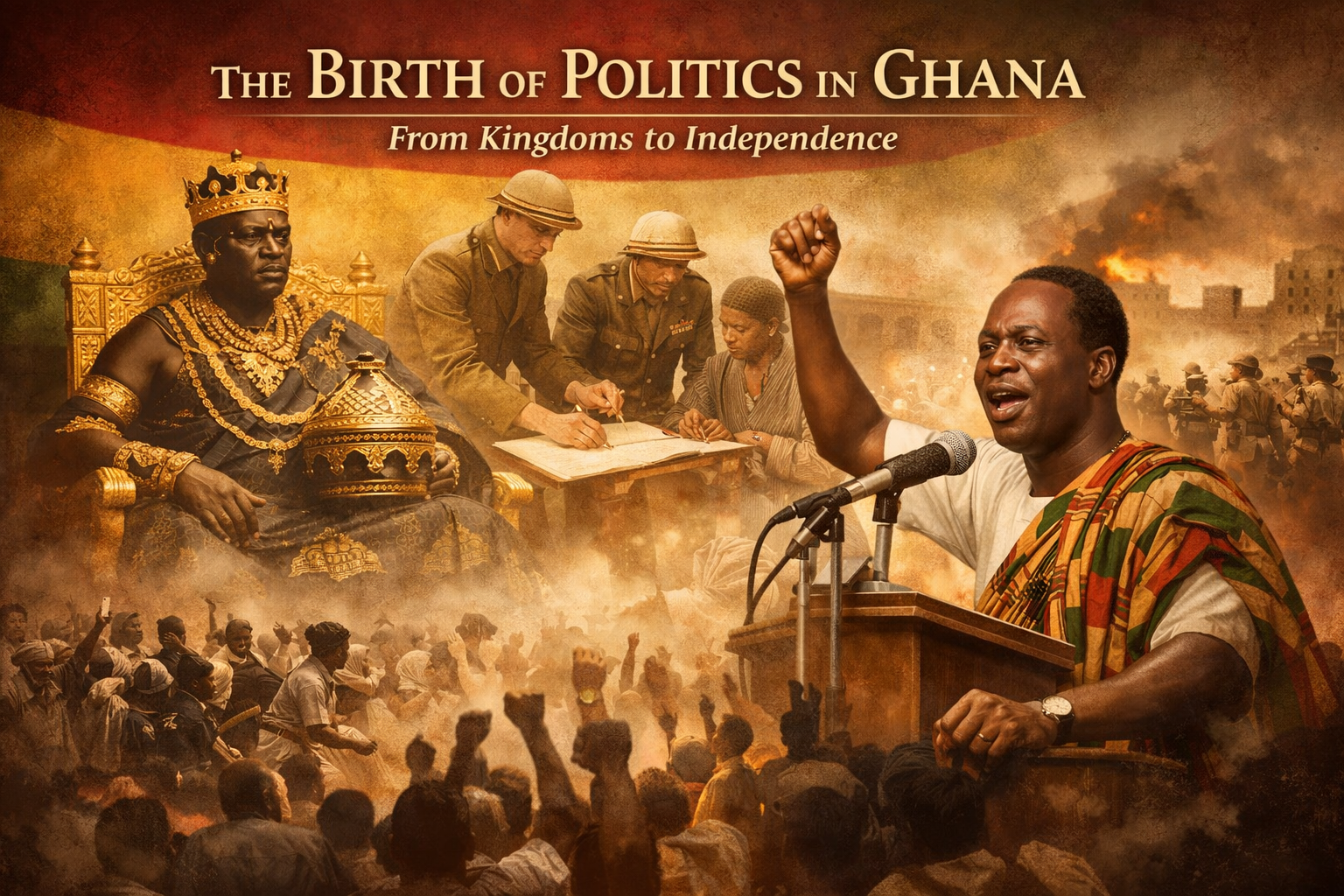
The birth of politics in Ghana is therefore a story of African statecraft, colonial resistance, intellectual nationalism, and ultimately self-rule.
1. Indigenous Political Systems Before European Contact (Pre-1400s)
Chieftaincy and State Formation
Early Ghanaian societies were organized around centralized and decentralized political systems:
- Akan States (Bono, Akwamu, Denkyira, Asante)
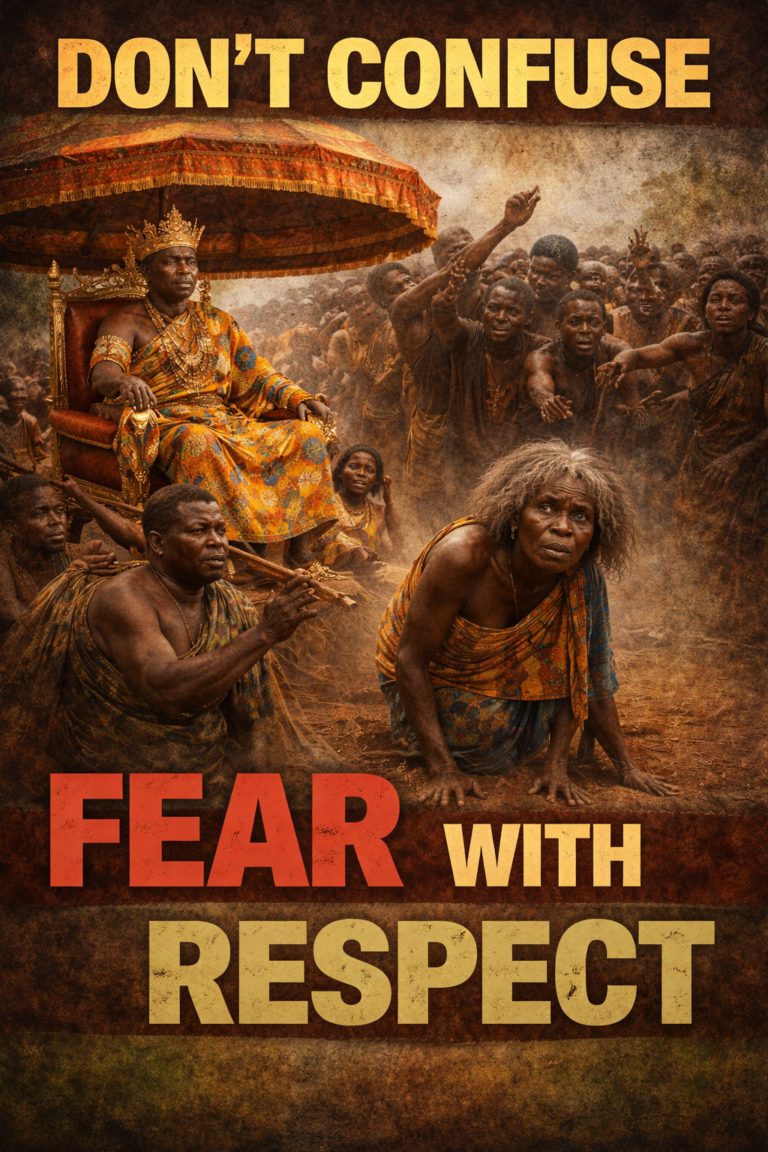
Governed by kings (Omanhene), councils of elders, and queen mothers (Ohemaa).
Power was not absolute—leaders ruled by consent and could be removed. - Dagbon Kingdom (Northern Ghana)
Ruled by the Ya-Na, with a structured hierarchy of chiefs and land custodians (Tindanas). - Ewe States (Anlo, Peki)
More decentralized, emphasizing council governance and consensus.
➡️ Key Political Principle: Accountability, collective decision-making, and customary law—an early form of democracy.
2. Politics Through Trade and Diplomacy (1400s–1800s)
European Contact and Political Shifts
The arrival of the Portuguese in 1471 introduced new political dynamics:
- Coastal chiefs negotiated treaties
- Forts such as Elmina Castle (1482) became centers of power
- Chiefs gained firearms, altering internal politics
Asante Empire – Africa’s Political Powerhouse
By the 18th century, the Asante Empire emerged as one of Africa’s most advanced political systems:
- Asantehene as constitutional monarch
- Asanteman Council acted as parliament
- Golden Stool (Sika Dwa Kofi) symbolized national sovereignty
➡️ The Asante political model rivaled European states in organization and legitimacy.
3. Colonial Rule and the Birth of Modern Politics (1821–1900)
British Colonial Administration
In 1821, Britain took formal control of the Gold Coast.
- Indigenous rulers were subordinated
- Laws imposed without African representation
- Economic exploitation intensified
Early Political Resistance
Key moments:
- Bond of 1844 – Chiefs were forced into legal agreements
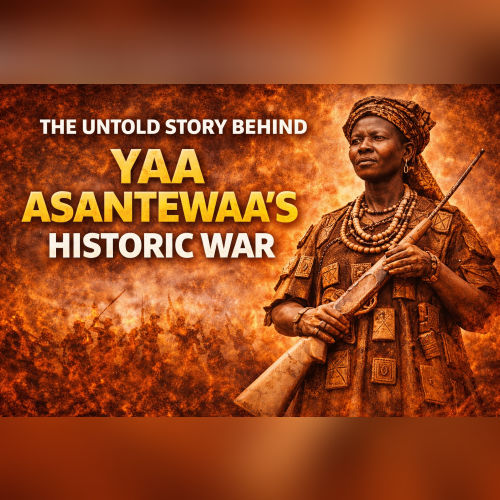
- Yaa Asantewaa War (1900) – Armed political resistance against British authority
➡️ Politics became a struggle between colonial authority and African sovereignty.
4. Rise of Educated Elites and Political Consciousness (1890s–1930s)
The Birth of Organized Political Thought
Western education produced lawyers, journalists, and teachers who demanded reforms.
Aborigines’ Rights Protection Society (ARPS) – 1897
- First organized political pressure group
- Opposed land expropriation by the colonial government
- Used petitions, newspapers, and legal arguments
Newspapers as Political Weapons
- Gold Coast Aborigines
- The African Morning Post
- The Accra Herald
➡️ Journalism became the backbone of political mobilization.
5. Political Parties and Mass Nationalism (1940s–1957)
United Gold Coast Convention (UGCC) – 1947
Founded by:
- J.B. Danquah
- Paa Grant
- George Grant
Goal: Self-government in the shortest possible time
Kwame Nkrumah and the CPP
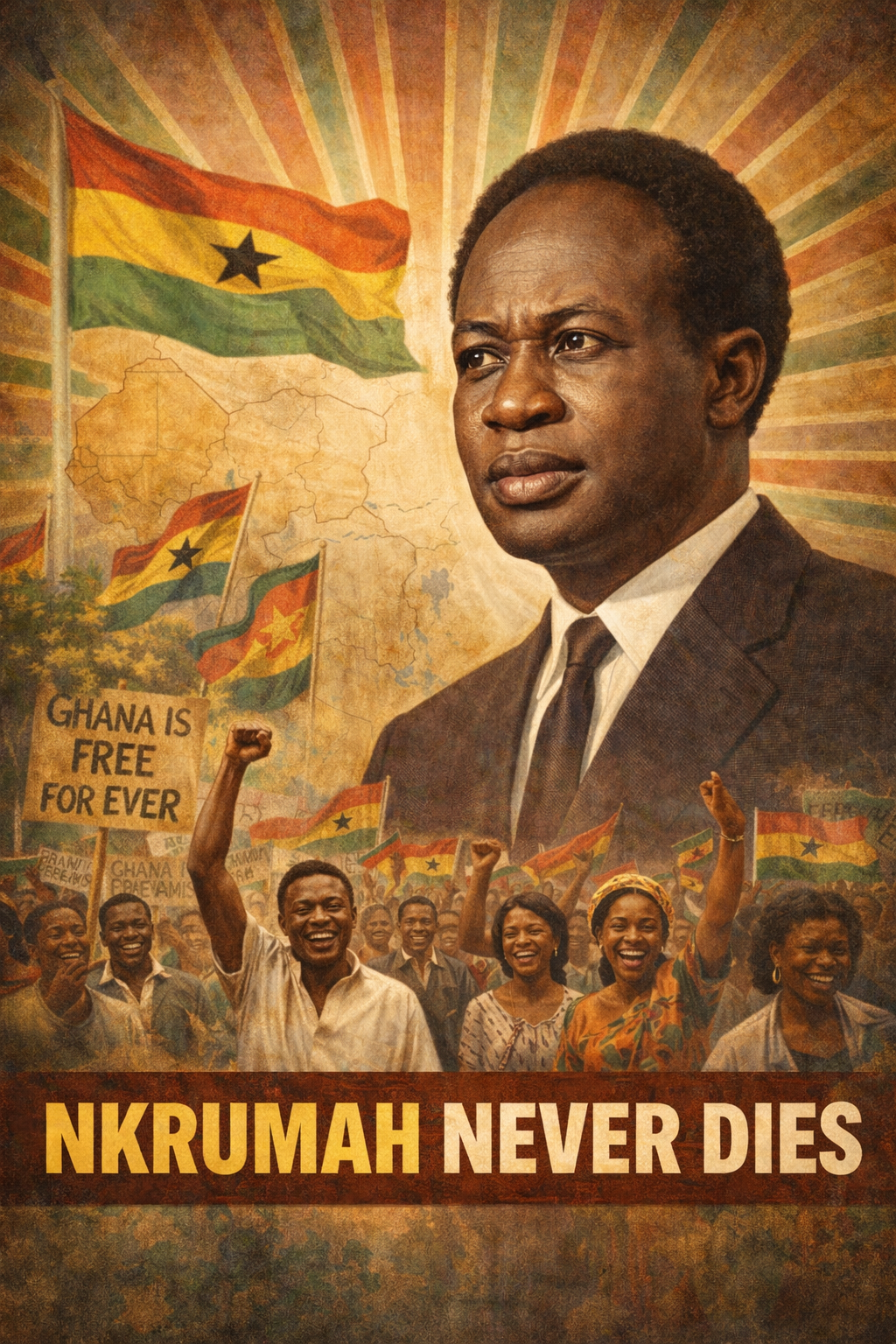
- Nkrumah formed the Convention People’s Party (CPP) in 1949
- Introduced mass politics: rallies, slogans, youth movements
- Slogan: “Self-Government Now!”
1948 Accra Riots
- Ex-servicemen protest
- British repression sparks nationwide political awakening
➡️ Politics moved from elite circles to the streets.
6. Independence and the Birth of the Ghanaian State (1957)
6 March 1957
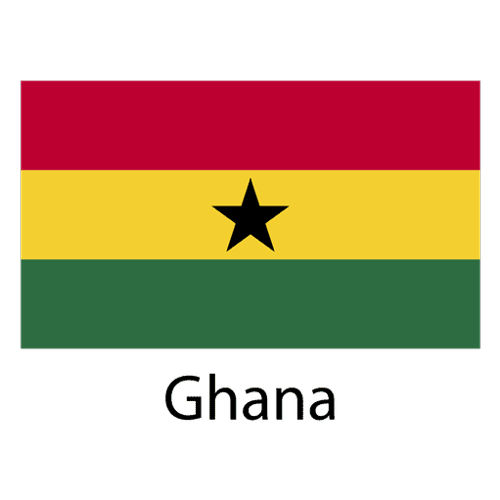
The Gold Coast became Ghana, the first sub-Saharan African country to gain independence.
Key political achievements:
- African-led government
- Republican constitution (1960)
- Pan-African leadership
Kwame Nkrumah declared:
“The independence of Ghana is meaningless unless it is linked up with the total liberation of Africa.”
7. Post-Independence Politics: Coups, Constitutions, and Democracy (1966–1992)
Military Interventions
- 1966: Nkrumah overthrown
- A series of coups destabilized governance
Return to Constitutional Rule
- 1992 Constitution
- Multi-party democracy restored
Since then:
- Peaceful transfers of power
- Strengthening institutions
- Political pluralism
The Soul of Ghanaian Politics
Ghana’s political history is not borrowed—it is rooted in African governance, sharpened by colonial resistance, and refined through democratic struggle.
From the Golden Stool to the ballot box, Ghana’s politics tells a story of power with accountability, resistance with intellect, and leadership with vision.
Watch the full video on YouTube – https://youtu.be/eoeo-rSQDAo