



African soldiers and the spread of football

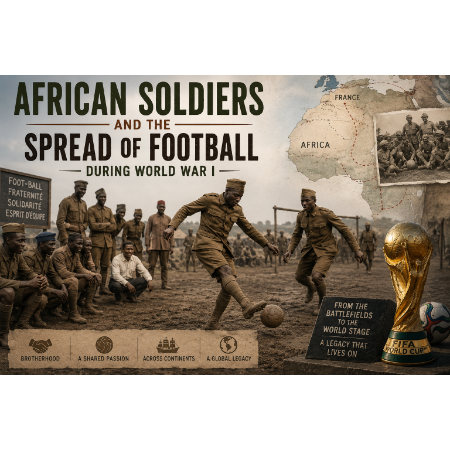
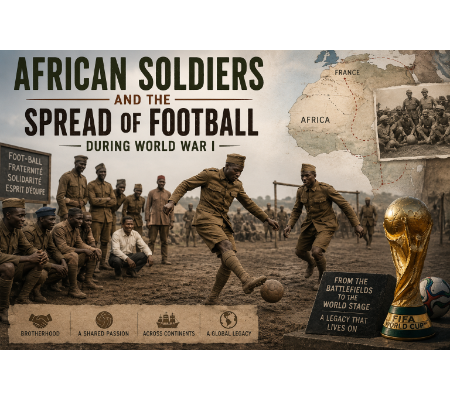
African Soldiers and the Spread of Football During World War I

When historians discuss the global spread of football, the story is often told through familiar names and places: English schools, British sailors, South American ports, and European clubs. Yet hidden within the trenches, military camps, and colonial regiments of the First World War lies another powerful chapter — one written by African soldiers. During World…
Read More

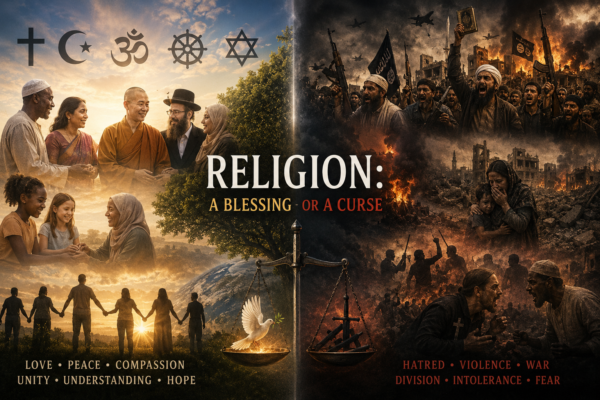
Religion: A Blessing or a Curse, A Boon or a Bane?

The world today is full of religions. By merely casting a cursory glance around us, we encounter Christians and Christianity, Hindus and Hinduism, Muslims and Islam, atheists, agnostics, traditionalists, Zionists, Jews and Judaism, Confucianists and Confucianism, Shintos and Shintoism. Religion, as sociologists and comparative cultural anthropologists remind us, is a social institution and a cultural…

Read More

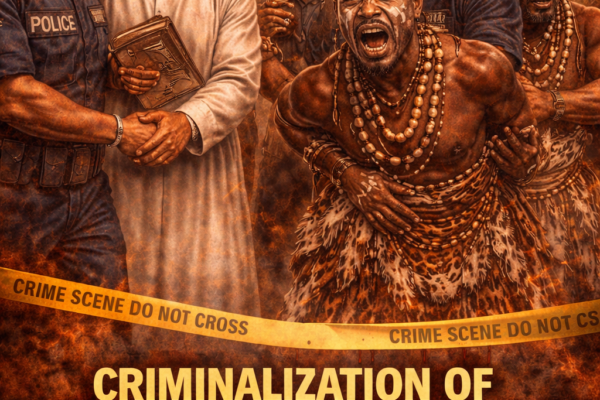
Criminalizing Witchcraft Accusations in Ghana: Prospects, Limits, and the Logic of Deterrence

Introduction The question of whether the criminalization of witchcraft accusations would have any meaningful impact in Ghana requires careful and systematic analysis. At present, witchcraft accusations are largely non-criminal, meaning there are no specific laws prohibiting individuals from accusing others of being witches. As a result, those who make such accusations do not face arrest,…

Read More

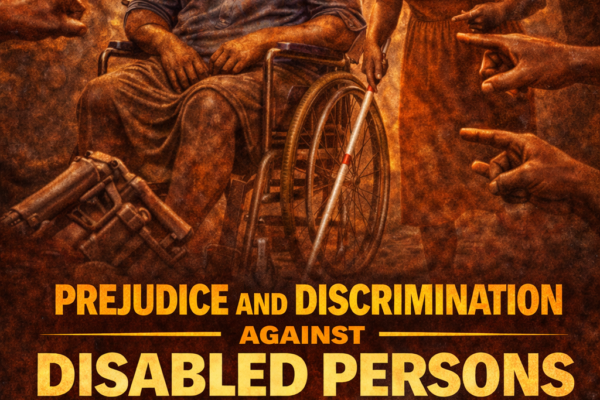
Prejudice and Discrimination Against Disabled People in Ghana

In every society, including Ghana, there exist disabled people living with various forms of disability. These disabilities take many shapes and forms. Some are physical, affecting mobility, sight, hearing, or bodily function. Others are mental or psychological, influencing cognition, emotional regulation, or social interaction. Disability is not confined to any particular group in society; it…

Read More

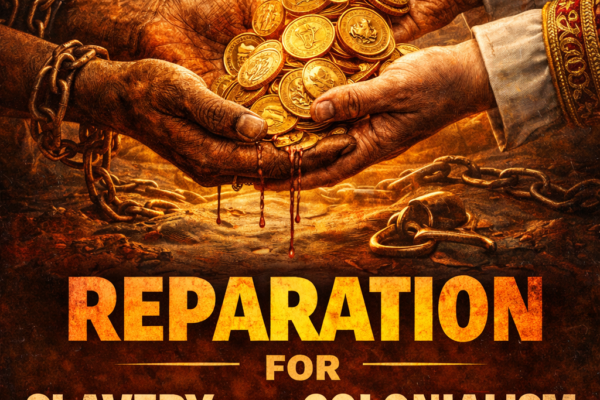
The Case for Reparation: Reparative and Restorative Justice Are Neither New nor Novel

“Reparation” as an idea or concept refers to the act of making amends for a wrong or injury—especially by providing compensation, restitution, or other forms of redress to those who have been harmed. In its simplest sense, reparation means “repairing the damage” caused by an injustice. In more formal or scholarly terms, reparation can take…

Read More

How Rules Become Laws: Examples from Ghana

Rules, Laws, and Social Order All human societies are governed by rules. These rules regulate behavior by defining what individuals may do and what they must refrain from doing. Without such rules, social life would be chaotic, unpredictable, and ultimately unsustainable. Rules make social interaction possible by creating order, stability, and mutual expectations among members…

Read More

There Is No Superior Culture — And No Inferior One

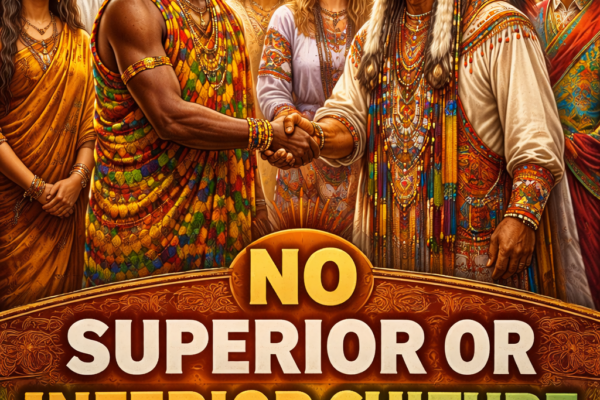
Let’s be clear from the outset: no culture is superior to another, and no culture is inferior. This should not be a controversial statement in the 21st century—yet, in practice, it still is. Culture remains one of the most misunderstood concepts in public discourse. When people misunderstand culture, they don’t just get definitions wrong—they get…

Read More

Ghana’s Quiet Strength: Understanding the Foundations of a Peaceful Nation

A Nation Defined by Peace In a region and continent that have, at various historical moments, been scarred by conflict and instability, Ghana stands out as a compelling example of relative peace. Since gaining independence in 1957, the country has largely avoided the large-scale civil wars that have afflicted some of its neighbors. While no…

Read More

GHANA: God Has Anointed the Nation Already — A Nation Richly Blessed

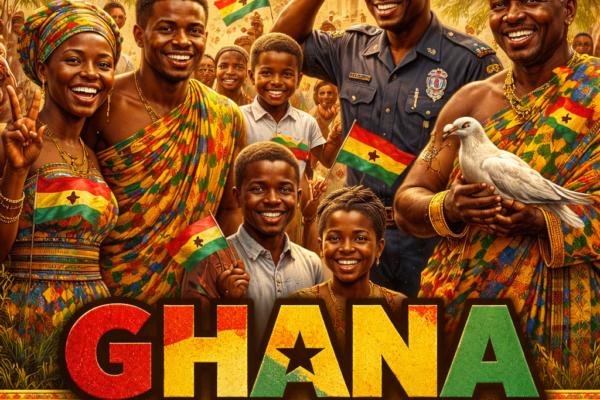
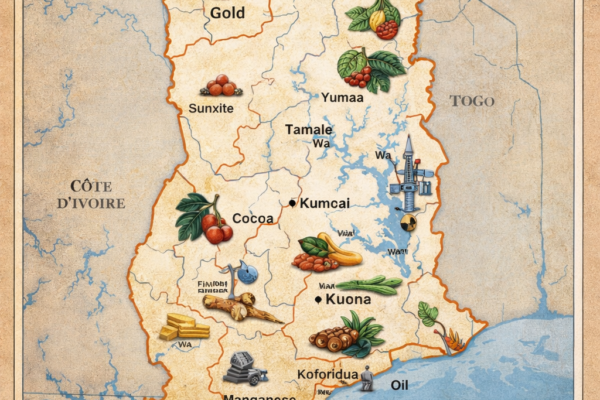
Ghana stands for “God Has Anointed the Nation Already.” Many Ghanaians see their country not merely as a geographical territory in West Africa, but as a land endowed with immense natural, human, and spiritual blessings. From abundant mineral wealth to fertile agricultural lands and a vibrant population of educated citizens, Ghana possesses many of the…

Read More

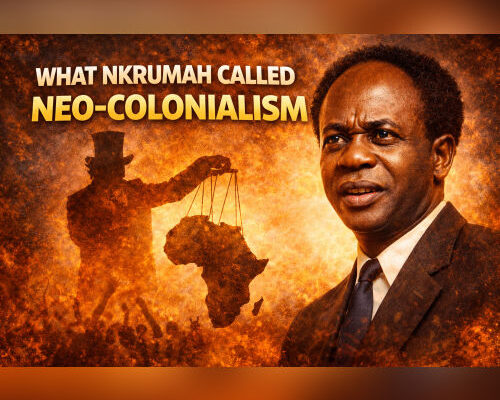
What Nkrumah Liked to refer to as Neo-colonialism

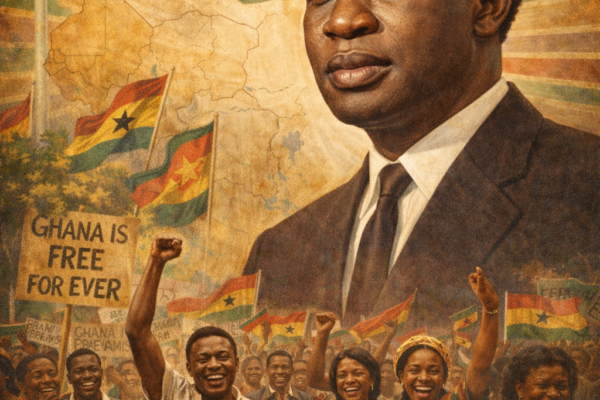
In the years following Ghana’s independence in 1957, one of the most influential political and intellectual concepts articulated by Kwame Nkrumah was “neo-colonialism.” For Nkrumah, independence did not mark the end of foreign domination in Africa. Instead, he argued that a new, more subtle form of control had emerged—one that operated through economic power, political…

Read More

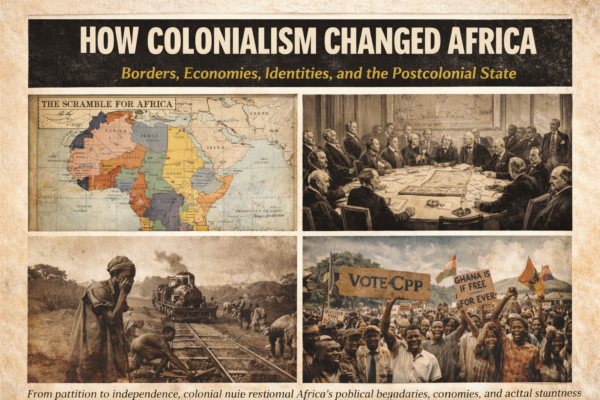
How Colonialism Changed Africa

The Slave Trade and Demographic Devastation When we talk about Africa today—its borders, its languages, its religions, its politics—we are also talking about colonialism. The Africa we know in the twenty-first century did not emerge naturally from the past. It was profoundly shaped by centuries of foreign intrusion, exploitation, and rule. To understand present-day Africa,…

Read More

Africa: Myths and Realities

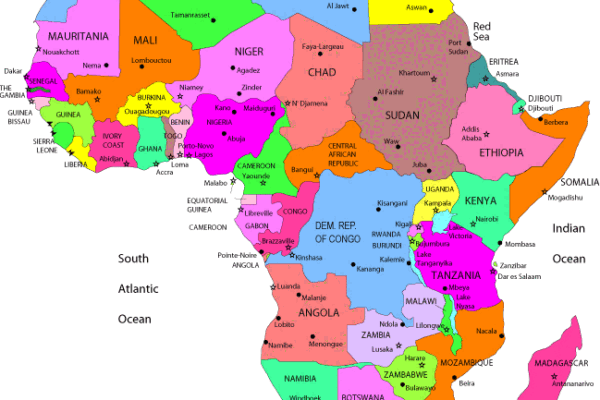
Africa is still the “dark continent” to many people. In spite of its immense size, large population, vast mineral and agricultural resources, militarily strategic location, and tremendous development potential, Africa is undeniably the most misunderstood continent. Very few non-natives of the continent know much about its geography, its peoples, its culture, or its politics. What…

Read More