


The emergence of Ghana as an independent nation in 1957 was not only a political milestone but also a global media event. Newspapers—both local and international—played a decisive role in announcing the birth of the new state to the world. Through headlines, editorials, photographs, and diplomatic reporting, the press transformed Ghana’s independence from a regional constitutional transition into an international symbol of African self-determination. In this way, journalism became a powerful bridge connecting the former Gold Coast to global audiences and shaping how the world understood the significance of its freedom.
The Media Environment Before Independence
By the early 1950s, the Gold Coast had developed one of the most vibrant press cultures in colonial Africa. A combination of missionary printing traditions, rising literacy, and nationalist activism had produced a network of newspapers that actively engaged in political discourse.
African-owned newspapers became particularly influential during the independence struggle. Publications such as the West African Pilot and local Gold Coast papers provided extensive coverage of constitutional reforms, elections, labor movements, and nationalist campaigns.
These newspapers did more than inform—they actively advocated for independence, framing the political struggle as part of a broader global movement against colonialism.
International Press Attention
As independence negotiations progressed in the mid-1950s, international newspapers began closely monitoring developments in the Gold Coast. Major British, American, and European publications recognized that the territory’s transition represented a turning point in colonial history.
Foreign correspondents were dispatched to Accra to report on political tensions, electoral victories, and constitutional changes. Their reporting emphasized the Gold Coast’s relative political stability compared to other colonies, highlighting it as a model for peaceful decolonization.
International press coverage framed the impending independence as a test case for whether African nations could successfully govern themselves after colonial rule.
The Role of Nationalist Media Strategy
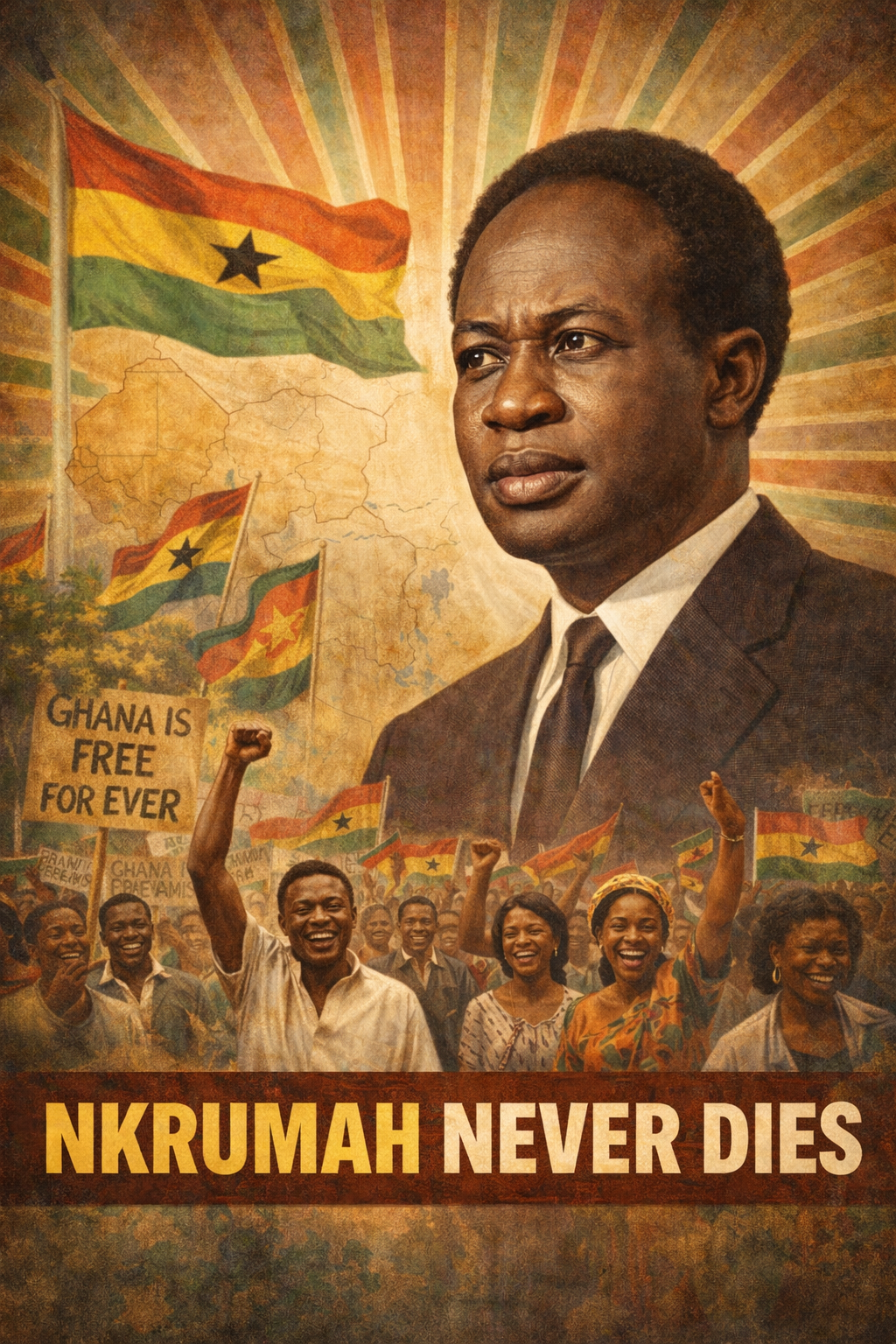
Nationalist leaders understood the importance of global media visibility. Political figures such as Kwame Nkrumah actively cultivated relationships with journalists to ensure that the independence movement received favorable international coverage.
Press conferences, public rallies, and carefully staged political events were designed to attract media attention. Nationalist newspapers emphasized themes of unity, democratic legitimacy, and economic potential to counter colonial stereotypes about African governance.
This strategic engagement with the press helped shape a positive international narrative about Ghana’s readiness for independence.
Reporting the Night of Independence
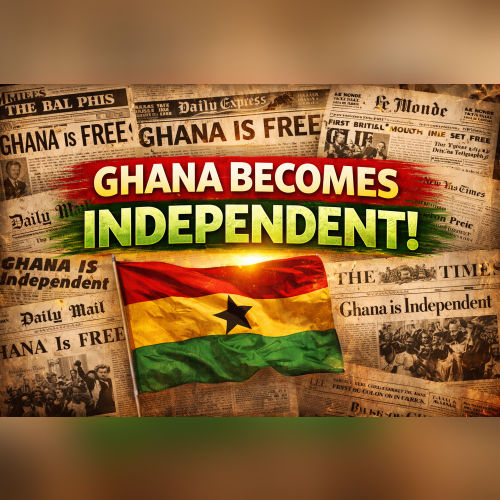
On March 6, 1957, newspapers around the world carried dramatic headlines announcing the birth of Ghana. Journalists documented the historic ceremony in Accra, particularly the symbolic lowering of the British Union Jack and the raising of the Ghanaian flag at Independence Square.
Reports described the atmosphere of celebration, the presence of foreign dignitaries, and Nkrumah’s declaration that Ghana’s freedom marked a new chapter not only for the country but for Africa as a whole.
Photographs of jubilant crowds, illuminated monuments, and ceremonial parades were widely circulated, visually reinforcing the narrative of a triumphant national awakening.
Global Political Framing
International newspapers framed Ghana’s independence within broader geopolitical contexts. In the Cold War environment of the 1950s, Western media often portrayed Ghana as an important ally in maintaining democratic stability in Africa.
Meanwhile, newspapers in newly independent Asian and Middle Eastern countries highlighted Ghana as evidence of the global decline of European imperialism.
Across Africa, nationalist publications celebrated Ghana’s independence as a milestone that inspired anti-colonial movements in other territories. The press thus positioned Ghana as a symbolic leader of continental liberation.
Shaping Ghana’s International Identity
The global press coverage of independence played a crucial role in shaping Ghana’s international identity. Newspapers portrayed the country as progressive, politically organized, and rich in cultural heritage.
This positive framing helped attract diplomatic recognition, foreign investment, and international partnerships in the early years of independence.
Moreover, the press emphasized Ghana’s commitment to Pan-Africanism, reinforcing its leadership role in advocating for continental unity and decolonization.
Long-Term Historical Significance
The role of newspapers in announcing Ghana to the world has had lasting historical implications. Archival press coverage remains a primary source for historians studying the independence era.
These records provide detailed insights into global perceptions of African self-rule and the evolving narratives of decolonization.
They also illustrate how media coverage can shape international legitimacy for newly independent states.
Conclusion
Newspapers were instrumental in announcing Ghana’s independence to the world, transforming a national political event into a global historical moment. Through strategic nationalist media engagement, extensive international reporting, and powerful visual documentation, the press helped construct Ghana’s identity as a symbol of African freedom and political possibility.
In doing so, journalism not only recorded history—it actively participated in shaping how Ghana’s emergence was understood, remembered, and celebrated across the world.