





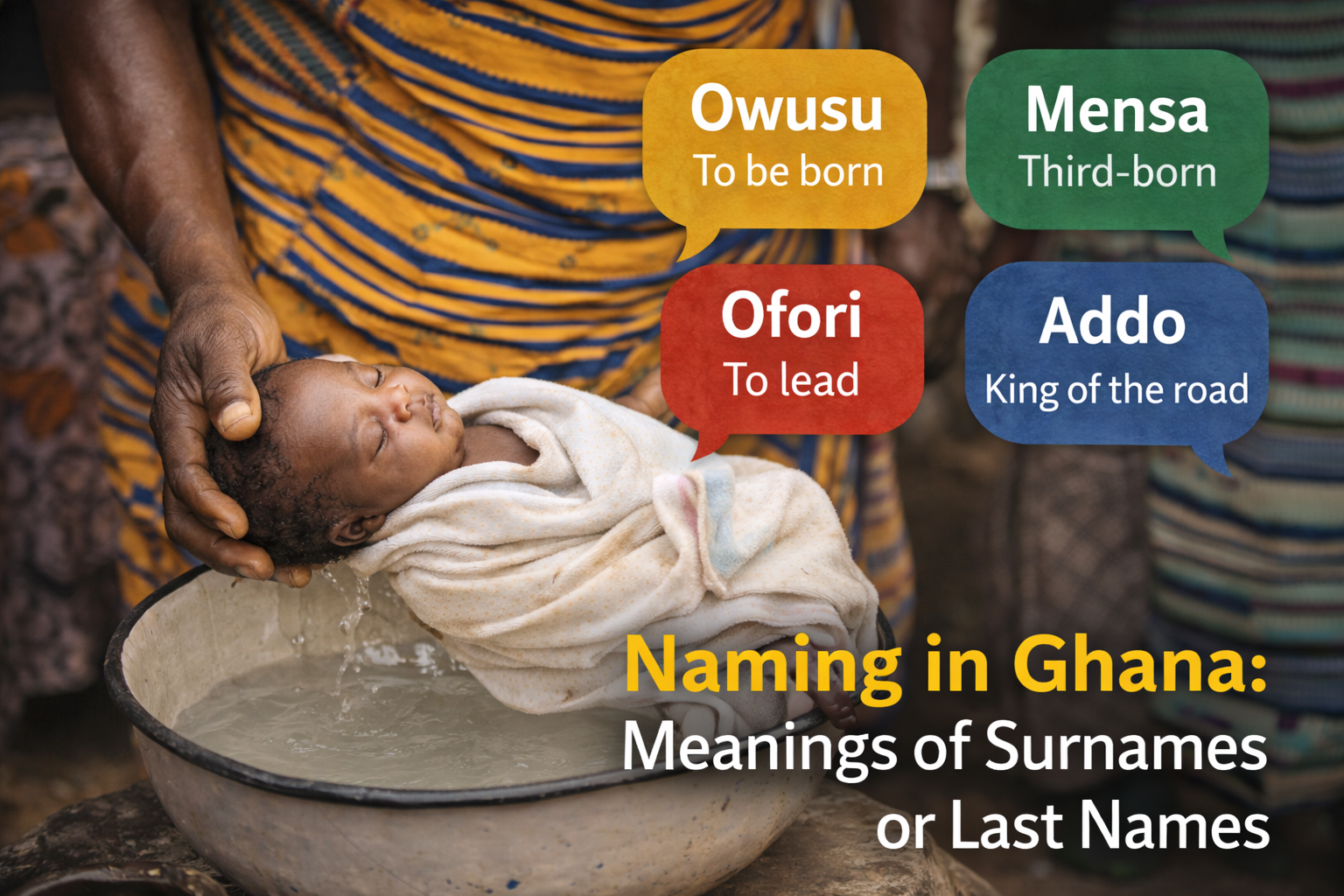
In Ghanaian society, names are never random. A name is a story, a memory, a prayer, a verdict on experience, or a declaration of destiny. Ghanaian surnames—particularly Akan surnames—carry deep cultural meanings that often encode family history, spiritual beliefs, social struggles, and moments of triumph.
Some names appear straightforward on the surface, yet even these require probing to fully grasp why a child was given that particular name. Others demand deeper inquiry—into lineage history, past misfortune, spiritual intervention, or the emotional state of parents at the time of birth. To ask about a person’s name in Akan society is, therefore, to invite a narrative.
Below are selected Akan surnames and what they signify.
Nyamekyɛ — “A Gift from God”
Example: Kwasi Nyamekyɛ
This name is typically bestowed upon a child born after prolonged infertility, repeated miscarriages, or the loss of previous children. The child is understood as divinely granted—an unmistakable act of grace from God (Nyame). The name publicly acknowledges gratitude and divine intervention.
Ababio — “One Who Has Returned”
Example: Kwame Ababio
Ababio reflects the Akan belief in reincarnation. The name suggests that the child is believed to be the return of a deceased relative—often a grandparent or ancestor—who has come back to life within the lineage.
Afriyie / Afiriyie — “One Who Has Arrived at the Right Time”
Example: Yaa Afriyie
This name celebrates timing. The child’s birth coincided with a favorable or redemptive moment—perhaps after hardship, poverty, conflict, or sorrow. The arrival is interpreted as providential and restorative.
Abayie — “You Have Come at an Auspicious Time”
Closely related to Afriyie, Abayie emphasizes the positive transformation the child’s birth brings. The name often marks a turning point in family fortunes or emotional healing.
Owoahene — “One Who Gives Birth to Kings”
Example: Kwaku Owoahene
This name conveys prestige and lineage pride. It may reference a royal ancestry, leadership heritage, or the expectation that the family produces leaders. It is both descriptive and aspirational.
Dwete — “Silver”
Example: Kwame Dwetɛ
Silver symbolizes value, beauty, and worth. The name may reflect the child’s perceived preciousness, especially in families that have endured loss or hardship.
Sika — “Money”
Example: Afua Sika
Sika does not merely denote wealth; it often symbolizes hope for economic stability or recovery from poverty. The name may reflect parental aspirations or gratitude following improved fortunes.
Sono — “Elephant”
Example: Kofi Sono
The elephant is a symbol of strength, authority, endurance, and majesty in Akan culture. Naming a child Sono expresses a wish for power, resilience, and respectability.
Pɔnkɔ — “Horse”
Example: Yaw Pɔnkɔ
Horses historically symbolized nobility, warfare, and prestige. The name Ponko may reflect bravery, speed, or high status.
Bɛɛko / Bɛɛko — “Struggler” or “One Who Came to Fight”
Example: Yaw Berko
This is a powerful and sobering name. It suggests a life anticipated to be marked by struggle, hardship, or relentless effort. Such names often reflect the difficult circumstances surrounding birth or inherited family adversity.
Mensah / Mansah
Example: Kofi Mensah or Yaa Mansah
In Akan naming traditions, Mensah refers to the third consecutively born son in a family. When a family has three sons born in a row, the third son is given the name Mensah.
Similarly, Mansah refers to the third consecutively born daughter. When a family has three daughters born in succession, the third daughter is called Mansah.
Names as Social Texts
In Akan society, surnames function as compressed biographies. They speak of survival, belief, disappointment, hope, lineage, and destiny. To bear an Akan surname is to carry a narrative that precedes the individual and continues beyond them. Names do not merely identify; they interpret life. And in Ghanaian culture, to understand a person’s name is to begin to understand the person themselves.