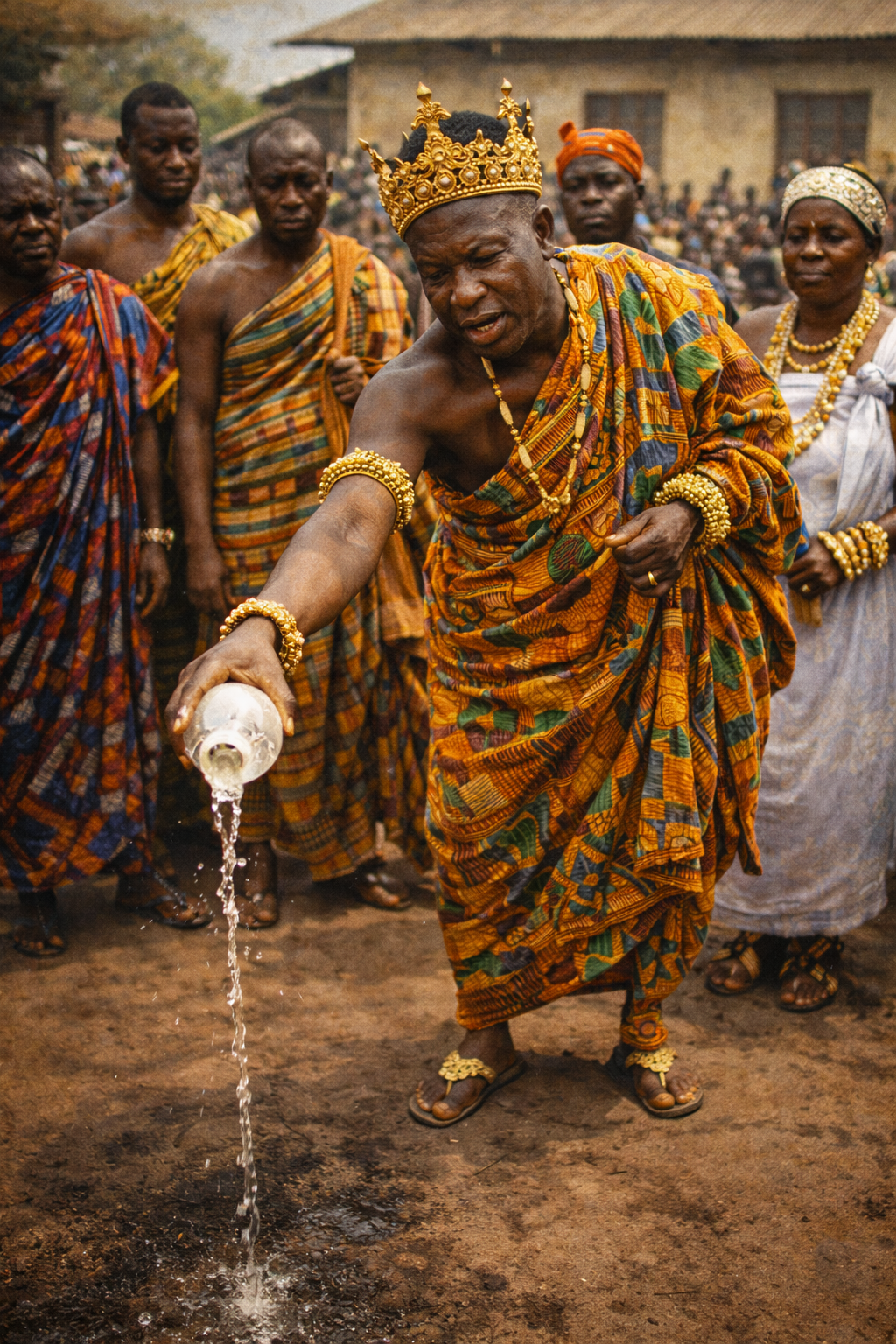








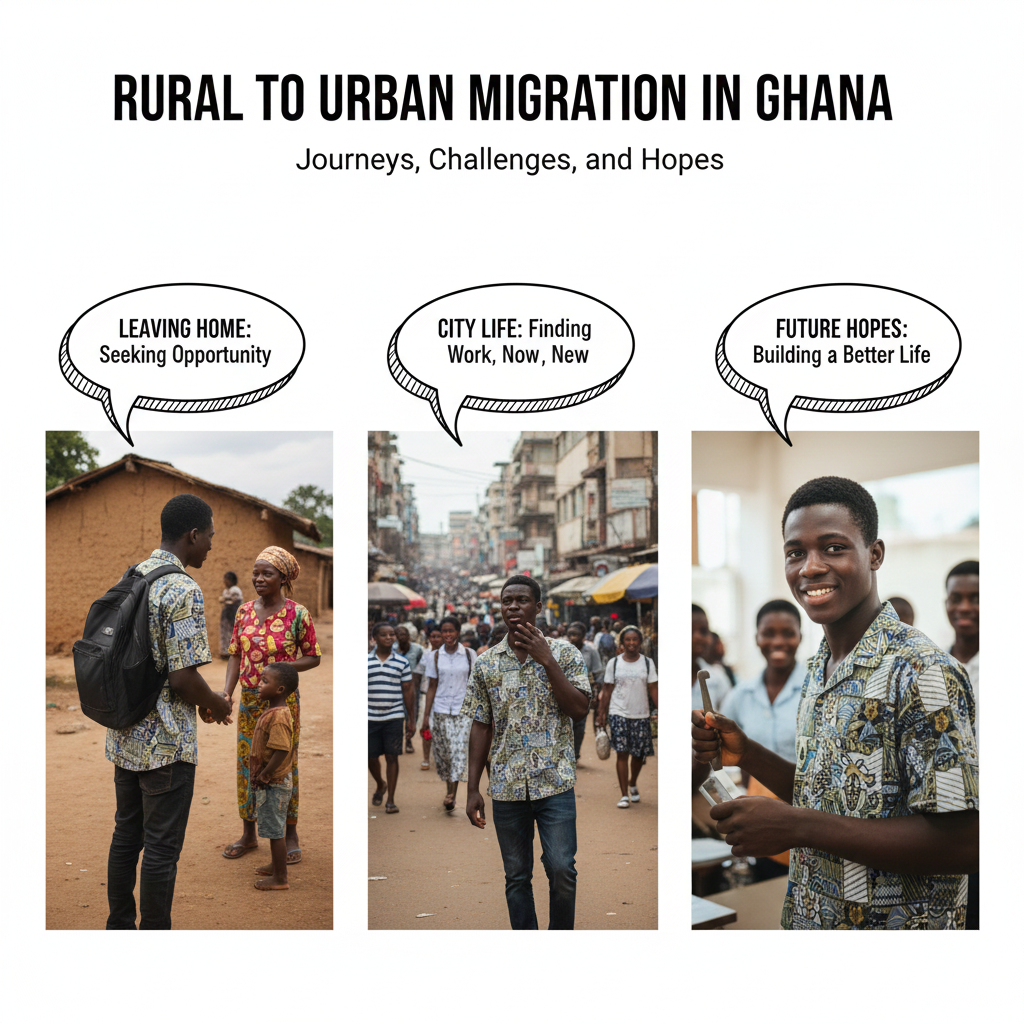
The causes of Rural–Urban Migration are major concerns of African governments like Ghana.
Across Ghana and much of Africa, a defining social transformation of the 21st century is the movement of people from the countryside to towns and cities. Every year, thousands of young people leave rural communities—villages and small towns—and migrate to urban centers like Accra, Kumasi, Takoradi, and Tamale in search of opportunities, services, and a better life.
This phenomenon, known as rural–urban migration, is driven by a combination of pressures that push people out of rural areas and attractions that pull them into cities. Understanding these forces can help policymakers, community leaders, and the public develop balanced responses that support both rural development and sustainable urban growth.
What “Rural” and “Urban” Mean
In Ghana’s demographic classification, rural areas generally refer to small towns and villages where agriculture remains the dominant occupation and infrastructure is limited. Urban areas include larger towns and cities with more advanced infrastructure, services, and economic opportunities.
According to the Ghana Statistical Service (GSS), more than 56 percent of Ghana’s population lived in urban areas in 2021, up from about 50 percent in 2010 — a significant shift that reflects growing internal migration and urbanization. CitiNewsroom.com
By 2025, projections indicate that nearly 20 million Ghanaians will reside in urban centers, illustrating how rapid urban growth continues to reshape the nation. theghanainsider.com
Push Factors: Why People Leave Rural Areas
1. Scarcity of Education and Training Opportunities
One of the most important drivers of rural–urban migration is the lack of secondary and tertiary educational institutions in rural areas. Senior high schools, technical institutes, polytechnics, and universities are concentrated in larger towns and cities. Young people often leave village life in order to pursue education — a fundamental step toward securing formal employment.
2. Limited Job Prospects
Formal employment opportunities—especially in government, administration, and modern sectors—are mostly found in urban areas. Few rural economies offer jobs in industry, commerce, services, or technology, making cities appear more promising for young job seekers.
According to studies of migration patterns in Ghana, young adults and working-age individuals are among the most likely to relocate to urban areas, drawn by the hope of employment and advancement.
3. Agriculture Is Not Enough
While agriculture remains the backbone of rural economies, it is increasingly seen as insecure and unappealing, especially when compared to city jobs. Farming depends on rainfall and soil fertility, and many households struggle with low yields, poverty, and irregular income. In northern Ghana, for example, climate change and erratic rainfall have pushed many families into poverty, prompting young women and men to leave home in search of work.
4. Harsh Living Conditions
Rural life can involve discomforts that contribute to migration pressures: poor roads, weak electricity coverage, limited health services, and exposure to pests and snakes. Such conditions make urban life—even in its harder forms—appear more attractive.
5. Social and Recreational Life
For Ghana’s youth, the lack of entertainment, night life, and social amenities in rural areas is a real pull toward cities. Urban centers offer cinemas, nightclubs, sports activities, modern restaurants, and a vibrant social scene that rural communities rarely provide.
Pull Factors: Why Cities Attract Migrants
1. Health and Social Services
Cities house the country’s major hospitals, specialist clinics, and diagnostic services. For rural residents facing serious medical needs, migrating to urban areas is often a necessity, not a choice. Once settled, many rural migrants remain in cities for both health and economic reasons.
2. Economic Opportunities
Urban centers are associated with diversified economic opportunities—from formal employment to informal trade, services, and entrepreneurship. This includes street vending, transport services, domestic work, and small-scale businesses. Even when jobs are scarce, the perceived chance of earning motivates many to relocate.
3. Relative Prestige and Exposure
Living in a city carries social prestige for many Ghanaians. Urban residence is often equated with modernity, education, and success, creating cultural as well as economic incentives to migrate.
Real-Life Migration Stories
The Kayayei Experience
One of the most visible faces of rural–urban migration in Ghana is the phenomenon of the kayayei — young female head porters who migrate primarily from northern and rural regions to work in major city markets.
Many of these young women—often between the ages of 10 and 25—leave farming villages due to declining agricultural viability, irregular rainfall, and crop failure. In Accra alone, estimates suggest there are over 160,000 kayayei, the majority of whom migrated to the city in search of work and income.
While working as porters, they carry heavy loads in markets such as Kaneshie, Makola, and Agbogbloshie. Yet life in the city is not always easy: many live in informal settlements with limited access to clean water, sanitation, and healthcare, and face daily exposure to exploitation and hardship.
Young Graduates and Job Aspirations
Another major group of migrants are young graduates from rural senior high schools and tertiary institutions who move to cities like Accra and Kumasi in search of jobs. Many find that formal employment is limited, leading them into informal work, contract labor, or self-employment.
Many of these graduates leave home at great sacrifice, investing time and money into education with the hope that urban relocation will lead to secure jobs and upward mobility. For some, this hope remains unfulfilled, yet the pattern of moving to cities persists because rural opportunities remain even more limited.
Urban Growth and Its Challenges
The rapid shift from rural to urban residency has implications for social development. More than half of Ghanaians now live in urban areas, and projections suggest this proportion will increase further as migration continues and cities expand. CitiNewsroom.com+1
Cities like Accra and Kumasi now face mounting pressure on housing, sanitation, transportation, education systems, and healthcare infrastructure. Informal settlements and slums have grown as urban populations rise faster than municipal services can keep up. CitiNewsroom.com
Conclusion: Toward Balanced Development
Rural–urban migration in Ghana is not merely a youth fad or a temporary trend—it reflects deep structural inequalities in access to education, healthcare, jobs, infrastructure, and social services.
While migration can expand individual opportunities and contribute to national economic growth, it also poses governance challenges and puts pressure on urban systems. To respond effectively, Ghana must invest in rural development—strengthening schools, healthcare facilities, roads, and economic opportunities—so that rural residents can choose where to live rather than being compelled to migrate by necessity.
The future of Ghana depends not only on thriving cities but also on resilient and prosperous rural communities.