





The Slave Trade and Demographic Devastation
When we talk about Africa today—its borders, its languages, its religions, its politics—we are also talking about colonialism. The Africa we know in the twenty-first century did not emerge naturally from the past. It was profoundly shaped by centuries of foreign intrusion, exploitation, and rule. To understand present-day Africa, we must first understand how colonialism transformed it.
The story begins even before formal colonial rule. Between the 15th and 19th centuries, European powers such as Portugal, Britain, France, and Spain participated in the transatlantic slave trade. Millions of Africans were captured, sold, and shipped across the Atlantic Ocean to work on plantations in the Americas. They were not volunteers. They were forcibly taken from their homes, families, and communities.
This mass removal of people had devastating consequences. Entire regions were depopulated. The majority of those captured were young and strong—men and women in their productive years. These were farmers, blacksmiths, warriors, mothers, and future leaders. Their absence weakened local economies and social structures. Communities lost not only their numbers but also their strength and stability.
The slave trade also fueled violence within Africa. Some groups were armed and encouraged to raid others. Warfare increased. Suspicion and mistrust spread. The long-term damage was enormous. Even before the formal conquest of Africa by European powers, the continent had already been deeply wounded.
The Scramble for Africa and Artificial Borders
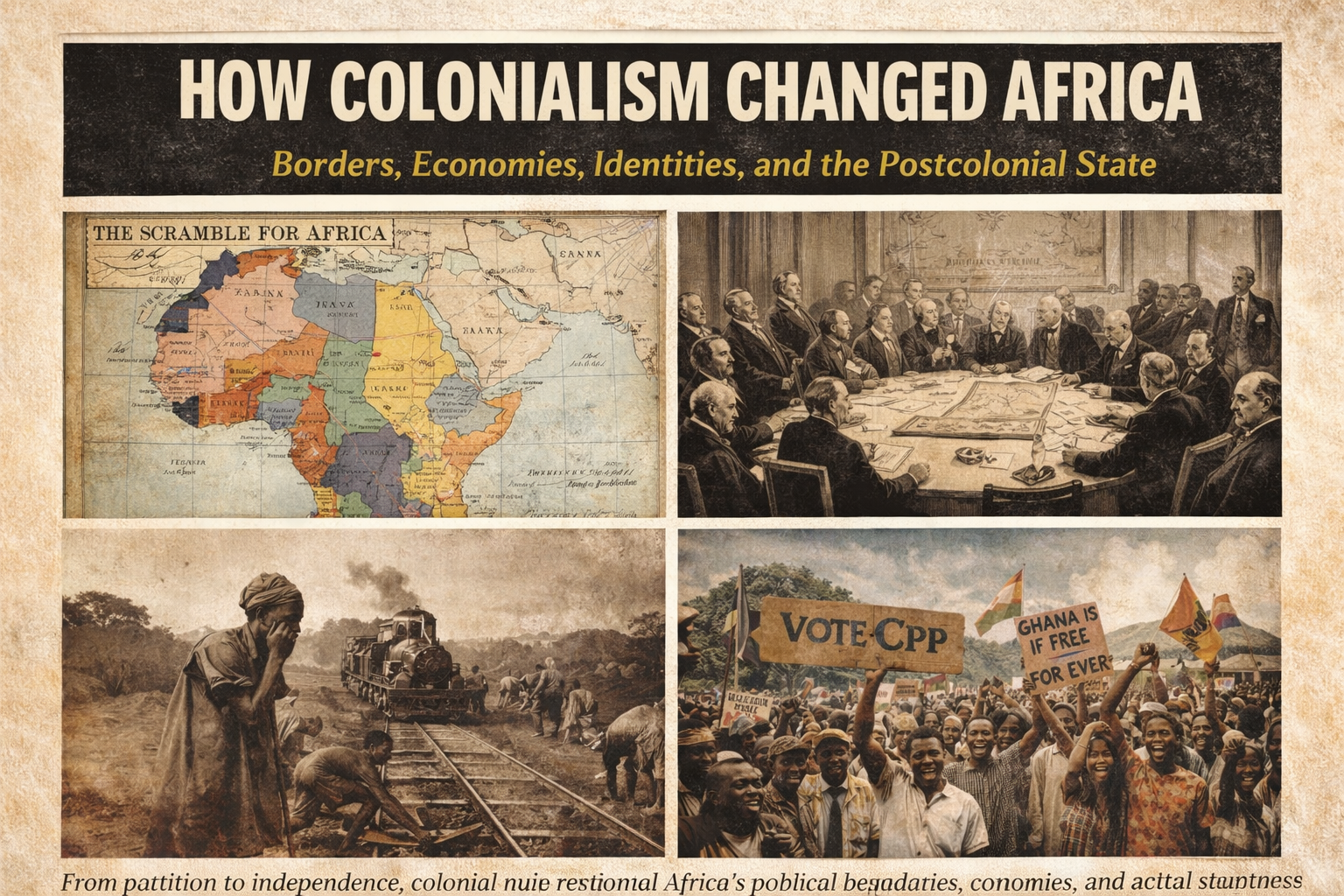
Then came the period known as the “Scramble for Africa.” In 1884–1885, European leaders met in Germany at the Berlin Conference. No African leaders were invited. Yet at this meeting, European powers divided Africa among themselves. They drew borders on maps, claiming territories as colonies.
Before this division, Africa was home to powerful kingdoms, empires, city-states, and communities with their own political systems. After the Berlin Conference, nearly the entire continent was under European control. The borders that were drawn during that period remain largely in place today. Africa now has 54 independent countries—but most of these countries inherited colonial boundaries.
These borders often made little sense. They did not follow ethnic lines, linguistic lines, or historical alliances. Some ethnic groups were split into two or three different countries. For example, one part of a community might find itself in one colony, while another part was placed in a different one. Families were separated. Cultural unity was disrupted.
At the same time, rival groups that had historically lived apart were sometimes forced into a single colony. After independence, these forced unions sometimes led to tension, competition for power, and even conflict. Many of the political struggles seen in post-independence Africa have roots in these colonial boundaries.
Cultural Transformation and Language
Colonialism did not only redraw maps. It also reshaped culture.
European powers introduced their own languages as official languages. In former British colonies, English became the language of government and education. In former French colonies, French took that role. In Portuguese colonies, Portuguese dominated public life.
Today, many Africans speak these European languages fluently. In fact, for some Africans born in cities, English or French may be their strongest language. In some cases, younger generations cannot speak their ancestral language well. This is one of the most lasting cultural changes brought by colonialism.
European languages became linked to power, education, and opportunity. To get a government job, to attend university, or to participate in national politics, one usually had to master the colonial language. Indigenous languages were often pushed to the margins, used at home or in informal settings but not always respected in official spaces.
At the same time, colonial languages sometimes served as a bridge. In countries with dozens or even hundreds of ethnic groups, a common official language could help people communicate across ethnic lines. Still, the dominance of foreign languages remains a powerful reminder of colonial rule.
Religious Change and Missionary Expansion
Religion also changed dramatically.
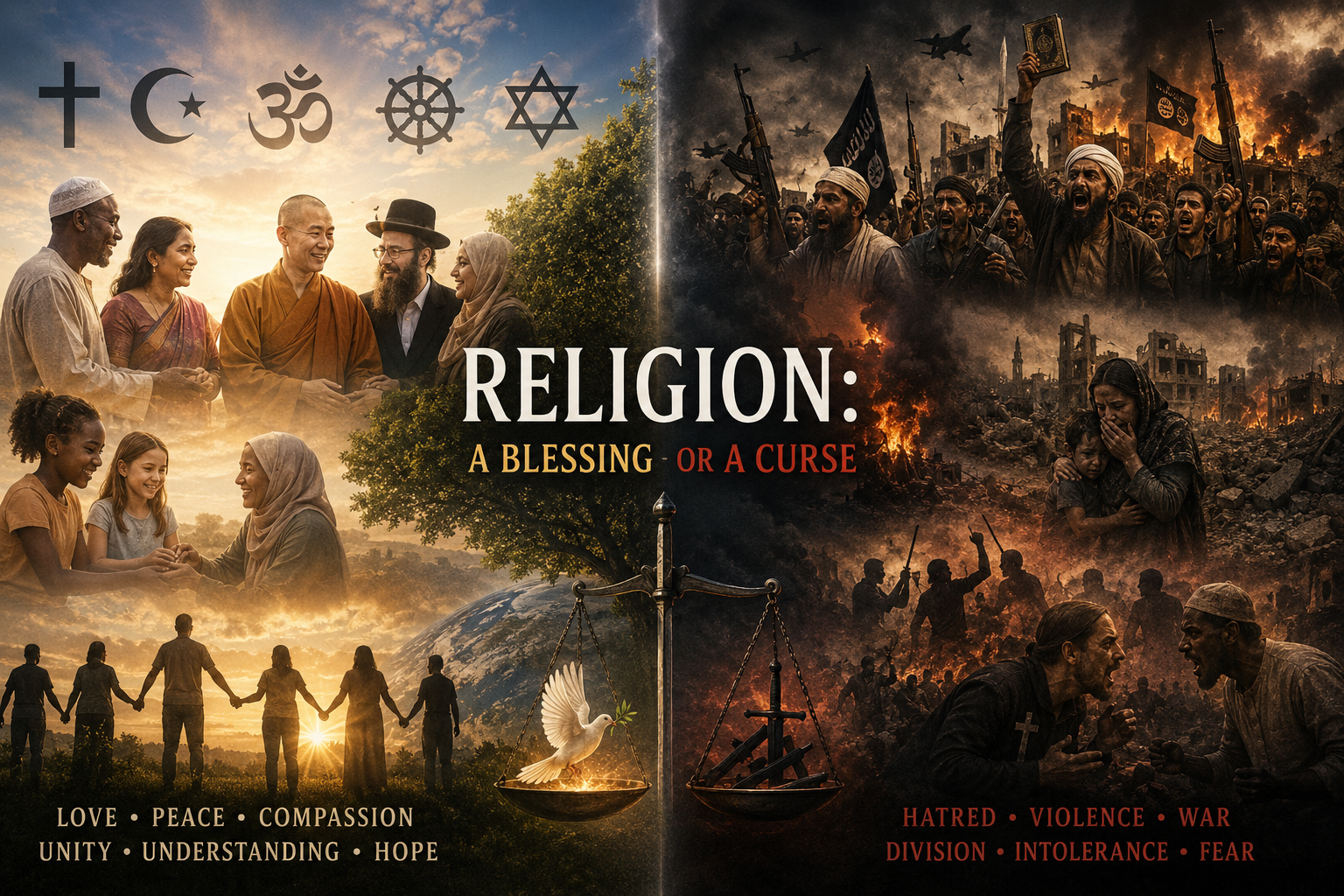
Before European colonization, Africans practiced a wide range of traditional religions rooted in local culture, ancestors, and spiritual beliefs. Islam had already spread widely in North and parts of West and East Africa through trade and scholarship. However, during colonial rule, Christian missionaries expanded their work across the continent.
Missionaries built churches and schools. Conversion to Christianity often went hand in hand with formal education. In many areas, mission schools became the main route to literacy and advancement. Over time, Christianity grew rapidly. Today, Africa is home to some of the largest Christian populations in the world.
This religious shift reshaped moral values, social norms, and even daily practices. In some cases, traditional religious practices were discouraged or labeled as backward. Indigenous spiritual systems did not disappear, but they were often transformed, blended with Christianity, or pushed underground.
Economic Restructuring and Dependency
Colonialism also restructured African economies.
Before colonial rule, many African societies were engaged in agriculture, trade, craft production, and regional exchange. Colonizers reorganized economies to serve European interests. Colonies were encouraged—or forced—to produce raw materials for export: cocoa, rubber, cotton, gold, palm oil, and later minerals and oil.
Infrastructure such as railways and ports was built, but mainly to transport goods from the interior to the coast for shipment to Europe. Little attention was given to developing industries within Africa itself. As a result, many African economies became dependent on exporting raw materials and importing finished goods.
This pattern has had long-lasting effects. Even today, many African countries rely heavily on the export of a few commodities. When global prices drop, their economies suffer. The structure of colonial economic policy left a deep imprint.
Political Centralization and Post-Independence Challenges
Politically, colonial governments centralized authority. Traditional systems of governance were weakened or reshaped to fit colonial administrative needs. In some areas, colonial rulers governed indirectly, using selected local leaders. In others, they imposed direct rule.
When independence movements succeeded in the mid-20th century, new African leaders inherited states that had been designed for control and extraction, not necessarily for inclusive participation. Building stable democratic systems in such structures proved challenging. Some countries experienced coups, military rule, or prolonged political instability.
It is important to say clearly: colonialism was not simply an exchange of ideas. It was a system of domination. It involved economic exploitation, cultural disruption, and political control. It extracted wealth from Africa and transferred it abroad. It changed the continent’s trajectory in fundamental ways.
At the same time, African societies were not passive victims. They resisted. There were wars of resistance, revolts, and intellectual movements demanding freedom. In the 20th century, nationalist leaders mobilized their people and pushed for independence. By the 1960s, most African countries had regained political sovereignty.
Yet independence did not erase the colonial legacy. The borders remain. The languages remain. The economic structures largely remain. The religious landscape has been permanently altered. Even debates about identity—about what it means to be African in a globalized world—are shaped by the colonial encounter.
Understanding colonialism is not about blaming the past for every present problem. It is about recognizing how history shapes current realities. When we see ethnic tensions linked to borders, we should remember how those borders were drawn. When we see the dominance of European languages, we should recall how they were imposed. When we examine economic dependence on raw materials, we should consider how colonial systems were designed.
Colonialism changed Africa demographically, politically, culturally, religiously, and economically. It removed millions of people through the slave trade. It carved the continent into 54 separate states. It split ethnic groups across borders. It introduced foreign languages and religions that reshaped identity. It reorganized economies to serve external powers.
Africa today is resilient, creative, and dynamic. But it is also a continent still negotiating the long shadow of colonial rule. To move forward with clarity, we must understand how we arrived here. History matters. And colonialism remains one of the most powerful forces in shaping modern Africa.