







A taboo is an act so deeply forbidden that it provokes moral outrage, fear, or spiritual anxiety when violated. Taboos are cultural universals: every society draws invisible lines that must not be crossed. Yet these lines are not the same everywhere. What one society condemns as unthinkable may be ordinary or morally neutral in another. Taboos, therefore, reveal not only what a people fear or revere, but how they understand order, danger, and the sacred in their world.
In Akan society, the word for taboo is akyiwadeɛ. A close examination of Akan culture reveals a rich network of taboos that regulate human conduct. These taboos are not arbitrary prohibitions or superstitions; rather, they are deeply rooted moral and spiritual regulations designed to protect human life, preserve communal harmony, and safeguard the natural environment. In this article, attention is focused on Akan taboos relating specifically to the earth.
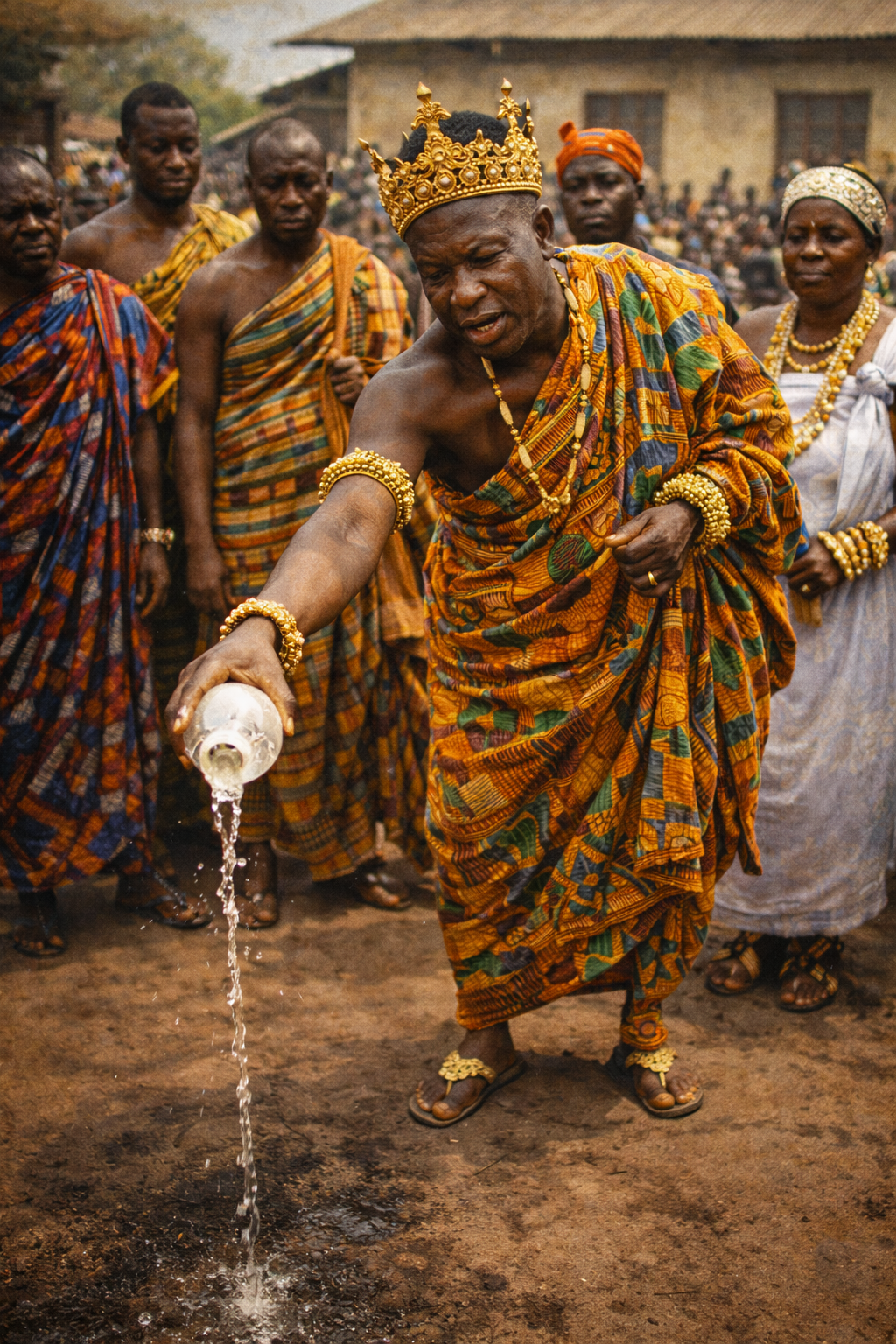
Among the Akans, the earth is known as Asaase, and it is regarded as sacred. The earth is not perceived merely as soil or physical land but as a living spiritual entity—one that sustains life, receives the dead, and mediates between the human and spiritual worlds. Because of this sacred status, Asaase must be treated with reverence, restraint, and moral discipline.
The sacred day of the earth is Thursday. For this reason, the earth is personified as Asaase Yaa—Mother Earth. In Akan culture, females born on Thursdays are named Yaa, reflecting the spiritual association between the day, femininity, fertility, and the earth deity.
As a mark of respect for Asaase Yaa, many Akan communities observe a strict taboo against farming or entering the bush on Thursdays. To go to the farm on this sacred day is believed to violate the sanctity of the earth. Those who defy this prohibition are thought to expose themselves to serious misfortune, including snake bites, falling trees, mysterious injuries, or sudden accidents in the forest or on the farm. Such occurrences are not interpreted as mere chance; they are understood as spiritual sanctions imposed by an offended earth.
Another important earth-related taboo concerns sexual intercourse on bare ground. In Akan belief, sexual activity is ritually polluting. To engage in sexual intercourse directly on the earth is considered a grave act of defilement against Asaase. This pollution is believed to have collective, rather than merely individual, consequences. When the earth is defiled, it may retaliate by withholding rain, resulting in drought, poor harvests, and hunger. Thus, what appears to be a private moral act is believed to carry public and ecological repercussions.
These taboos reveal a core Akan moral principle: human behavior directly affects the well-being of the community and the natural world. Respect for the earth is therefore not only an environmental ethic but also a profound spiritual obligation.
Because of the earth’s sacredness, Akan society also places a strong prohibition on the shedding of human blood on the ground. It is a grave taboo for blood resulting from suicide or homicide to touch the earth. Such an act is believed to defile Asaase and bring serious spiritual consequences upon the entire community.
For this reason, when a person dies by suicide, extreme care is taken to ensure that the corpse does not come into contact with the bare ground. In cases of hanging, the body must be carefully supported and removed from the ligature in a manner that prevents it from falling to the earth. Allowing the body to touch the ground is believed to pollute the earth and invite misfortune, calamity, or spiritual retaliation against the community.
These practices underscore the Akan belief that deaths involving violence or self-destruction are not merely private tragedies but communal crises with moral, spiritual, and ecological implications. The earth, as a sacred and living entity, must be protected from ritual and moral contamination if social order and cosmic balance are to be maintained.
Spiritual Sanctions and Misfortune
When an earth taboo (akyiwadeɛ) is violated, the first consequence is believed to be spiritual displeasure. Asaase Yaa is not passive; she is a living moral force. The offender may suffer sudden or unexplained misfortunes such as:
- Accidents (snake bites, falling trees, mysterious injuries)
- Persistent illness resistant to ordinary treatment
- Sudden loss of livelihood or repeated failure
These are interpreted not as coincidences, but as signs of moral imbalance caused by offending the earth.
2. Collective Punishment and Communal Crisis
In Akan cosmology, the earth is communal property, and her pollution affects everyone. For this reason, the consequences of violation often extend beyond the offender:
- Droughts and irregular rainfall
- Crop failure and food shortages
- Increased mortality or sudden deaths
- Social unrest and persistent bad luck in the community
A common Akan understanding is that “the earth does not punish alone.” If she is defiled, the whole community may suffer until restitution is made.
3. Moral Pollution and Ritual Danger
Violations such as shedding blood on the ground, sexual defilement of the earth, or farming on sacred days are believed to create moral pollution. This pollution renders the land ritually dangerous:
- Farming becomes unproductive
- Hunting becomes unsafe
- Childbirth and funerals become spiritually risky
Until purification rites are performed, normal life is believed to proceed under spiritual threat.
Case Example
At dawn on May 8, 2010, the youth of Atimpoku, a small town in the Eastern Region of Ghana, poured into the streets, anger written on their faces and weapons in their hands. Farming and fishing had failed, accidents had multiplied, and death had stalked the community. The explanation, they insisted, was spiritual betrayal: the gods had been offended. Their outrage centered on the funeral of a man who had drowned. Led by a herbalist in the town and youth leader, the protesters argued that honoring a victim of an “unnatural” death violated ancestral law (or taboo)—and that the community was now paying the price for that transgression.