






Rape and sexual assault are among the most serious crimes in Ghana, leaving victims with profound physical, emotional, and psychological scars. Despite public awareness campaigns and media reporting, sexual violence continues to occur in society, highlighting the urgent need for vigilance, education, and justice.
Sex is meant for two consenting adults. Consent is not just a formality—it is the foundation of lawful sexual activity. When one party does not consent, it becomes rape. If one of the individuals is underage, it is classified as defilement, known in some societies as statutory rape. Using force to coerce sexual activity is a grave offense, punishable under Ghanaian law.
Statistics on Rape in Ghana
In Ghana, sexual violence remains a grave and pervasive problem. In 2020, police statistics recorded 503 rape cases and 1,750 cases of defilement—with Greater Accra, Ashanti, and Central regions among the hardest hit—illustrating how widespread the issue has become. Recent media headlines have been dominated by shocking incidents involving minors and close relatives, underscoring that no community is immune. These figures, combined with frequent news reports of assaults in schools and communities, reveal that the fight against rape and sexual assault in Ghana is far from over.
Types of Rape
Understanding the different forms of rape helps society recognize and respond to sexual violence more effectively:
- Stranger Rape: Occurs when the perpetrator and victim are strangers.
- Gang Rape: Involves two or more people committing rape together.
- Aggravated Rape: Rape by a stranger that involves weapons or results in severe injury.
- Date Rape: Occurs in a dating or romantic relationship without consent.
- Marital Rape: Also called partner rape, wife rape, or spousal rape, occurs within a marriage. Studies suggest that marital rape is often more common than stranger rape, though it remains underreported.
Each form of rape leaves a lasting impact on victims, highlighting the importance of reporting and punishing offenders.
What Ghanaian Law Says
Ghana treats rape and defilement as serious criminal offenses, with heavy penalties designed to deter offenders. Under the Criminal Offences Act, 1960 (Act 29):
- Rape (Section 97–98): Perpetrators face life imprisonment or long-term imprisonment, depending on the circumstances of the crime.
- Defilement: Sexual activity with a person under 16 is a severe offense punishable by life imprisonment.
The law also criminalizes attempts to remove cases from police oversight, such as pressure from relatives to settle privately. This ensures that justice is not obstructed and that offenders are held accountable.
The Impact on Victims
Rape victims endure serious physical injuries, long-lasting psychological trauma, and social stigma. Many suffer in silence, afraid to report due to shame or fear of retaliation. Families, communities, and authorities must ensure victims receive medical care, counseling, and legal support.
Why Reporting Matters
Every reported case helps protect others. Rape is a crime that affects not just the individual victim but society at large. By reporting cases to the police, Ghanaians ensure that justice is pursued, offenders are punished, and the broader culture of sexual violence is challenged.
A Call to Action
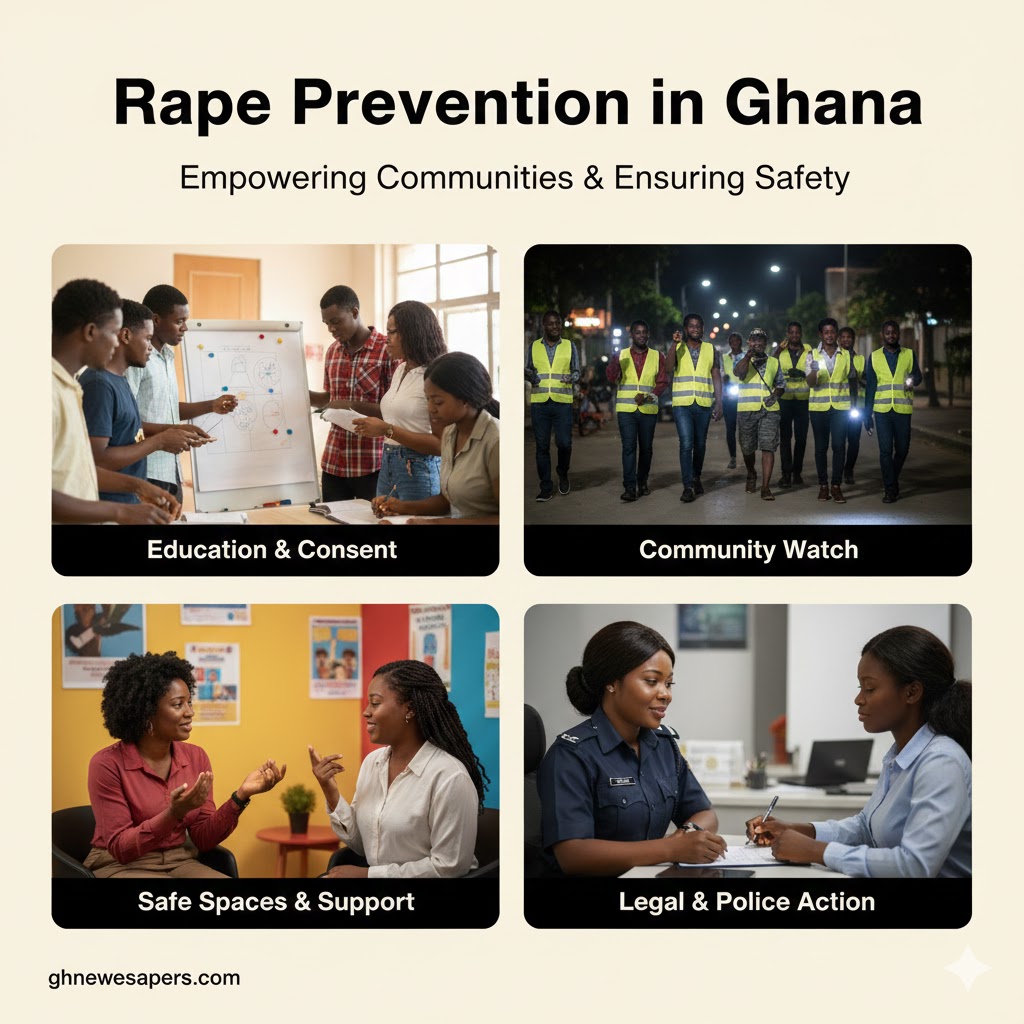
Rape and sexual assault are preventable crimes, but prevention requires awareness, legal enforcement, and societal commitment. Education on consent, protection of minors, and strong law enforcement are key. Ghanaian society must reject silence, hold perpetrators accountable, and support victims.
The courts must continue to impose strict sentences, not only as punishment but as a deterrent, sending a clear message: sexual violence has no place in Ghana.
The Need for National Education on Rape and Defilement
There is an urgent need for nationwide public education on the crimes of rape and defilement in Ghana. Many young people—and even some adults—do not fully understand what constitutes rape or defilement, why these acts are crimes, and the severe legal consequences attached to them. This lack of legal and moral awareness contributes to reckless behavior, silence among victims, and the normalization of sexual violence in some communities.
Public education must clearly explain that rape is sexual intercourse without consent, and that defilement is any sexual activity involving a person under the age of 16, regardless of consent or relationship. These acts are crimes because they violate bodily autonomy, dignity, and, in the case of defilement, destroy the physical and psychological development of children. Education must also emphasize the heavy prison sentences imposed under Ghanaian law, including life imprisonment, to deter potential offenders.
Beyond the legal definitions, education should address the lasting effects of rape and defilement on victims—including trauma, depression, fear, social stigma, and disrupted education and family life. Schools, churches, mosques, community centers, and the media must be mobilized to spread this information in clear, accessible language. When young people understand the law and its consequences, society becomes safer, and victims are more likely to report abuse without shame or fear.