




Imprisonment, also known as incarceration, is one of the most severe penalties imposed by courts in Ghana and elsewhere. Judges and magistrates have several sentencing options at their disposal, including fines, probation, community service, and custodial sentences. Prison is usually reserved for people convicted of serious offences such as robbery, burglary, aggravated assault, and murder.
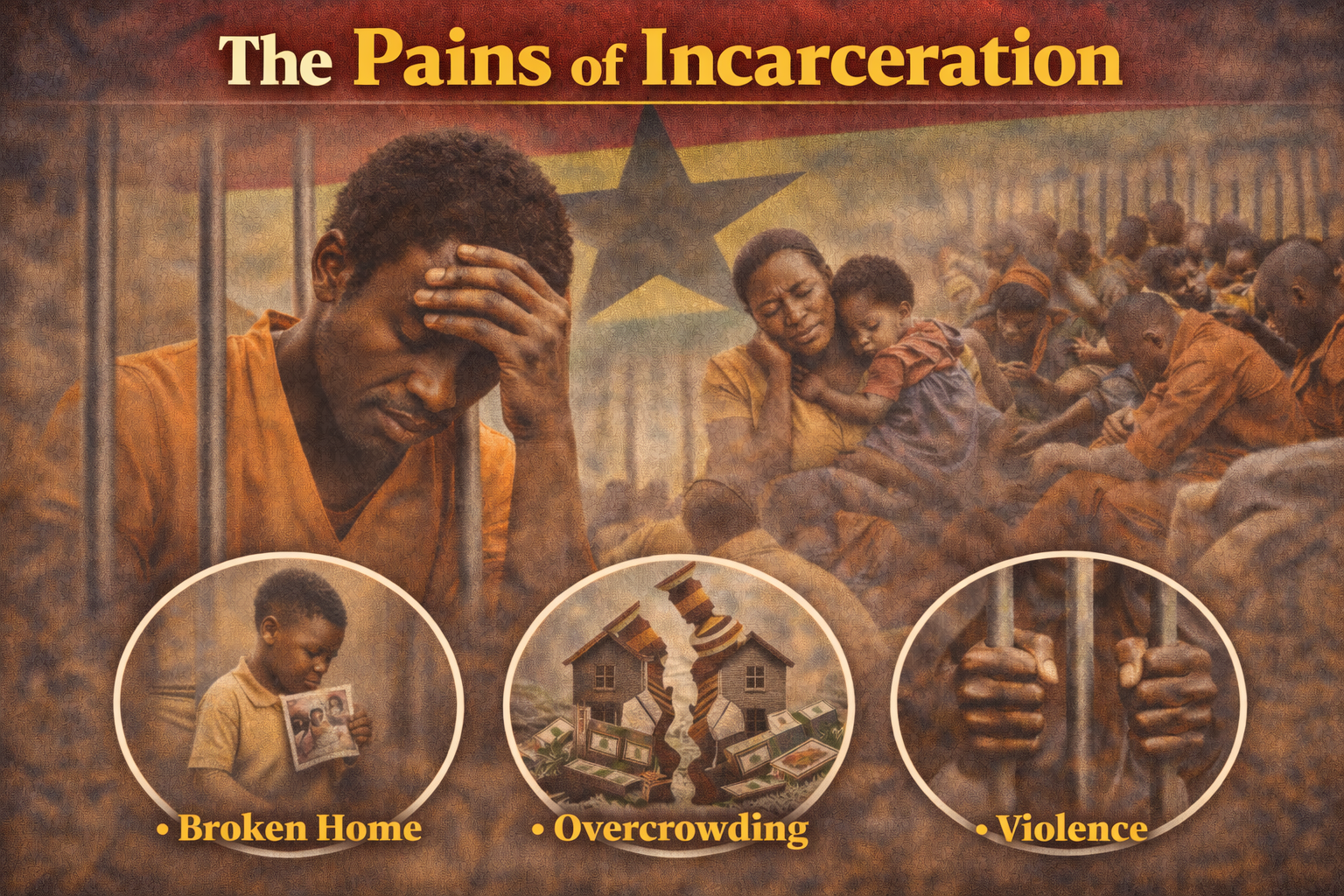
Yet many members of the public misunderstand what imprisonment actually entails. Prison is not a place where people are endlessly punished while inside. Rather, being confined to prison is itself the punishment. What inmates endure daily—the loss of freedom, choice, privacy, and social contact—are collectively described as the pains of incarceration.
Prison as Punishment, Not Extra Punishment
Once a person is sentenced, the punishment is the deprivation that comes with imprisonment. Prisoners are not meant to be tortured or abused. Instead, the law punishes them by removing them from society and subjecting them to strict control. Every aspect of daily life—movement, food, clothing, time, and contact with loved ones—is regulated.
Loss of Freedom and Constant Control
The most fundamental pain of incarceration is the loss of freedom. In prison, individuals cannot decide where to go, when to sleep, or how to organize their day. They live under constant supervision, locked schedules, and restricted movement. This loss of autonomy weighs heavily on inmates and is often the hardest part of imprisonment to endure.
Sexual Deprivation
Another rarely discussed but significant pain of incarceration is sexual deprivation. Heterosexual inmates are deprived of the opportunity for heterosexual sexual relations while in custody. For many, this prolonged deprivation causes emotional distress and frustration, adding to the psychological burden of imprisonment.
Loss of Choice in Food and Clothing
In prison, inmates do not choose what they eat. Meals are provided according to institutional rules, not personal preference. Whether the food is appealing or not, prisoners must eat what they are given.
Similarly, inmates are generally required to wear official prison-issued clothing. They cannot dress according to taste, culture, or comfort. Clothing, which in ordinary life expresses identity and dignity, becomes another reminder of lost individuality.
Separation from Family and Loved Ones
Imprisonment also creates deep emotional pain through separation from loved ones. Visits are restricted, controlled, and often infrequent. Only approved visitors are allowed, and even then, visits may be short and closely monitored. The strain on marriages, parent–child relationships, and extended families is immense.
Prison Security Levels and Different Degrees of Pain
Not all prisons impose the same level of deprivation. Around the world, prisons are classified into minimum, medium, and maximum security facilities. Some countries also operate super-maximum security (supermax) prisons for the most dangerous offenders.
In minimum security prisons, restrictions are lighter. Inmates may have more freedom of movement, access to work programs, and greater interaction with others. The pains of incarceration, though real, are less severe.
In medium security prisons, controls are tighter. Movement is restricted, supervision is heavier, and daily routines are more rigid. Inmates here experience greater deprivation than those in minimum security facilities.
In maximum security prisons, restrictions are extreme. Inmates are closely monitored, movement is tightly controlled, and contact with others is limited. The pains of incarceration are therefore much harsher. Where supermax facilities exist, deprivation reaches its highest level, with prolonged isolation and minimal human contact.
Ghana’s Prison System: Numbers and Realities
These pains of incarceration must be understood within the context of Ghana’s prison system. Ghana currently has about 49 prison establishments nationwide, ranging from minimum to maximum security facilities.
The country’s prison population stands at approximately 14,900 inmates, far exceeding the system’s official capacity of just over 10,000. This means Ghana’s prisons are severely overcrowded, intensifying every pain of incarceration—limited space, strained facilities, and reduced access to rehabilitation programs.
Men make up the overwhelming majority of inmates, with more than 14,700 male prisoners, while fewer than 200 women are incarcerated nationwide. Although women form a small percentage of the prison population, they often face unique challenges, including limited facilities and gender-specific services.
Overcrowding worsens conditions for everyone. Inmates must share cramped cells, compete for limited resources, and endure reduced privacy. Prison officers are also stretched thin, making effective supervision and rehabilitation more difficult.
Do the Pains of Incarceration Prevent Reoffending?
For some offenders, the pains of incarceration are powerful enough to deter future crime. The memory of lost freedom, separation from family, and harsh living conditions discourages them from returning to prison.
For others, however, imprisonment alone is not enough. Without education, skills training, counseling, and reintegration support, some former inmates reoffend after release. This raises important questions about how Ghana balances punishment with rehabilitation.
A Broader Reflection on Punishment and Reform
Understanding incarceration helps the public move beyond simplistic ideas about prison as either too harsh or too lenient. Prison is a place of serious deprivation, not comfort. At the same time, a system focused only on punishment without rehabilitation risks producing repeat offenders rather than reformed citizens.
As Ghana grapples with overcrowded prisons and limited resources, there is a growing need to expand non-custodial sentencing for minor offences, strengthen rehabilitation programs, and ensure that incarceration serves both justice and public safety.