






In the years following Ghana’s independence in 1957, one of the most influential political and intellectual concepts articulated by Kwame Nkrumah was “neo-colonialism.” For Nkrumah, independence did not mark the end of foreign domination in Africa. Instead, he argued that a new, more subtle form of control had emerged—one that operated through economic power, political influence, cultural penetration, and international institutions rather than direct colonial rule. His writings, speeches, and state-controlled newspapers consistently framed neo-colonialism as the greatest threat to Africa’s true sovereignty.
Origins of the Concept
Nkrumah developed his theory of neo-colonialism in the late 1950s and early 1960s, influenced by his experiences during the nationalist struggle and his observations of global Cold War politics. While European empires were formally dissolving, he noticed that many newly independent countries remained economically dependent on former colonial powers.
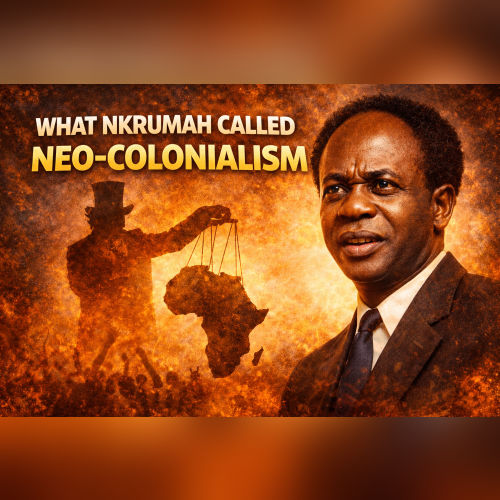
He famously defined neo-colonialism as a situation in which a state is independent in name but its economic system and political policy are directed from outside. This idea was most fully articulated in his influential book Neo-Colonialism: The Last Stage of Imperialism, published in 1965, which became a cornerstone of post-colonial political theory.
Economic Control as the Core Mechanism
At the heart of Nkrumah’s concept was the belief that economic dependency was the primary tool of neo-colonial domination. He argued that Western powers maintained control over African nations by:
- Dominating trade markets
- Controlling prices of raw materials
- Influencing financial institutions
- Investing in industries that primarily benefited foreign interests
Nkrumah often pointed to international financial organizations such as the International Monetary Fund and the World Bank as instruments through which wealthy nations exerted indirect control over developing economies.
According to his analysis, these institutions imposed conditions that limited economic autonomy, forcing African states to align with Western economic priorities.
Political Influence and Foreign Intervention
Beyond economics, Nkrumah argued that neo-colonialism also operated through political manipulation. He believed powerful nations influenced African governments through:
- Diplomatic pressure
- Support for rival political factions
- Intelligence operations
- Military alliances
In his speeches, he frequently warned that foreign powers could destabilize independent African states by supporting coups, funding opposition groups, or shaping domestic political narratives.
This perspective reflected broader Cold War tensions, as African countries often became arenas for ideological competition between Western capitalist and Eastern socialist blocs.
Media Framing and Public Messaging
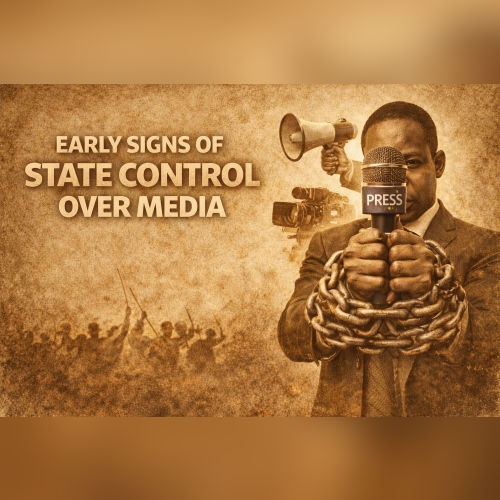
Ghanaian newspapers during Nkrumah’s presidency played a key role in promoting the concept of neo-colonialism. State-aligned publications such as the Ghanaian Times frequently published editorials explaining how foreign economic interests continued to influence Africa.
These newspapers framed neo-colonialism as:
- A continuation of colonial exploitation in disguise
- A major obstacle to African unity
- A justification for strong centralized leadership
Through such reporting, the concept became widely understood among Ghanaian readers, shaping public perceptions of international relations.
Pan-African Dimensions
Nkrumah’s idea of neo-colonialism was closely tied to his vision of Pan-Africanism. He argued that individual African nations could not resist external domination alone. Instead, he believed only continental unity could provide the economic and political strength needed to achieve true independence.
His advocacy for African unity was reflected in his leadership role within the Organization of African Unity (OAU), founded in 1963. Nkrumah saw the OAU as a critical platform for resisting neo-colonial pressures and promoting collective self-reliance.
Criticism and Controversy
While many African leaders and intellectuals embraced Nkrumah’s theory, it also attracted criticism. Some Western governments accused him of using the concept to justify authoritarian policies and suppress domestic opposition.
Even within Ghana, critics argued that the emphasis on external threats sometimes overshadowed internal governance challenges, including economic management and political freedoms.
Nevertheless, the idea of neo-colonialism remained influential and continues to shape academic and political discussions about global inequality and post-colonial power structures.
Long-Term Global Impact
Today, Nkrumah’s concept of neo-colonialism is widely studied in fields such as political science, international relations, and African studies. It has influenced debates on:
- Globalization and economic dependency
- Corporate power in developing countries
- Foreign aid and conditional loans
- Cultural influence through media and technology
Many scholars argue that while the forms of control have evolved, the structural patterns Nkrumah identified remain relevant in contemporary global politics.
Conclusion
For Nkrumah, neo-colonialism represented the hidden continuation of imperial domination after formal independence. Through economic dependency, political influence, and global institutional power, he believed foreign forces still shaped the destinies of newly independent nations.
His articulation of this concept transformed not only Ghana’s political discourse but also global understandings of post-colonial power relations. More than half a century later, Nkrumah’s warnings about neo-colonialism continue to resonate, reminding the world that true independence involves not just political sovereignty, but also economic and structural autonomy.