







The growth of newspaper readership in the Gold Coast—modern-day Ghana—cannot be understood without examining the critical role played by nineteenth-century mission schools. These educational institutions, established by European Christian missions, were not only centers of religious instruction but also engines of literacy, intellectual transformation, and political awareness. By producing a new class of literate Africans, mission schools created the very audience that would later sustain the rise of newspapers and public discourse in colonial West Africa.
Origins of Missionary Education in the Gold Coast
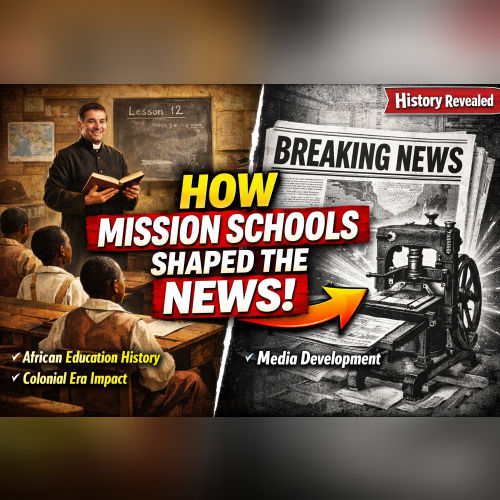
Formal Western-style education in the Gold Coast began in the eighteenth century with European trading companies, but it expanded significantly in the nineteenth century through missionary efforts. Protestant missions such as the Basel Mission, the Wesleyan Methodist Mission, and the Roman Catholic missions established schools across coastal and inland communities.
One of the earliest and most influential institutions was founded at Cape Coast by the Wesleyan Methodist Missionary Society in the 1830s. These schools focused on teaching reading, writing, arithmetic, and Christian doctrine. Instruction was typically conducted in English, though missionaries also translated religious texts into local languages like Twi, Ga, and Ewe.
The primary objective of mission education was religious conversion. However, the unintended consequence was the creation of a literate African elite capable of engaging with written materials beyond the Bible—including newspapers, pamphlets, and political tracts.
Literacy as the Foundation of Newspaper Culture
Before the spread of mission schools, literacy rates in the Gold Coast were extremely low, and communication relied primarily on oral traditions. Newspapers, introduced in the late nineteenth century, required a readership capable of reading and interpreting complex texts.
Mission schools fulfilled this need by producing a new social class: clerks, teachers, catechists, and merchants who were proficient in English literacy. These individuals became the primary consumers of early newspapers such as the Gold Coast Times (established in 1874) and later publications like the Gold Coast Chronicle.
This emerging literate class also formed the backbone of the colonial bureaucracy, as many graduates were employed in administrative roles. Their daily interaction with written communication reinforced habits of reading, which naturally extended to newspapers.
Mission Schools and the Rise of African Intellectualism
Beyond basic literacy, mission schools cultivated intellectual curiosity and critical thinking. Students were exposed to European political philosophy, Christian moral teachings, and global history. This exposure shaped their worldview and stimulated engagement with contemporary issues such as colonial governance, trade policies, and social reforms.
As a result, many early African newspaper editors and contributors were mission-educated. Figures like J. E. Casely Hayford exemplify this trend. Educated in mission institutions, Hayford became a lawyer, journalist, and nationalist leader who used the press to advocate for African self-governance.
Mission schools thus functioned as incubators for a new African intelligentsia that would dominate newspaper readership and production.
Newspapers as Extensions of Missionary Influence
In many cases, early newspapers were directly linked to missionary activities. Mission Presses printed religious newsletters, educational materials, and later secular publications. These publications often promoted Christian values, moral reform, and social modernization.
Mission-educated readers tended to trust printed materials because they associated them with authority and enlightenment. This trust significantly boosted newspaper circulation.
However, missionary influence also shaped editorial perspectives. Early newspapers frequently reflected Christian moral frameworks, advocating temperance, education, and “civilized” social behavior while sometimes criticizing traditional cultural practices.
Geographic Expansion of Readership
Mission schools were initially concentrated along the coastal towns such as Cape Coast, Elmina, and Accra. Consequently, early newspaper readership was largely urban and coastal.
As missions expanded inland during the late nineteenth century, literacy spread into interior regions. This expansion gradually broadened the geographical reach of newspapers, transforming them from elite coastal publications into more widely read platforms.
By the early twentieth century, mission-educated teachers in rural areas often served as local opinion leaders, reading newspapers aloud to communities and interpreting their contents for non-literate audiences.
Political Awakening and Nationalism
Perhaps the most profound impact of mission schools on newspaper readership was their role in fostering political consciousness. Literacy enabled Africans to access information about global events, colonial policies, and nationalist movements.
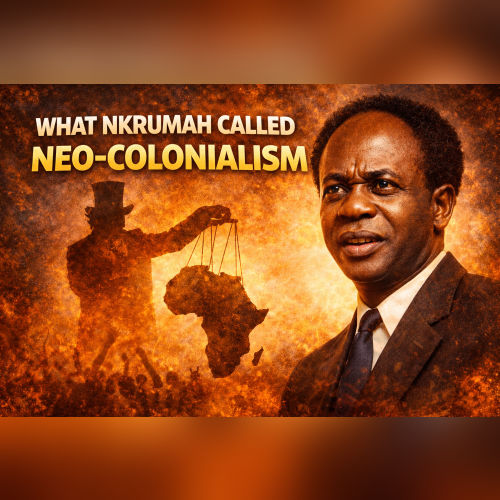
Newspapers became vehicles for political debate, enabling educated Africans to critique colonial rule, advocate reforms, and mobilize public opinion. Many nationalist leaders—including Kwame Nkrumah—emerged from mission school backgrounds and used newspapers as tools for political activism.
Thus, mission schools indirectly contributed to the rise of nationalism by creating a literate public capable of engaging with political journalism.
Long-Term Cultural and Social Impact
The influence of mission schools extended beyond the colonial era. They established a lasting culture of reading and intellectual engagement that continues to shape Ghana’s media landscape today.
Modern newspaper readership patterns still reflect the educational foundations laid by missionary institutions. High literacy rates, strong print traditions, and vibrant public discourse can all be traced back to the educational transformations initiated in the nineteenth century.
Mission schools played a foundational role in the development of newspaper readership in the Gold Coast. By promoting literacy, nurturing intellectual elites, and fostering critical engagement with written texts, they created the social conditions necessary for a thriving press culture.
Although originally designed to advance religious objectives, mission schools ultimately became catalysts for broader social change, enabling the rise of journalism, political awareness, and national identity formation in Ghana.
Watch full video on YouTube – https://youtu.be/Q7bny6hNMiQ