










A Mother with Sixteen Children to Raise
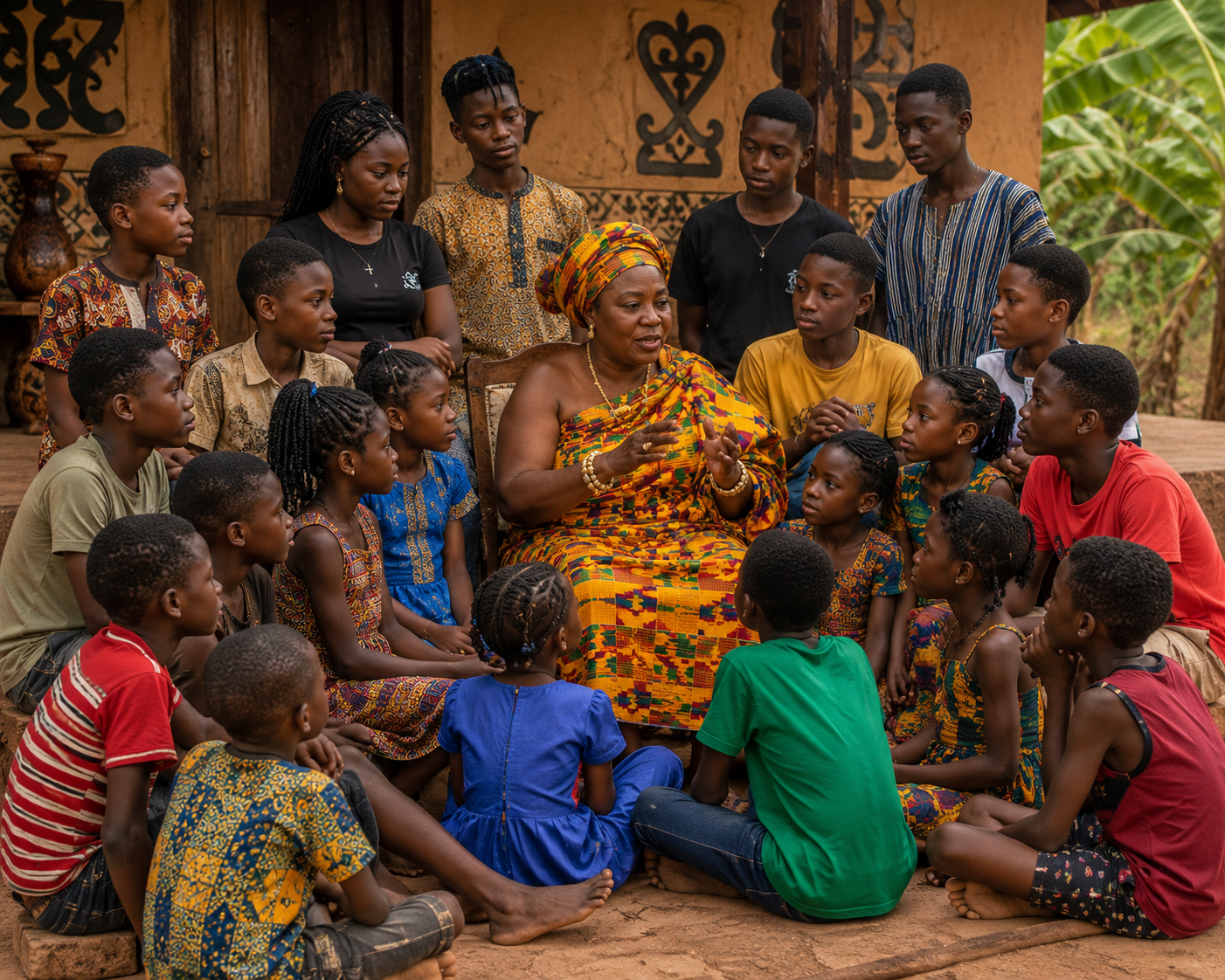
Growing up in Ghana in the 1970s, my mother taught her eight biological children and eight non-biological children the enduring virtues of self-reliance, hard work, and personal dignity. She was a woman of uncommon wisdom who believed that excessive dependence on others diminished one’s humanity and weakened one’s spirit.
To drive home this lesson, she frequently invoked a striking Akan proverb:
“Obi bɛboro wo ama w’ane anaasɛ w’ankasa bɛto wo bo ase ane, deɛwɛn na ɛyɛ?”
She would always end with a piercing rhetorical question: Which is better — for someone to beat you so mercilessly that you lose control of yourself in humiliation, or for you to deliberately and comfortably ease yourself on your own terms?
Though earthy and blunt in expression, the proverb carried profound philosophical depth.
The Deeper Meaning Behind the Proverb
The central message of my mother’s teaching was unmistakable: it is far better to labor for one’s own sustenance, comfort, and advancement than to live perpetually at the mercy of others.
She wanted us to understand that dependency often comes with indignity, loss of autonomy, and vulnerability to mistreatment. A person who relies excessively on handouts, leftovers, or the goodwill of others may eventually find themselves exposed to humiliation, control, or exploitation.
In contrast, self-reliance offered freedom, dignity, and peace of mind. Whether the reward was material or non-material, my mother believed we should strive to earn it through honest labor, perseverance, and initiative. She taught us never to sit idly waiting for favors, hand-me-downs, or charity when we were capable of exerting ourselves.
To her, even modest achievements earned through one’s own effort were far more honorable than comforts obtained through dependence.
Lessons That Shaped a Lifetime
Those teachings profoundly shaped our outlook on life. They instilled discipline, resilience, and a determination to confront adversity with courage rather than resignation.
Long before concepts such as “empowerment,” “agency,” and “self-determination” became fashionable academic terms, my mother had already imparted their essence through proverbial wisdom and everyday instruction. Her lessons were practical, moral, and deeply human.
Looking back today, I recognize that her teachings remain among the greatest inheritances she gave her children.
Why the Message Still Matters Today
The lessons embedded in my mother’s proverb remain remarkably relevant in contemporary society, particularly in an era increasingly characterized by dependency, entitlement, and the relentless pursuit of instant gratification.
At the individual level, the proverb encourages personal responsibility and initiative. Many people desire success, comfort, and recognition without a corresponding willingness to endure sacrifice, discipline, or sustained labor. My mother challenged such a mentality. She believed that genuine fulfillment comes from earning one’s achievements rather than depending excessively on others for survival, validation, or advancement.
The self-reliant individual develops resilience, confidence, and independence of thought because they are not perpetually beholden to external benefactors.
Self-Reliance and Human Dignity
My mother’s teaching also spoke to the preservation of human dignity.
Dependency often creates unequal power relations in which the giver acquires disproportionate influence over the receiver. Excessive reliance on others may expose individuals to manipulation, humiliation, disrespect, or loss of autonomy. In many social contexts, favors are rarely entirely free of expectations or obligations.
Thus, the person who cultivates self-sufficiency protects not only material independence but also personal honor and freedom.
Raising Responsible Children
In family life, my mother’s philosophy underscored the importance of instilling industriousness and responsibility in children.
Parents who provide every comfort without requiring effort may unintentionally raise individuals who lack perseverance and problem-solving skills. By contrast, children socialized into habits of hard work and accountability are often better equipped to navigate adversity and uncertainty in adult life.
Her philosophy was therefore not merely about economic survival; it was fundamentally a moral education in character formation.
A Lesson for National Development
The proverb also carries important implications for national development.
Societies that value productivity, innovation, and self-help are often better positioned for economic advancement than societies overly dependent on external aid or patronage systems. Sustainable progress requires initiative, creativity, and the willingness to build rather than merely consume.
At both the personal and collective levels, cultures of dependency can undermine ambition, weaken resilience, and stifle initiative.
At the same time, my mother’s teaching did not advocate selfish individualism or the rejection of communal support. Ghanaian and broader African societies have long valued mutual assistance, kinship obligations, and collective solidarity. Rather, the proverb warned against habitual dependency and the surrender of one’s agency.
It called for a balance between communal interdependence and personal responsibility.
An Enduring Truth
Today, in a world where many seek shortcuts to success or dependence on powerful patrons, my mother’s words continue to affirm an enduring truth: there is honor in striving for one’s own sustenance, dignity in self-earned accomplishment, and freedom in not having to live perpetually at the mercy of others.