







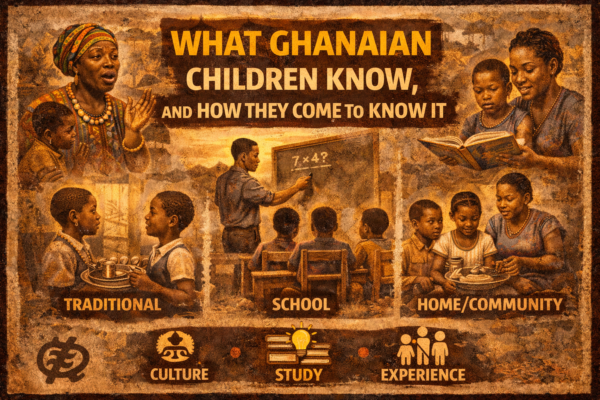
What Ghanaian Children Know, and How They Come to Know It

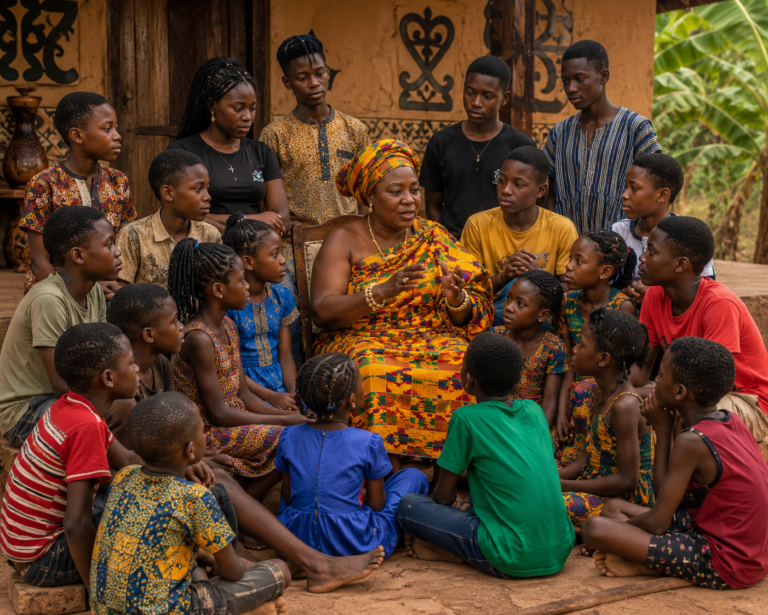
No one is born with knowledge. Human beings are born with the capacity to learn, but what they eventually know—how they speak, think, behave, believe, and interpret the world—is acquired from society. Knowledge, values, attitudes, and skills are socially produced and socially transmitted. By the time a Ghanaian child reaches the age of eighteen, that…
Read More

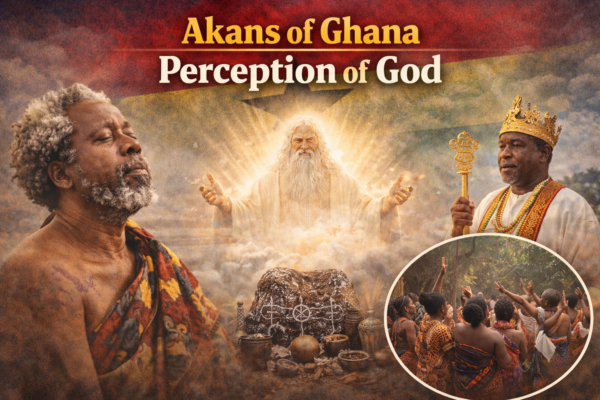
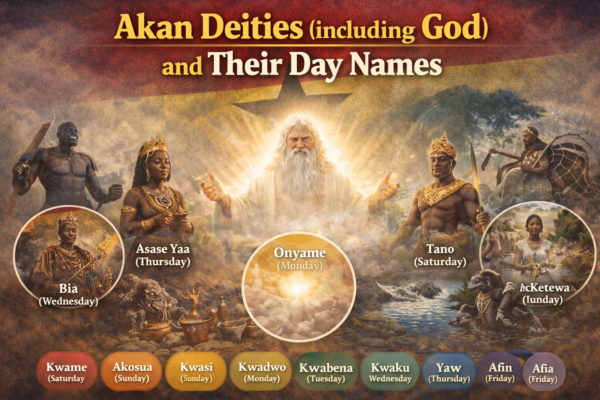
Akan Deities and Their Day Names: Onyankopɔn Kwame, Asaase Yaa, Po Abenaa and Kofi Yesu

Among the Akan of Ghana, naming is never a casual act. Names locate a person in time, history, morality, and the spiritual universe. One of the most distinctive Akan naming practices is the giving of day names (kradin), assigned according to the day of the week on which a child is born. These names are…

Read More

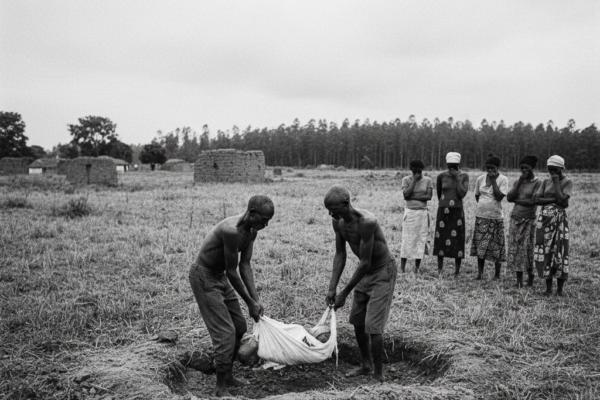
Posthumous Treatment of Accused Witches in Ghana

In many Ghanaian communities, accusations of witchcraft generate intense moral outrage and social hostility. Persons believed to be malevolent witches are frequently subjected to verbal abuse, physical assault, forced displacement, and, in extreme cases, extrajudicial killing (Adinkrah, 2004, 2015). Crucially, however, the sanctioning of alleged witches does not necessarily terminate at biological death. Rather, death…

Read More

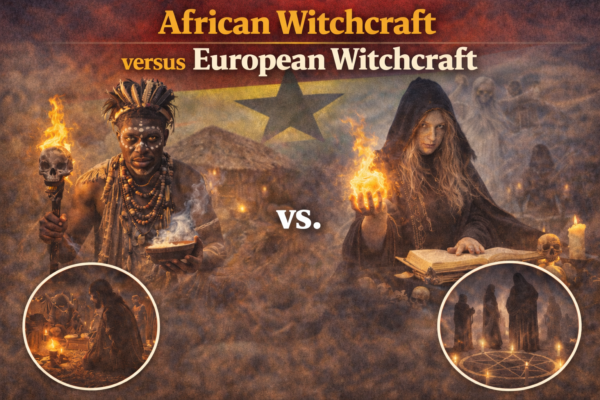
African Witchcraft Versus European and American Witchcraft

African witchcraft versus European witchcraft have been the focus of local discussions about witchcraft in Ghana for many years. During the period of European colonization, westernization, and the early stages of modernization, people in the Gold Coast (now Ghana) struggled to explain the wide gap in development between Africans and Europeans. Many ordinary people asked…

Read More

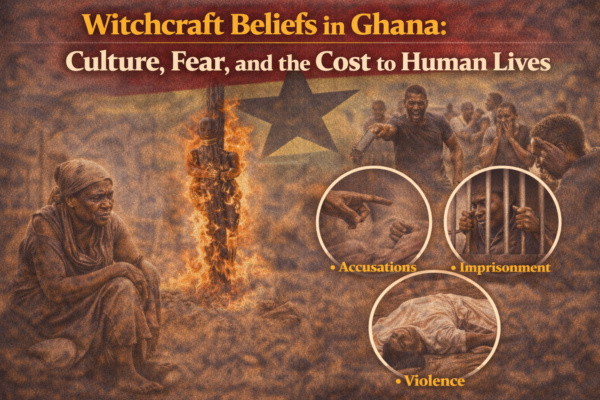
Witchcraft Beliefs in Ghana: Culture, Fear, and the Cost to Human Lives

Witchcraft is commonly understood in Ghana as a supernatural power believed to be possessed by some individuals, enabling them to influence the behavior, health, fortune, or misfortune of others—either as victims or beneficiaries. Belief in witchcraft and witches remains widespread and deeply embedded in Ghanaian society. Although no comprehensive national survey exists to measure belief…

Read More

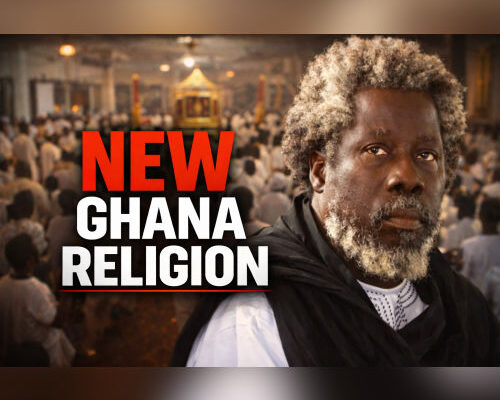
A New Religion in Ghana: Asomdwee Ntonton Som

A new religious movement has emerged in Ghana known as Asomdwee Ntonton Som, a name that translates literally as “Peace and Exaltation Religion.” Ghana is a deeply multireligious society, long accustomed to religious plurality. Christianity—represented by historic denominations such as Catholic, Presbyterian, Methodist, Anglican, and Salvation Army, as well as numerous Pentecostal and Charismatic movements—dominates…

Read More

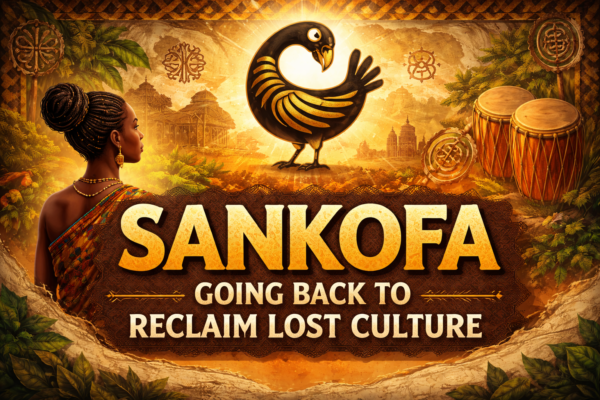
Sankofa: Going Back to Reclaim Lost Culture

Culture refers to the total way of life of a people. It encompasses both material and non-material elements. Material culture consists of tangible aspects that can be seen and touched, such as cooking practices, eating utensils, earthenware, palanquins, drums, and idiophones. Non-material culture, by contrast, includes intangible elements such as language, music, art, religion, dance,…

Read More

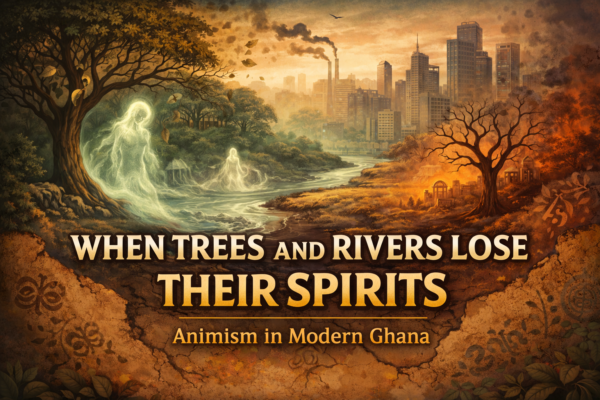
When Trees and Rivers Lose Their Spirits: Animism in Modern Ghana

Animism is the belief that the environment and society are populated with spirits. Many Ghanaians hold animistic beliefs, maintaining that their surroundings are inhabited by spiritual beings. Some of these spirits are believed to be benevolent, while others are considered malevolent. Animistic beliefs are widespread across Ghana’s ethnic groups. Even Ghanaians who identify as Christian…

Read More