












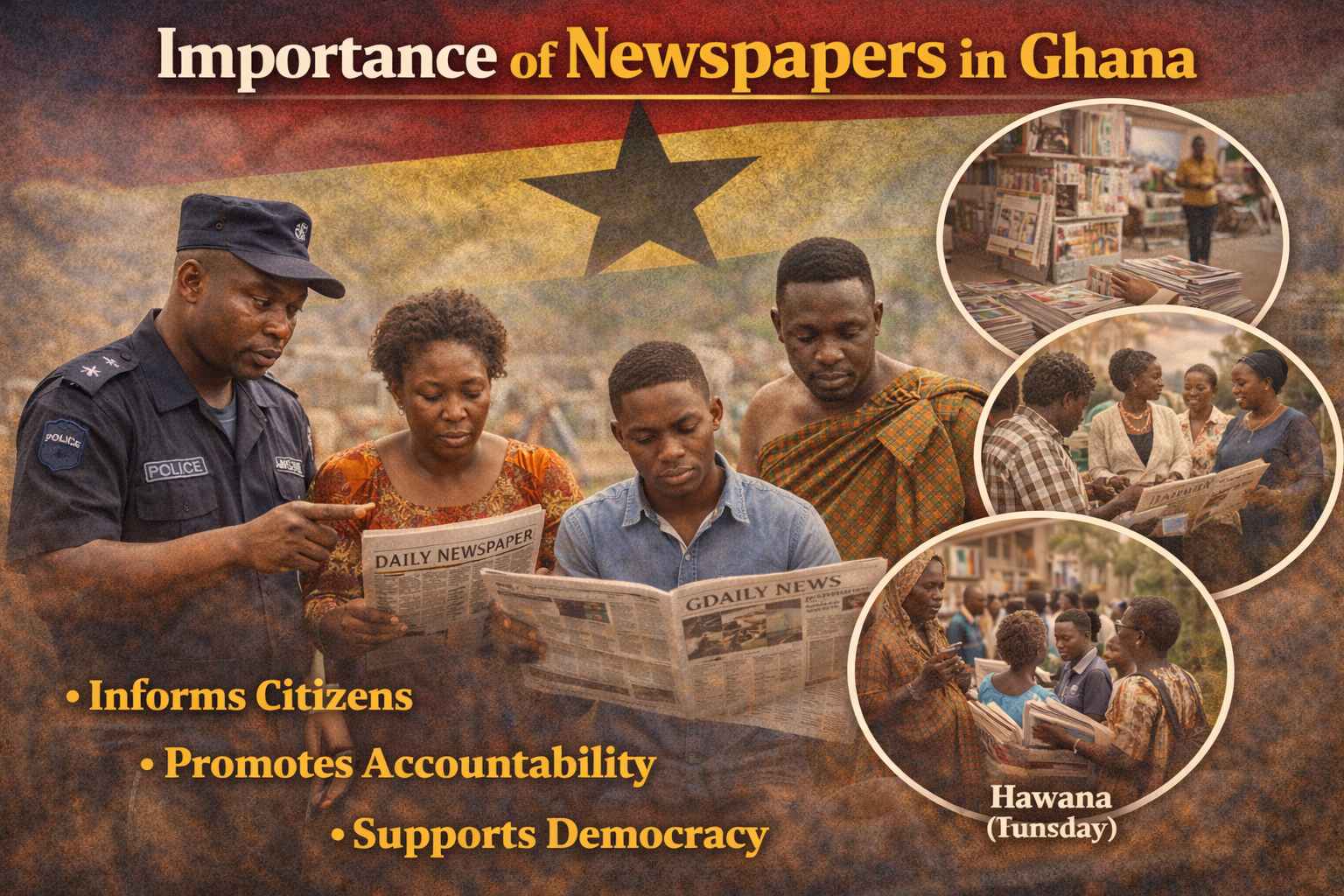
Newspapers occupy an important place in Ghanaian society. Long before the rise of social media and online news platforms, newspapers were the primary source of information for the public. Even today, despite digital competition, newspapers continue to serve critical social, political, educational, and cultural functions across the country.
Source of News and Information
At their most basic level, newspapers in Ghana provide news about events occurring in the country. They inform citizens about developments in government, politics, business, sports, education, religion, crime, and public health. Through newspapers, Ghanaians learn about parliamentary debates, presidential activities, court cases, strikes, examinations, football matches, and economic trends.
For many people—especially those in rural and peri-urban areas—newspapers remain a reliable source of verified information, helping to counter rumors and misinformation.
Political Awareness and Civic Education
Ghanaian newspapers play a major role in political education and democratic participation. They report on elections, political parties, policy decisions, and public accountability. Through in-depth reporting and analysis, newspapers help citizens understand national issues and make informed decisions during elections.
Editorials published in newspapers often address pressing national concerns, such as corruption, economic hardship, governance, and social justice. These editorials guide public opinion and stimulate national conversation.
Letters to the Editor: The People’s Voice
The Letters to the Editor section allows ordinary citizens to express their views on national and local issues. This section serves as a platform for public debate, criticism, and advocacy. Teachers, students, workers, chiefs, and concerned citizens use this space to comment on government actions, social problems, and moral issues.
In this way, newspapers promote freedom of expression and strengthen democratic culture.
Advice Columns and Life Guidance
Many Ghanaian newspapers include advice columns that address everyday problems. These columns provide guidance on marriage, relationships, parenting, work, health, and personal conduct. For some readers, especially those without access to professional counseling services, these advice sections offer practical wisdom and emotional support.
Special feature pages on marriage, family life, career development, and personal growth further enrich public understanding of social issues.
Advertising and Economic Activity
Newspapers in Ghana play a crucial role in advertising goods and services. Businesses advertise products, sales, job vacancies, real estate, and public notices. These advertisements support local commerce and provide economic opportunities for traders, entrepreneurs, and professionals.
For many small businesses, newspaper advertisements remain an affordable and trusted way to reach customers.
Funeral Announcements and Social Connection
One of the most distinctive uses of newspapers in Ghana is the publication of funeral announcements. Newspapers carry detailed information about the deceased, including photographs, biographies, family lineage, and funeral arrangements.
These announcements serve an important social function. They inform relatives, friends, and community members—both within Ghana and abroad—about funeral events and help maintain social ties in a society where funerals are culturally significant.
Educational Role of Newspapers
Newspapers perform an essential educational function in Ghana. The country has limited public libraries, especially for children. In many homes, newspapers become the primary reading material available to young people.
School-aged children often learn to read or improve their reading skills by reading newspapers at home. They encounter new vocabulary, current affairs, and real-world issues that enhance classroom learning. For students, newspapers are practical tools for literacy development.
Newspapers as Historical and Research Sources
For scholars, journalists, and researchers, newspapers are invaluable sources of historical and social data. In situations where government records are incomplete, inaccessible, or poorly archived, newspapers provide detailed accounts of events, policies, and public reactions.
Researchers use newspapers to study social change, political history, crime trends, economic conditions, and cultural practices in Ghana.
Conclusion
Despite the rise of digital media, newspapers remain deeply embedded in Ghanaian social life. They inform, educate, connect, and preserve the nation’s collective memory. From political analysis to funeral announcements, from literacy development to historical research, newspapers continue to play a vital role in Ghana’s development.
As Ghana moves further into the digital age, the challenge is not to abandon newspapers, but to strengthen and adapt them so they can continue serving the public good.