





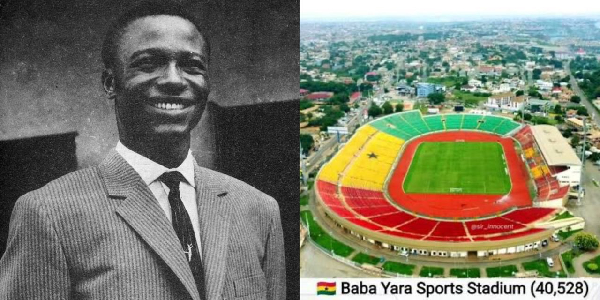
Few names in Ghanaian football command as much reverence as Baba Yara. Gifted, charismatic, and electrifying on the field, Baba Yara remains one of the greatest footballers Ghana has ever produced. Though his career was tragically cut short, his brilliance and influence left an enduring mark on the history of Ghanaian football.
Early Life and the Origin of the Name
Baba Yara was born Usmanu Seidu Maada on October 12, 1936. From a young age he showed exceptional athletic talent and a deep passion for football. His famous nickname “Baba Yara” reportedly came from a childhood incident when he kicked a ball so forcefully that his mother exclaimed in surprise, “Ei, Baba Yara!” The name stayed with him and eventually became one of the most celebrated names in Ghanaian sports.
Rise to Stardom at Asante Kotoko
Baba Yara’s professional career took off when he joined Asante Kotoko in the 1950s. His arrival immediately transformed the team. In his debut match he scored a hat trick, signaling the arrival of a remarkable talent.
Playing as a right winger and wearing the number 7 jersey, Baba Yara dazzled fans with his incredible speed, dribbling skills, and powerful crosses. His style of play was both elegant and explosive. Because of his dominance on the wings, sports commentators and supporters began calling him the “King of Wingers.”
During his time with Kotoko, the club won the Ghana FA Cup in 1957 and the league title in 1958, helping establish the team as one of the strongest football clubs in the country. His outstanding performances earned him the Ghana Footballer of the Year award in 1959 and 1960, making him the most celebrated footballer of his generation.
Service to the National Team
Baba Yara was also a key player for the Ghana national football team. During the early years of Ghana’s independence, football played an important role in national pride, and Baba Yara quickly became one of the stars of the national side.
He represented Ghana in numerous international matches and was admired for his attacking flair and goal-scoring ability. He was also part of the squad that won the prestigious 1963 African Cup of Nations, a major milestone in Ghana’s football history.
Later, he joined Real Republicans, a team established during the presidency of Kwame Nkrumah to assemble the country’s best players and strengthen the national team.
A Tragic Accident
At the peak of his career, tragedy struck. In March 1963, Baba Yara was involved in a serious road accident in the Volta Region while returning from a league match. The accident caused severe spinal injuries that left him paralyzed and abruptly ended his football career at the young age of 26.
Despite receiving medical treatment abroad, he never recovered fully. After several difficult years confined to a wheelchair, Baba Yara died on May 5, 1969, at the age of only 33. His passing was mourned across Ghana, as the nation lost one of its most beloved sporting icons.
Honoring a National Football Hero
Today, Baba Yara’s legacy continues to live on in Ghana. The most prominent tribute to him is the Baba Yara Sports Stadium, the largest stadium in the country. Originally known as Kumasi Sports Stadium, it was renamed in his honor in 2005 to recognize his immense contribution to Ghanaian football.
The stadium hosts major matches involving the Black Stars and domestic league clubs, ensuring that Baba Yara’s name remains permanently associated with the sport he loved.
Decades after his death, Baba Yara is still remembered as a symbol of skill, dedication, and national pride. For many football fans in Ghana, he represents the golden era of Ghanaian football and remains a towering legend whose name will never be forgotten.