










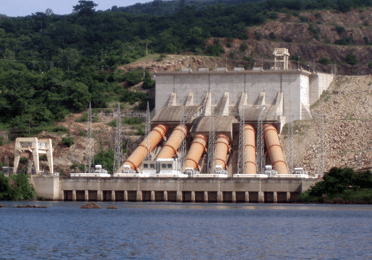
Few infrastructure projects in the history of Ghana have had as profound an impact as the construction of the Akosombo Dam. Built in the early years of Ghana’s independence, the project symbolized the ambitious development vision of the country’s first president, Kwame Nkrumah, who believed that industrialization was essential for true economic independence.
The dam did more than generate electricity. It reshaped Ghana’s economy, geography, and social landscape, creating the massive Lake Volta, one of the largest man-made lakes in the world.
Ghana’s Development Vision After Independence. When Ghana gained independence from Britain in 1957, the country inherited a colonial economy largely dependent on raw material exports, particularly cocoa. While cocoa had made the Gold Coast one of the wealthiest territories in West Africa, Kwame Nkrumah believed the future of the country required industrial development.
Nkrumah’s vision was bold. He imagined Ghana becoming an industrial hub for Africa, capable of producing aluminum, steel, and manufactured goods. But such industries required enormous amounts of electricity.
At the time, Ghana’s power supply was limited and unreliable. To achieve his industrial goals, Nkrumah proposed a massive hydroelectric project along the Volta River.
The Volta River Project. The idea eventually became known as the Volta River Project. It involved constructing a giant hydroelectric dam at Akosombo, a town located in eastern Ghana.
The project was supported by international partners, including the World Bank, the United States Government, and the aluminum company Valco, which planned to build an aluminum smelter in Ghana.
Construction of the Akosombo Dam began in 1961 and required thousands of workers, engineers, and planners.
The scale of the project was unprecedented in West Africa.
Creation of Lake Volta. When the dam was completed in 1965, the reservoir behind it formed Lake Volta, which stretches across a large portion of eastern Ghana.
The lake covers approximately 8,500 square kilometers, making it one of the largest artificial lakes on Earth.
Its creation dramatically transformed the geography of Ghana. Entire forests and valleys were submerged, and new transportation routes emerged across the lake.
The lake also opened opportunities for inland fishing and water transport.
However, the project also required the relocation of thousands of people from villages that were flooded during the creation of the reservoir.
Powering Ghana’s Economy. One of the primary goals of the Akosombo Dam was to provide reliable electricity for Ghana’s industrial development.
The dam’s hydroelectric power station began producing large amounts of electricity for the country.
These electricity-powered industries, cities, and infrastructure are across Ghana. It also allowed Ghana to export electricity to neighboring countries.
The availability of reliable power helped support economic growth and modernization.
The aluminum smelter operated by Valco became one of the major industrial beneficiaries of the project.
Regional Energy Hub Over time, the electricity generated by the Akosombo Dam allowed Ghana to become an energy supplier in West Africa.
Power from the dam has been exported to countries such as Togo and Benin, strengthening Ghana’s regional influence.
The project, therefore, played an important role not only in Ghana’s national development but also in regional cooperation.
Social and Environmental Impact: Like many large infrastructure projects, the construction of the dam brought both benefits and challenges.
While the dam created new economic opportunities, the formation of Lake Volta required the relocation of more than 80,000 people from communities that were submerged.
New towns were built to accommodate displaced residents, and development programs were introduced to support affected communities.
Environmental changes also occurred as ecosystems adapted to the new lake environment.
A Symbol of Post-Colonial Ambition Despite the challenges, the Akosombo Dam remains one of the most powerful symbols of Ghana’s early development ambitions.
For Kwame Nkrumah, the dam represented the idea that newly independent African nations could build large-scale projects and shape their own economic futures.
Even decades later, the dam continues to supply a significant portion of Ghana’s electricity.
It stands as a reminder of a moment in history when Ghana sought to transform itself through bold infrastructure and visionary leadership.
Today, the Akosombo Dam remains one of the most important landmarks in Ghana’s development story.