








Sociologists define religion as a system of shared beliefs and practices through which people relate to what they consider sacred or supernatural. In simple terms, religion helps people make sense of life, death, and the world beyond what we can see.
A Cultural Universal
One important idea in sociology is that religion is a cultural universal. This means that every known society, past and present, has had some form of religion. Sociologists and socio-cultural anthropologists who have studied communities across the world consistently find religious beliefs and practices at the heart of human life.
In fact, religion is very ancient. Scholars believe it dates back tens of thousands of years, perhaps as far as 100,000 years ago. Even early human groups, such as the Neanderthals, appear to have believed in a world beyond everyday life. Archaeologists have discovered graves containing flowers and tools buried with the dead—suggesting that these early people believed in an afterlife.
Great Thinkers on Religion
Two of the most important scholars to study religion are Emile Durkheim and Max Weber.
Emile Durkheim, a French sociologist, wrote The Elementary Forms of Religious Life, a book that remains influential today. He argued that religion is not just about belief in the supernatural, but also about bringing people together and strengthening social unity.
Max Weber, a German sociologist, wrote The Protestant Ethic and the Spirit of Capitalism. In this work, he suggested that certain religious beliefs—especially those of Calvinist Protestants—played a key role in the rise of capitalism in Western Europe. According to Weber, religion can shape not only personal values but also entire economic systems.
Religion as a Community Affair
Religion is not just a private matter; it is communal. It belongs to a group of believers who share the same faith and participate in common rituals. For a belief system to be recognized as a religion, it must be practiced and shared by a community.
For example, Islam is estimated to have about 2 billion followers worldwide. Christianity has roughly 2.8 billion adherents. In Ghana, newer religious movements such as Asomdwee Ntonton Som have also attracted tens of thousands of followers. These numbers highlight the collective nature of religion.
Religion is Learned
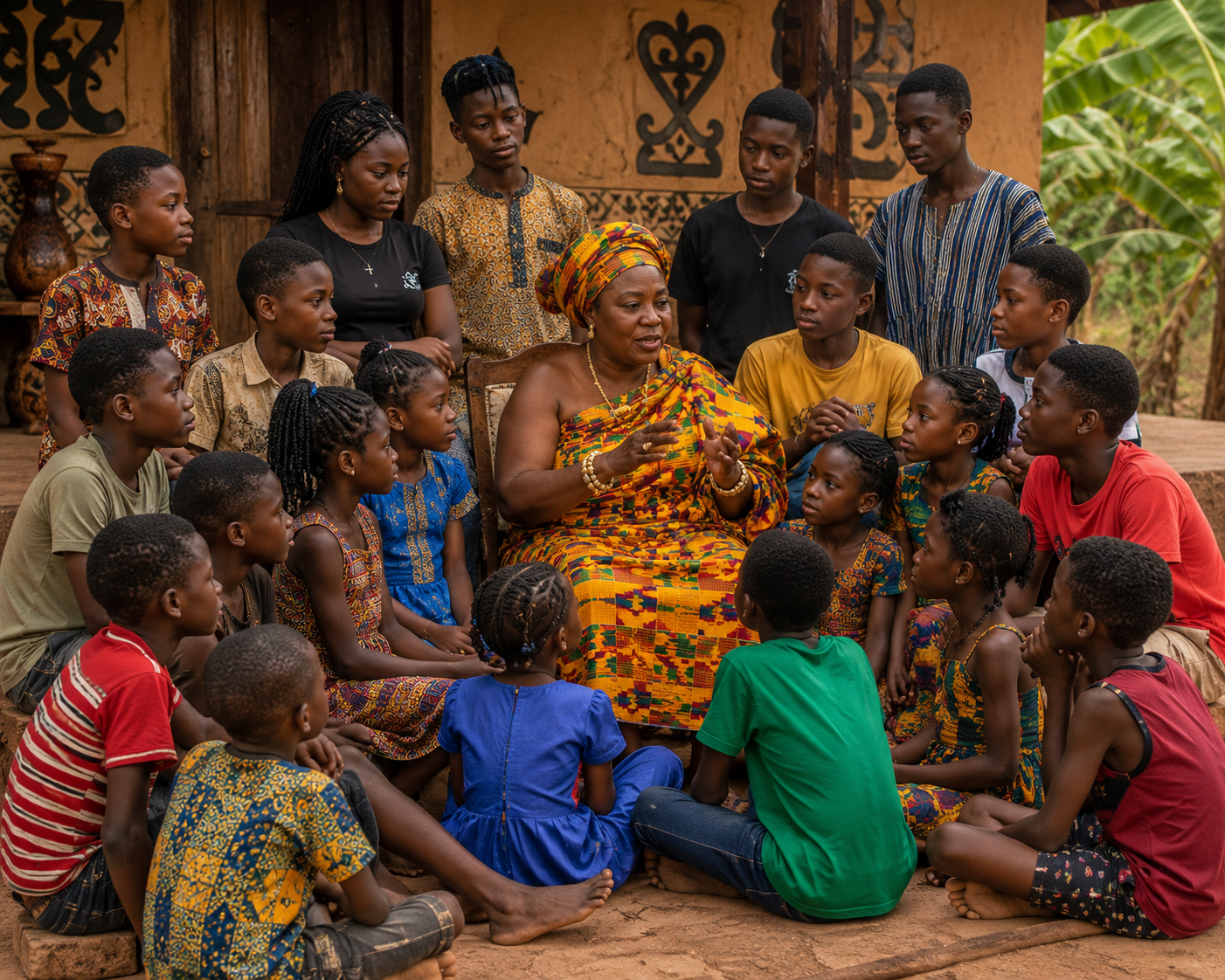
Sociologists also emphasize that religion is learned, not inherited at birth. No child is born Christian, Muslim, or adherent of any other faith. Instead, children learn religious beliefs and practices from parents, family members, and the wider community. This process is known as socialization—the way people learn the values, norms, and traditions of their society.
People can also change their religion later in life through a process called resocialization. For example, someone raised as a Christian may convert to Islam after learning about it and accepting its teachings.
A clear example can be seen in Ghana, where many members of Asomdwee Ntonton Som were once Christians or Muslims. Through exposure to new teachings and beliefs, they embraced a different religious path.
Conclusion
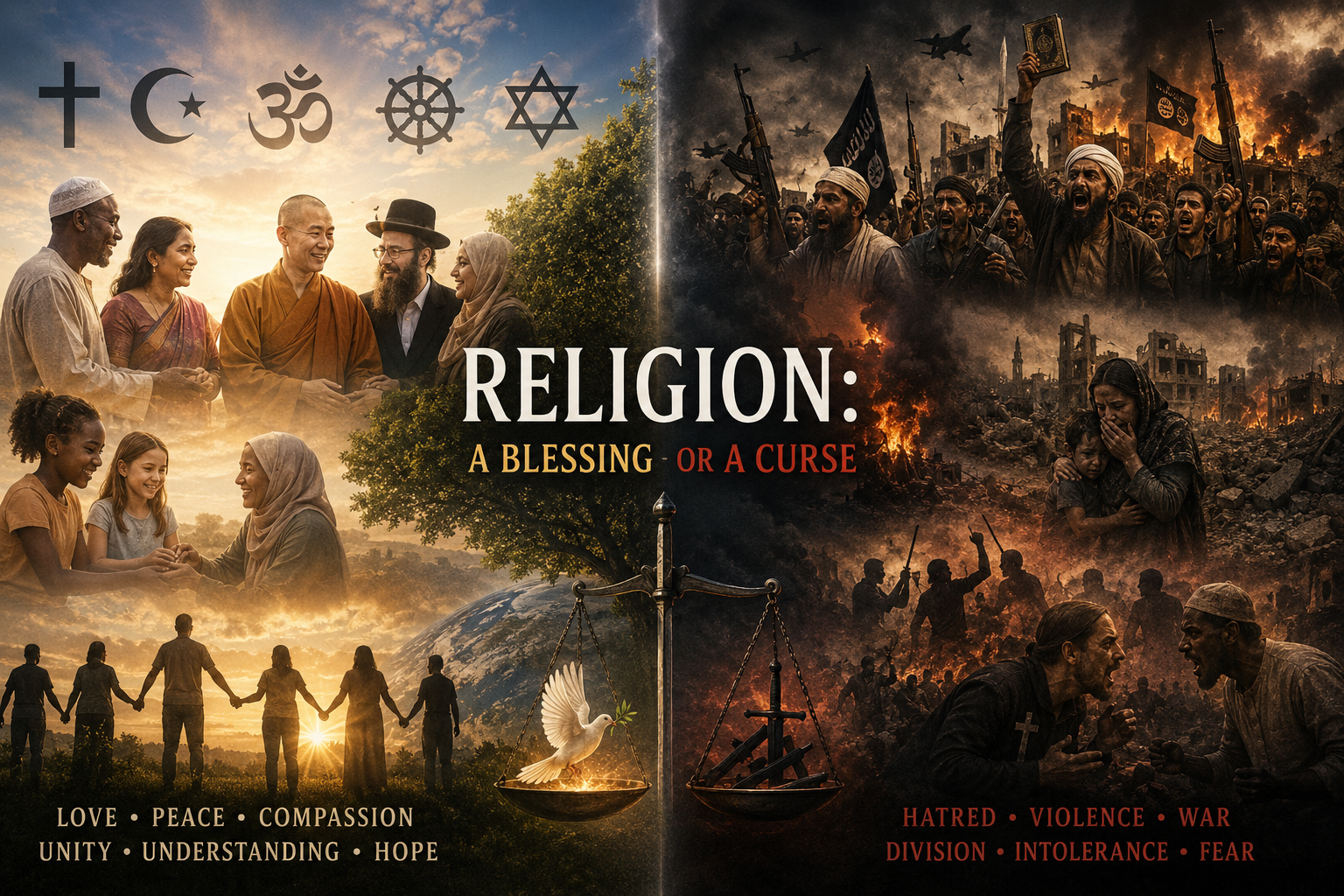
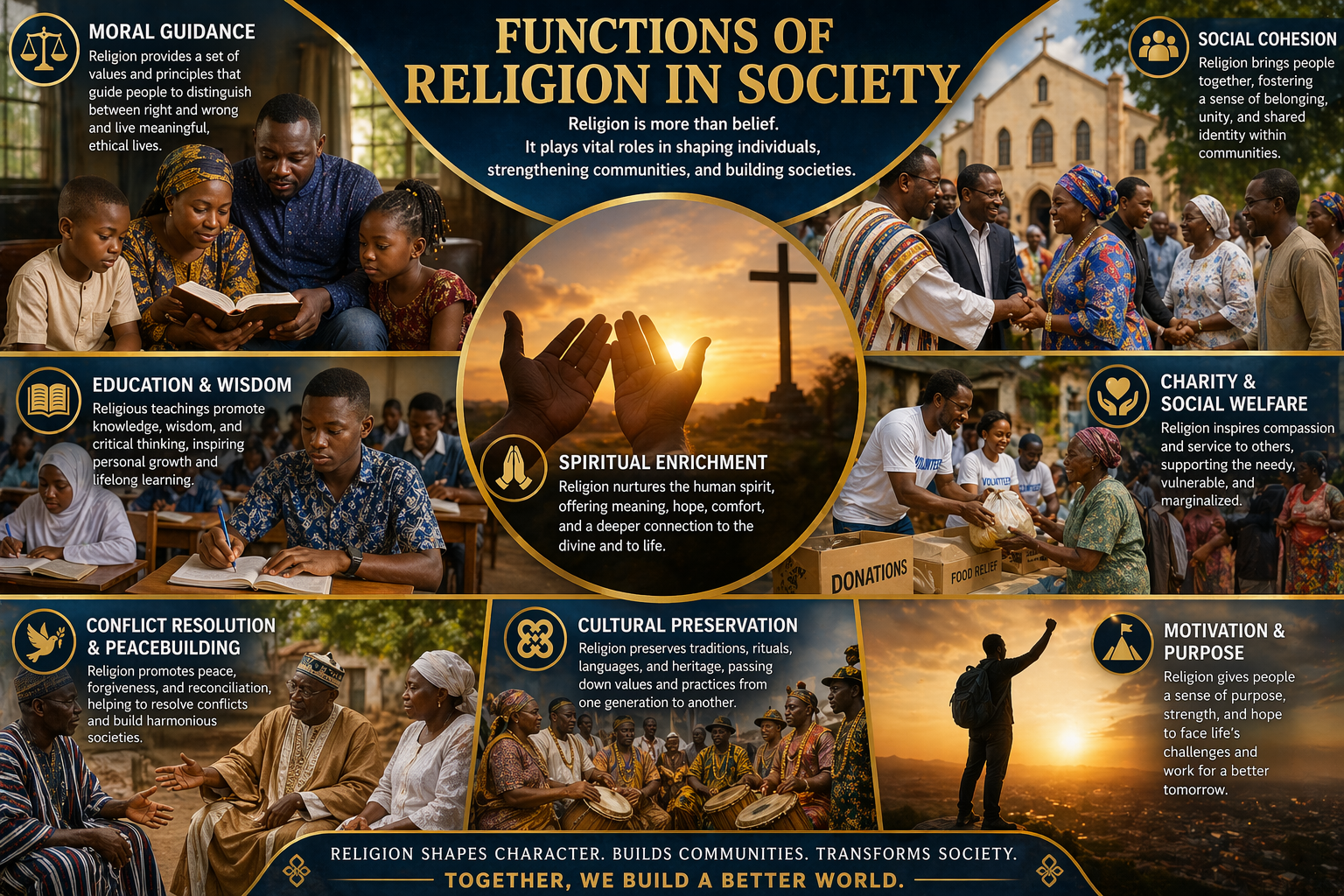
Religion remains a powerful force in society. It shapes how people think, behave, and relate to one another. Whether ancient or modern, local or global, religion continues to play a central role in human life—uniting communities, guiding moral values, and offering meaning in an ever-changing world.