







Africa is still the “dark continent” to many people. In spite of its immense size, large population, vast mineral and agricultural resources, militarily strategic location, and tremendous development potential, Africa is undeniably the most misunderstood continent. Very few non-natives of the continent know much about its geography, its peoples, its culture, or its politics. What little information people have of the continent represents generalizations, myths, or fallacies. To many people, the word Africa conjures images of naked or minimally-clad nomadic herdsmen, head-hunting and cannibalistic tribesmen, overpopulated communities, hot, dry and arid deserts, enervating climates, abject poverty and debilitating diseases. To others, Africa symbolizes interethnic violence, bloody coups d’etat, autocratic governments, guerilla fighting, and Marxist regimes. And still to others, it spells a blissful vacationland—beautiful scenery, extensive safaris, historic monuments, exotic cuisines, striking art forms and quaint customs. Some of the myths have been deliberately or inadvertently perpetuated by academic observers, the mass media, travel agencies, vacationers, and Africa’s detractors. Unfortunately, these myths have been accepted as reality by the unwitting public.
While some Europeans, Asians and Americans may be well-informed about the continent, overall, there is a poverty of knowledge among non-Africans about Africa. My own extensive interaction with non-Africans of diverse social backgrounds reveals that the information that people have of the continent can at best be described as fragmentary and distorted half-truths. The African living overseas is bombarded with questions and statements which reveal not just ignorance, but also misconceptions about the continent. As an African social scientist living overseas, I feel impelled to help correct some of the misperceptions about the continent by providing counterfactual information on Africa. This article therefore aims to dispel what I perceive to be six of the most prevalent myths about the continent.
Myth One: Africa is a Country
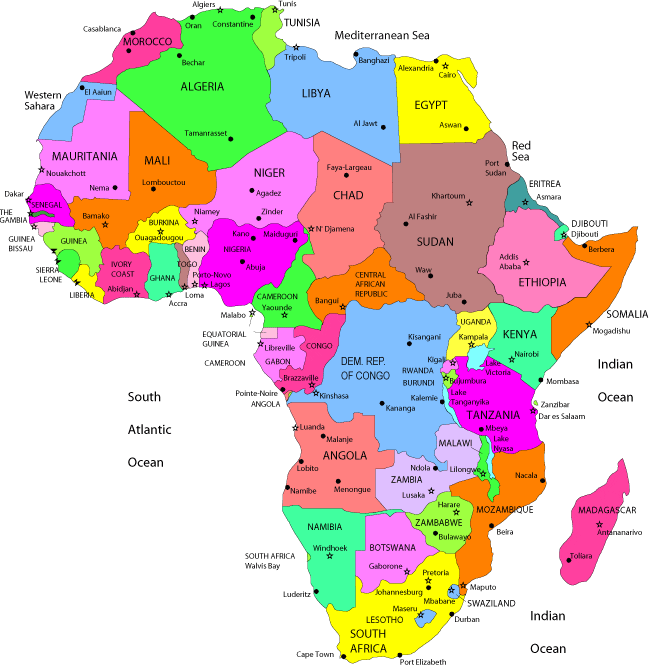
Many people speak about Africa as if it were one large political entity, a unitary nation-state when in fact Africa is a continent. The second largest continent in the world after Asia, Africa at 11.7 million square miles, is more than three times the size of the United States, accounting for some 20.4 percent of the earth’s total land area. Unlike Australia, the only continent that is also a single nation, the continent of Africa comprises some 54 countries ranging in size from the Gambia (less than one-half of the size of New Hampshire) to the Sudan (larger than Alaska and Texas combined).
Closely related to the misconception of Africa as a single nation-state is the notion, also false, that Africans constitute a homogeneous group of people sharing a distinct racial, linguistic, and cultural group. Each of the 54 countries in Africa is fragmented into several such groupings. It is estimated that the 1.6 billion or so people who inhabit the continent (about 19.1 percent of the world’s human population), belong to some two thousand different and varied ethnic, and cultural groups. To put this in perspective, well over 250 ethnic groups live in Nigeria alone, and Zambia’s 22.6 million nationals belong to more than 70 different ethnic groups. In a nutshell, not all Africans are Nigerian, nor does “Nigerian” represent a homogeneous identity.
The cultural diversity of Africa is illustrated further by the enormous linguistic groupings on the continent. Literally, over a thousand different languages are spoken on the continent. Indeed, according to estimates by UNESCO, about 2,000 languages are spoken on the continent. To provide an example, Nigeria’s 250 ethnic groups speak more than 300 distinct languages and dialects while the Democratic Republic of the Congo, with a population of approximately 112.8 million people, is home to 250 ethnic groups who speak close to 700 different languages. This should lay to rest the notion that one can “learn to speak African.”
Myth Two: African is One Giant Safari
Perhaps the most pervasive image of Africa that is shared by a significant number of people not familiar with the continent is that Africa is one large safari where wild beasts roam freely and where the natives keep giraffes, tigers, baboons, and others, as household pets. Over the years, television programs and the travel industry have perpetuated these myths through the portrayal of Africa as untamed wilderness—lush vegetation, ferocious beasts, captivating birds and backward people. As one student in my introductory sociology class confessed to me, “when I think of Africa, I think of jungles filled with tigers, gorillas, and elephants, and Tarzan swinging through trees with Jane.” Contrary to popular beliefs, the continent of Africa is characterized by varied terrain—from arid deserts to dense rain forests, from small villages to densely-populated industrial centers. While a few countries on the continent have established game reserves and zoological parks to boost their tourist industries, it is inaccurate to think of the whole African continent as one giant wildlife sanctuary. Consider the irony: I lived in my native Ghana for 25 years prior to my North American sojourns but the first time I saw the African elephant was in 1984 at the St. Louis, Missouri, Zoo.
Myth Three: African is a war-torn, conflict-prone region.
Another one of the most widespread misconceptions about Africa is that it is a continent whose internal politics is characterized by civil wars, ethnic riots, military coup d’etats, political strife, and guerilla campaign. For that segment of the international public that relies exclusively on television and the non-scholastic print media for information about the continents, the political turmoil that has afflicted Liberia, Sierra Leone, Ethiopia, Congo, and the Sudan in recent years reinforces this imagery. However, to the extent that this depiction of the continent is extended to apply to the whole continent, it is misleading. While some African countries in recent years have been the scene of violent political imbroglio, it is inaccurate to portray the continent as perpetually embroiled in warfare. Countries like Ghana, Cameroon and Botswana have been relatively free of social upheavals. These are countries which are, of course, relatively absent in international media coverage and about the least of which is known.
Myth Four: Africa is an Economic Basket-case.
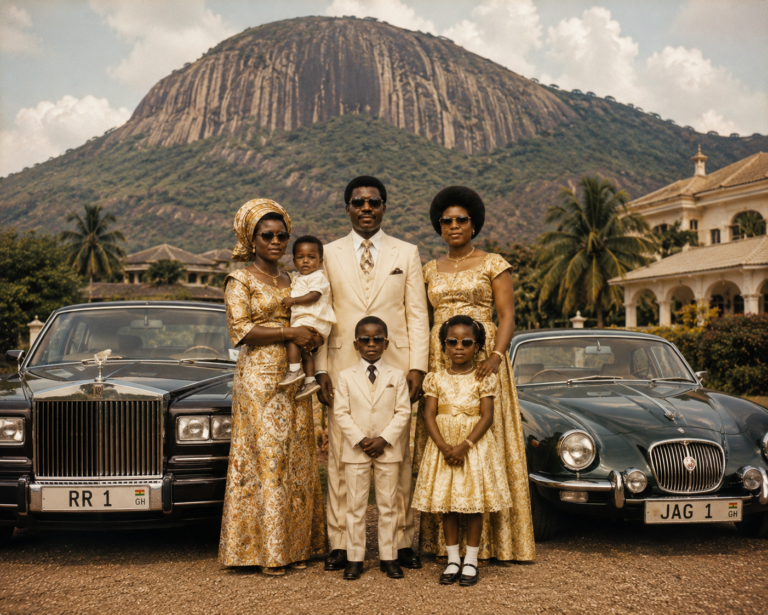
Economically, Africa is often depicted as hopelessly destitute. It is frequently portrayed as a continent typified by primitive methods of cultivation, subsistence farming, drought, and famine. The devastating droughts and the killer famine that have afflicted the Sahel (e.g. Ethiopia, Somalia and the Sudan) in the last three decades reinforce this imagery. In recent years, it has become fashionable for international relief agencies and tele-evangelical sects to show films of transit-bound refugees, clusters of starving or malnourished children and the emaciated, fragile bodies of African adults in order to move people to contribute to the causes they claim to represent. While on the positive side, this has elicited substantial donations to the poor on the continent, overall, the activities of these organizations have obscured more than they have revealed about Africa, presenting a negative and unflattering image of African people and of life on the continent. While some geographical areas of the continent have suffered severe droughts and famine, it is grossly inaccurate to attempt to extend such cases as representing the general conditions of the continent. Even in those economically bankrupt African countries, socio-economic conditions are not all gloomy. In those with thriving economies such as the Botswana and Ghana, among others, standards of living and life expectancy rates are comparable to those of some developed nations. In most of these communities, electricity, running water, telephones, automobiles, aircrafts—in short, all the modern conveniences are available. Street scenes and skylines in some of Africa’s principal cities are predominantly modern in appearance and are not markedly different from that of Western metropolitan centers. Contrary to the image of minimally-clad roving nomadic tribesmen, the vast majority of the people of Africa are donned in western-style clothing.
Myth Five: All African Men are Polygynous.
Another widespread myth about African concerns the familial arrangement and marital lifestyles of Africans. It is widely believed that African states are polygynous societies where men with voracious sexual appetites live in harems with their multiple wives. Contrary to the belief that polygyny is the most popular, widespread form of marital arrangement, polygyny is a practice which is rapidly disappearing from the continent. While officially legal in some countries, polygyny exists in only a select number of the societies in Africa. In several others (such as Botswana), it is virtually non-existent. In countries where it does exist, it is not the dominant form of marriage. In the West African nation of Ghana where plural marriages remain legal, estimates are that less than 20 percent of the married men have more than one spouse. In 2022, 15% of currently married women in Ghana were in polygynous marriages, while 9% of currently married men had two or more wives. Industrialization, mechanized farming, the influence of Christianity, and child support obligations have combined to render polygyny obsolete.
Myth Six: Facial Scarifications Are the Work of Tigers.
In their social intercourse, some non-Africans have come across Africans with facial markings. These markings have so confounded some that they have come up with outlandish explanations. Some of the myths have it that these markings constitute informal sanctions for childhood misbehavior or a form of cultural tagging of Africa’s criminal population. Others have construed these markings as the accidental work of tigers, lions and other wild animals which Africans themselves keep us domestic companions. The truth is that in some African communities, facial scarifications indicate something of the bearer’s status, such as ethnic group affiliation, age-grade status, clan membership and other ritualistic symbols. In a continent peopled by thousands of ethnic and cultural groups, easy identification of a kinsman has certain practical advantages. In some African societies, too, facial scarification is carried out for reasons that are primarily aesthetic. Among the Ashanti of Ghana for instance, the short horizontal mark across the right cheek serves a cosmetic purpose.
Conclusion:
It is particularly disconcerting that so little is known about a continent that is the ancestral home to some 52 million Americans. At present, the Black diaspora (African diaspora) consists of an estimated 170 to 350 million people of African descent living outside the African continent. Some subscribe to the myths discussed above and others of this ilk have obscured far more interesting facets of Africa. The unflattering portrayal of the continent by television and the print media has caused some people of African descent to spurn references to the continent as their ancestral homeland. The negative portrayal of the continent and its people have also played a role in impeding the mutual understanding and amicable interactions between Africans and Americans in this country. Only education will help alter assumptions that people have of the continent. Educators in both the classroom and the media should recognize their obligation to both Africans and their receiving public to present a balanced, accurate picture of Africa in all its diversity and dynamism.