


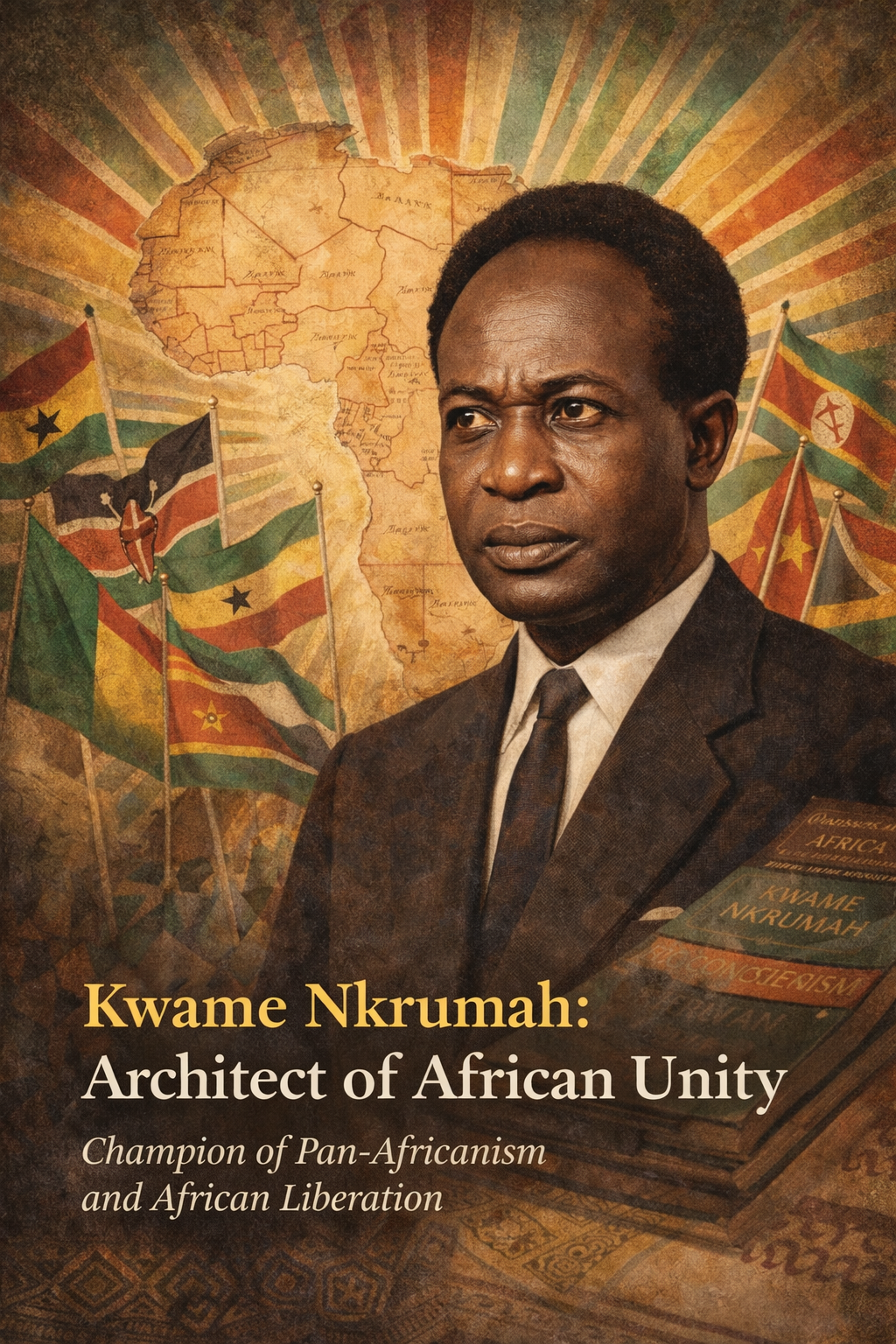
Early Life and Education
Kwame Nkrumah was born in 1909 in what Ghana is now, West Africa. He studied both in Ghana and overseas, gaining knowledge that would later shape his vision for his country and the continent.
Leader of Ghana’s Independence
Nkrumah emerged as one of the most prominent political leaders who fought to free Ghana from British colonial rule. Thanks to his leadership and dedication, Ghana became the first African colony south of the Sahara to gain independence. He became the country’s first president.
For his brilliance and his role in leading Ghana to freedom, he was given the honorary title “Osagyefo,” which means “the one who uses warfare to save his people.”
Pan-African Vision
Even after Ghana’s independence, Nkrumah insisted that national freedom was not enough. He believed, “The independence of Ghana is meaningful only if it is linked to the total liberation of Africa.” He worked to support other African countries still under colonial rule, helping many to achieve their own independence.
He also played a key role in founding the Organization of African Unity (OAU), which sought to unite African nations politically and economically. Beyond Africa, Nkrumah helped establish the Non-Aligned Movement, giving newly independent countries a voice in global politics without having to align with either the United States or the Soviet Union during the Cold War.
Modernizing Ghana
As president, Nkrumah transformed Ghana’s economy. He worked to move the country beyond its dependence on agriculture, promoting industrialization and infrastructure development. His vision was to make Ghana a modern, self-reliant nation.
Intellectual Contributions
Nkrumah was also an intellectual and author. He wrote books aimed at educating Africans and people of African descent worldwide. His notable works include Africa Must Unite and Neocolonialism: The Last Stage of Imperialism, which remain influential in understanding African politics and the legacy of colonialism.
Overthrow and Legacy
Despite his achievements, Nkrumah’s presidency ended abruptly. In 1966, he was overthrown in a military coup d’état while on a state visit abroad.
Today, Kwame Nkrumah is remembered not just as Ghana’s founding president, but as a visionary leader who championed African unity, independence, and progress. His dream of a liberated and united Africa continues to inspire generations across the continent.
Popularity Across Africa and Beyond
During his time as President, Kwame Nkrumah was admired not only in Ghana but across Africa and the world. Many African leaders and Black leaders globally looked to him as a symbol of independence, vision, and Pan-African unity.
He sought to unite African nations in closer political and economic cooperation. One of his bold initiatives was the idea of a confederacy with Mali and Guinea, which at the time was known as the Ghana-Guinea-Mali Union. Although the confederacy did not last, it reflected Nkrumah’s belief that African countries were stronger together.
Education and Opportunity
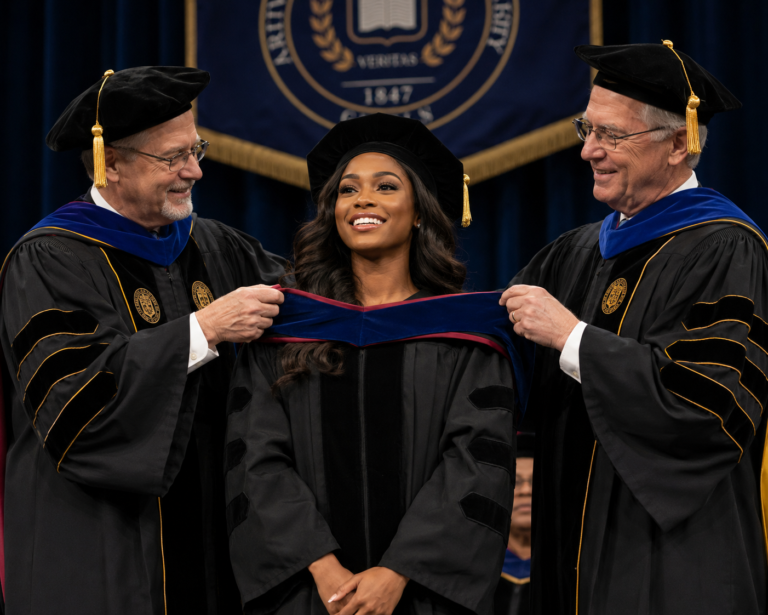
Nkrumah strongly believed that education was the foundation for a prosperous nation. As president, he introduced compulsory and free education across Ghana. This policy allowed children from all backgrounds to go to school and created opportunities for Ghanaians to become professionals.
Many Ghanaians who were working or studying overseas benefited from these policies. They were able to return home with skills and knowledge that contributed to the country’s growth. Nkrumah’s education policies were an important step toward building a skilled and educated workforce in Ghana.
Promoting Ghanaian Languages
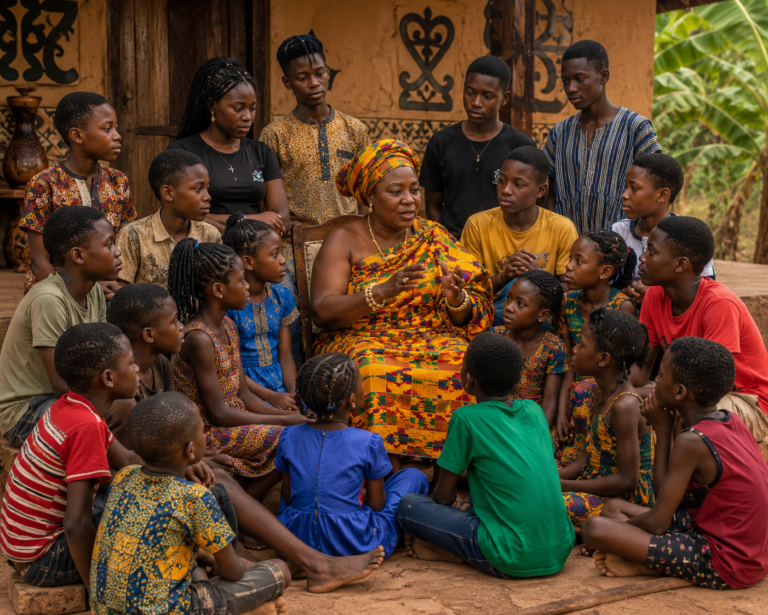
Nkrumah also worked to preserve and promote local culture. He established the Bureau of Ghana Languages, which focused on developing Ghanaian languages and encouraging their use in schools and public life. This was a way to balance the influence of foreign languages, such as English, and ensure that Ghanaians could maintain a connection to their own heritage.