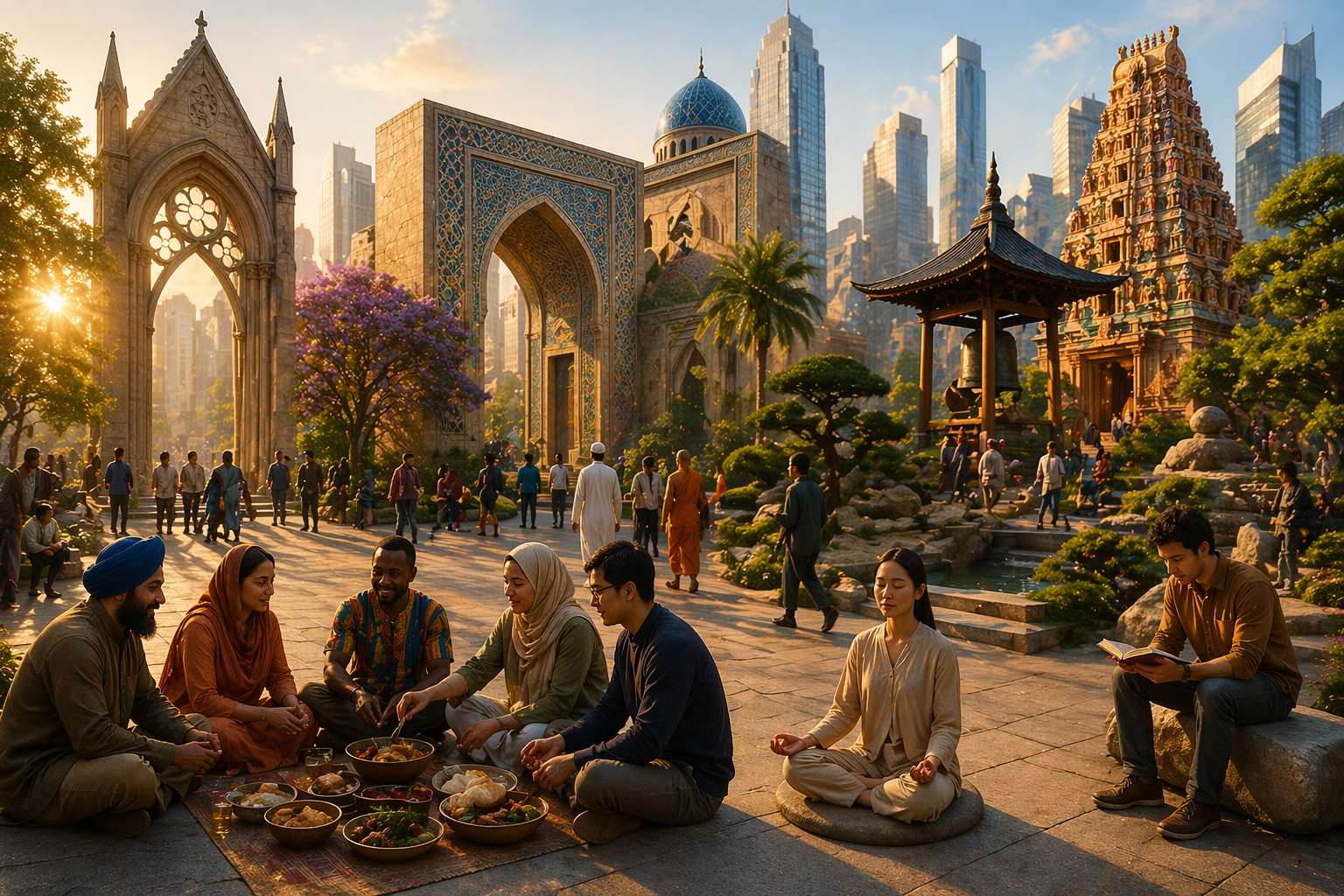









The world today is full of religions. By merely casting a cursory glance around us, we encounter Christians and Christianity, Hindus and Hinduism, Muslims and Islam, atheists, agnostics, traditionalists, Zionists, Jews and Judaism, Confucianists and Confucianism, Shintos and Shintoism. Religion, as sociologists and comparative cultural anthropologists remind us, is a social institution and a cultural universal found in every known society. It has accompanied humanity across centuries, shaping morals, rituals, identities, and collective life.
Yet religion, in all its multiparious and multiform manifestations, has also become a marker of division, separating humanity into disparate and often discordant groups with antithetical beliefs, rival truth claims, and competing visions of how life ought to be lived. Diversity in itself is not the problem. Human beings differ in language, culture, politics, and worldview, and societies often flourish amid diversity. The deeper problem arises when such differences are weaponized by ambitious actors seeking to advance narrow, myopic, and parochial interests.
History offers sobering testimony. In both ancient and modern times, religion has too often served as a spark, a banner, or a justification for persecution, pogroms, sectarian conflict, and genocide. Millions of innocent people across the centuries have fallen victim to wars and tensions in which religion was either central or cynically manipulated for political ends. One need not search far into the historical record to find bloodshed committed in the name of God, doctrine, purity, or salvation.
But the divisive potential of religion is not confined to grand historical events or distant battlefields. It can also be seen at the micro level, within homes and families, where intimate relationships are tested by competing loyalties and convictions.
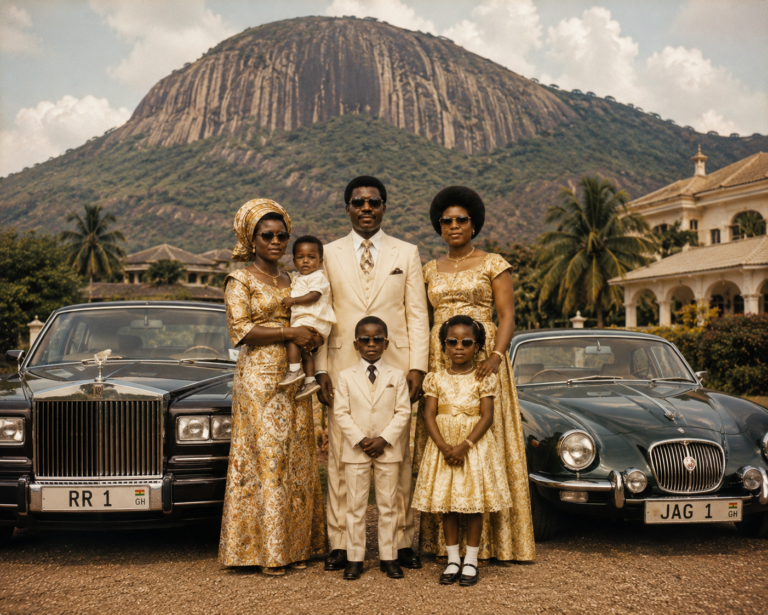
I am reminded of a nuclear family in Ghana where the father is Roman Catholic, the mother is a Seventh-day Adventist, the first-born child is a Jehovah’s Witness, the second child is Muslim, the third child is atheist, the fourth child is agnostic, and the fifth is a devout member of Asomdwee Ntonton Som. One may smile at the variety, yet one may also imagine the tensions that could arise over worship, dietary rules, sacred days, rites of passage, funerals, childrearing, and moral authority. In such a household, religion may enrich conversation, but it may also strain unity.
Taking the example a little further, I am also reminded of tenants living in a multi-family compound house. Some do not speak to others because religion has divided them so profoundly. Shared walls and common courtyards do not necessarily produce harmony when suspicion and intolerance are allowed to reign.
In Ghana today, there are also troubling instances in which some Christian pastors and Muslim mallams, through accusations of witchcraft—whether founded or unfounded—have sown deep divisions between parents and their offspring, siblings and siblings, children and grandmothers, and parents and children. Once distrust enters the family circle, the damage can be immense. Bonds built over decades may be shattered overnight.
In extreme cases, these ruptures have allegedly fueled deadly domestic violence: uxoricides, mariticides, grannicides, filicides, patricides, parricides, sororicides, avunculicides, amiticides, nepoticides and nepiticides. Such tragedies are not caused by religion alone, for human greed, fear, mental instability, and personal cruelty are often involved. Yet religion can become the language through which hostility is expressed and legitimized.
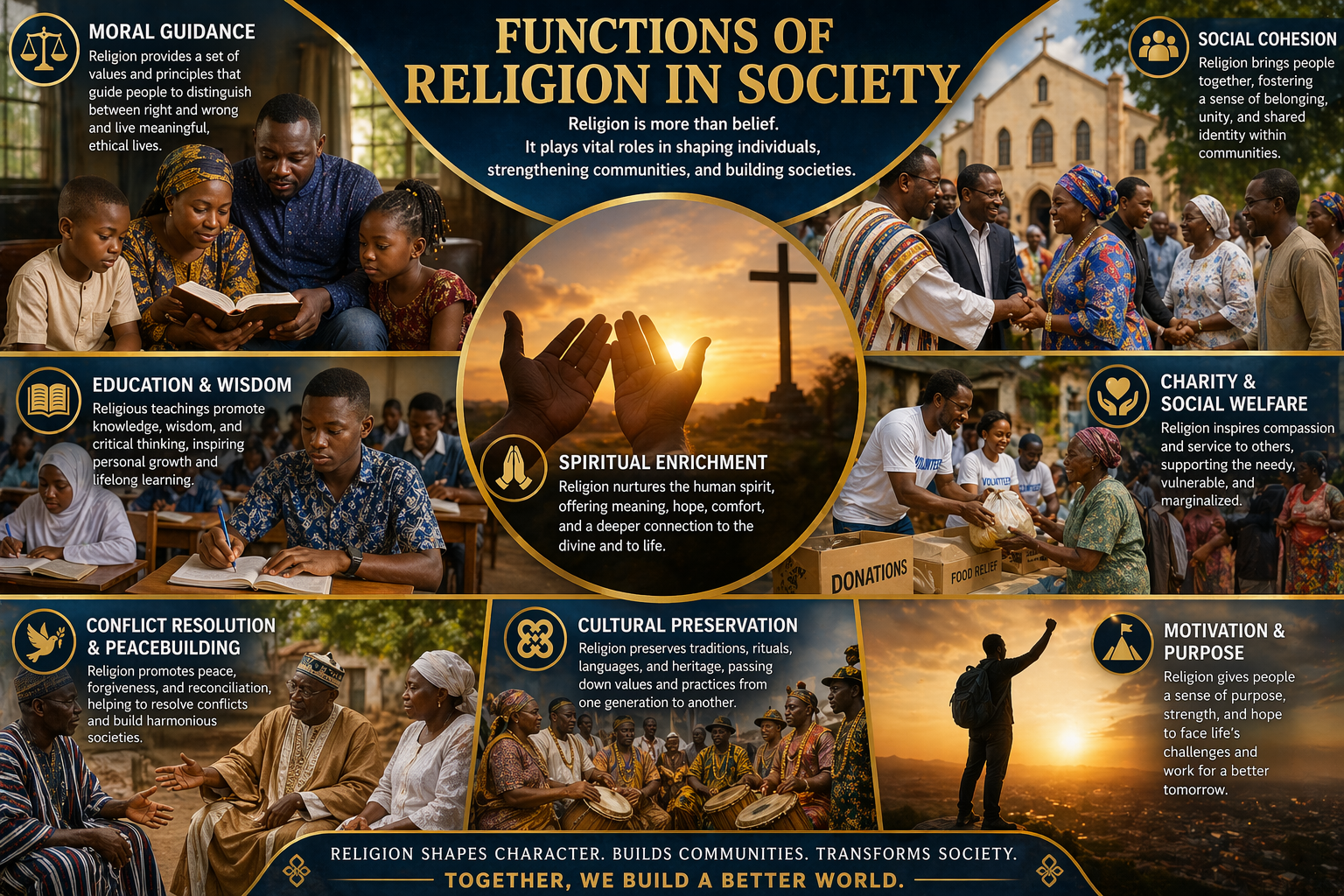
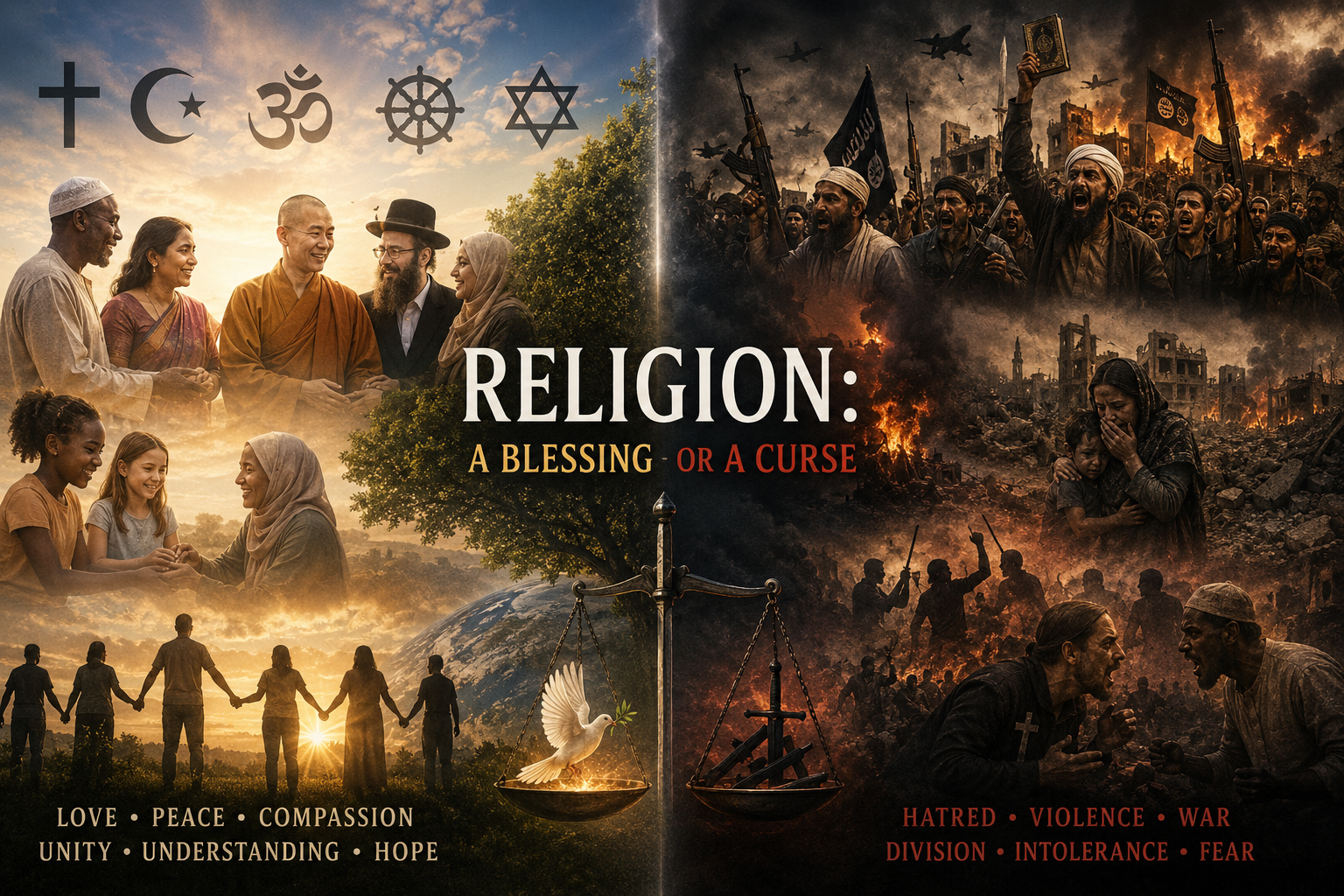
And yet, fairness requires another side to be acknowledged. Religion has also inspired charity, compassion, education, healing, discipline, social solidarity, and hope. It has built hospitals, schools, orphanages, and communities of care. It has comforted mourners, restrained vice, and given countless people meaning in times of suffering.
So we return to the central question: Is religion a boon or a bane, a blessing or a curse?
Perhaps the answer lies not in religion itself, but in the human hands into which it is placed. When guided by humility, love, and justice, religion can elevate society. When corrupted by fanaticism, greed, and intolerance, it can become destructive.
This is a rhetorical question. It is not meant for you to answer out loud.