





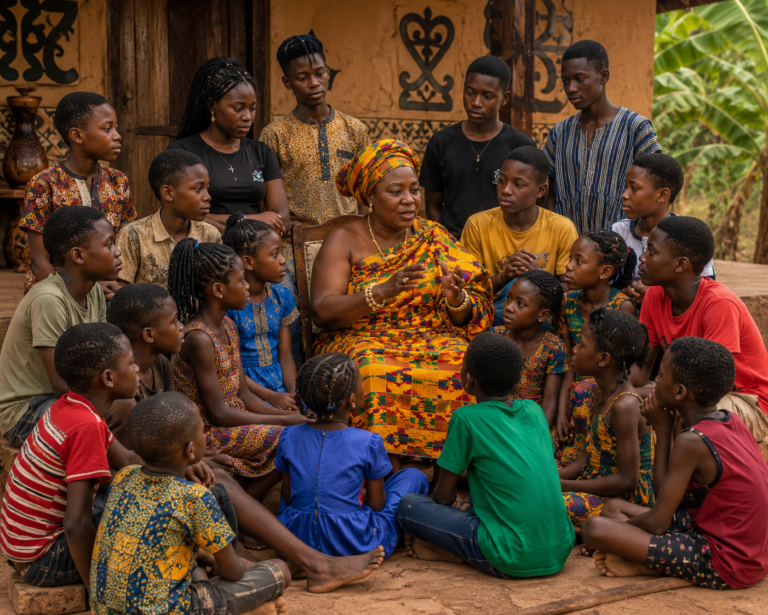






Kente cloth is one of the most famous traditional textiles of West Africa and is strongly associated with Ghana. It is a handwoven cloth made from narrow strips of silk or cotton that are stitched together to form a larger fabric. The cloth is distinguished by its brilliant colors, geometric patterns, and symbolic meanings embedded in each design.
Among the Akan people of Ghana, especially the Asante, Kente cloth is not simply a decorative fabric but a cultural text. Each color and pattern carries a specific meaning related to proverbs, history, moral values, and social philosophy. For this reason, Kente functions as a visual expression of Akan thought and identity.
Traditionally, Kente cloth was worn mainly by kings, chiefs, and members of royal families. It was considered a prestigious cloth reserved for important occasions such as festivals, royal ceremonies, marriages, and other major social events. Over time, however, Kente became more widely available and is now worn by many people during celebrations, graduations, and cultural events.
The cloth is typically wrapped around the body rather than tailored into fitted garments. Men often wear it draped over one shoulder in a toga-like style, while women usually wear it as a two-piece cloth consisting of a skirt and blouse with a matching head covering.
The History of Kente Cloth
The origins of Kente cloth are deeply rooted in the history of the Asante Kingdom in present-day Ghana. According to Akan oral tradition, the art of Kente weaving began in the seventeenth century in the town of Bonwire in the Ashanti Region.
A popular legend explains that two young men from Bonwire—Kuragu and Ameyaw—observed a spider weaving its intricate web in the forest. Inspired by the spider’s skill, they attempted to imitate the weaving pattern using threads and eventually developed the technique of weaving cloth. Their invention impressed the Asante king, Otumfuo Osei Tutu I, who adopted the cloth as a royal textile.
The name “Kente” itself is believed to come from the Akan expression kenten-nwin-ntoma, meaning “basket-woven cloth,” referring to the cloth’s resemblance to the pattern of woven baskets.
Early Kente cloth was made from raffia fibers, but later silk threads became popular through trade with North African and European merchants. The introduction of silk increased the prestige and beauty of the cloth, making it a symbol of wealth and authority.
Kente weaving is carried out on a traditional horizontal loom that produces narrow strips of cloth. Each strip is only a few inches wide, and several strips are sewn together to create a complete cloth. The process requires considerable skill, patience, and artistic creativity.
There are hundreds of Kente patterns, and each pattern has a name and meaning. Many designs are inspired by proverbs, historical events, famous leaders, and elements of nature. Colors also carry symbolic meaning. For example, gold represents royalty and wealth, green symbolizes growth and renewal, blue represents peace and harmony, and red often represents sacrifice or political struggle.
Kente Weaving Centers in Ghana
Although Kente cloth is recognized worldwide, its most important weaving centers remain in Ghana, especially in the Ashanti Region. Several towns have become famous for preserving the art of Kente weaving and training generations of master weavers.
The most famous center is Bonwire, often described as the historic home of Kente weaving. Bonwire is located about 18 kilometers from Kumasi and has long been associated with the royal production of Kente cloth. In this town, weaving is a major economic activity, and many families are involved in the craft. Young boys traditionally learn the skill from their fathers and begin weaving at an early age.
Bonwire continues to be a vibrant center of Kente production today. Visitors can tour weaving workshops, observe artisans working on traditional looms, and purchase authentic handwoven cloth. The village also hosts cultural events and festivals celebrating Kente weaving.
Another important weaving center is Adanwomase, located near Bonwire in the Kwabre East District. Adanwomase has been a Kente-weaving community for more than four centuries and remains one of the few places where traditional weaving techniques are still practiced extensively. Visitors can watch the weaving process and learn about the cultural significance of Kente in the community.
Historically, Adanwomase also served as a royal weaving town where cloth was produced for the Asante king and members of the royal court. The town continues to maintain strong ties to the royal tradition of Kente weaving.
Another notable weaving community is Sakora Wonoo, which is also located in the Ashanti Region. Like Bonwire and Adanwomase, Sakora Wonoo is recognized as an important center of Kente weaving and contributes significantly to the production of traditional cloth.
Together, these towns form a cultural network that preserves the techniques, designs, and knowledge associated with Kente weaving in Ghana.
Kente Cloth in Other Parts of the World
Over the past century, Kente cloth has become an international symbol of African culture and identity. Its influence extends far beyond Ghana due to migration, globalization, and the African diaspora.
In the United States, the Caribbean, and Europe, Kente cloth has become a symbol of African heritage and pride. Many African-American students wear Kente stoles during graduation ceremonies as a celebration of their cultural roots and achievements. Kente has also been used during important cultural and political events to express solidarity with African heritage.
The cloth also gained global recognition during the twentieth century through Pan-African movements and African independence struggles. Leaders and activists embraced African cultural symbols such as Kente as expressions of dignity, identity, and resistance.
Today Kente patterns appear in global fashion, art, and design. Fashion designers incorporate Kente motifs into clothing, handbags, footwear, and home décor. Museums around the world exhibit Kente cloth as an important example of African textile artistry.
Despite its global popularity, authentic Kente cloth remains a highly skilled handmade craft produced by trained weavers in Ghana. The preservation of weaving traditions in towns such as Bonwire, Adanwomase, and Sakora Wonoo ensures that this important cultural heritage continues to thrive.
Conclusion
Kente cloth is one of the most important cultural symbols of Ghana and one of the most celebrated textiles in the world. Originating in the weaving communities of the Ashanti Region, especially Bonwire and Adanwomase, the cloth represents centuries of artistic skill, cultural philosophy, and historical tradition.
From its legendary beginnings inspired by a spider’s web to its modern role as a global symbol of African identity, Kente cloth continues to embody the creativity and cultural richness of the people who first created it. Today it stands not only as a treasured Ghanaian tradition but also as a powerful emblem of African heritage recognized across the world.