











Life on the Streets: A Visible Social Failure
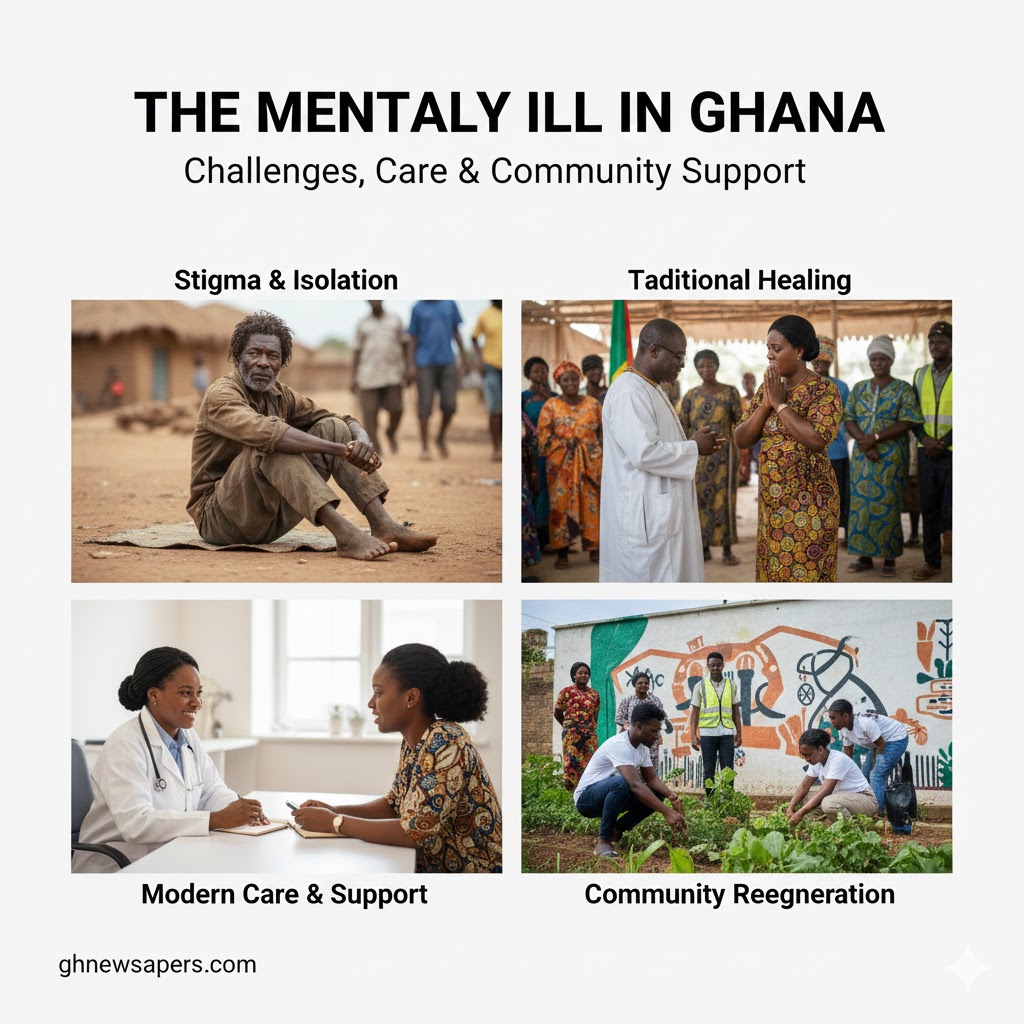
On the streets of Ghana, many people living with mental illness wander without care, shelter, or dignity. Some are dressed in dirty, tattered clothing; others are barely clothed, and a few are completely naked. Their presence is a visible reminder of a deep social failure—one that the nation has grown disturbingly accustomed to ignoring.
Fear, Stigma, and Isolated Acts of Violence
Occasionally, some mentally ill persons have attacked members of the public. In rare but tragic cases, such attacks have even resulted in death. These incidents fuel fear and stigma, yet they distract attention from the real problem: the absence of sustained treatment, family support, and state responsibility for mental health care.
Public Abuse and Dehumanization
Unfortunately, many mentally ill persons in Ghana are not only neglected but actively abused by the public. Some are physically assaulted and pelted with stones, often in the name of “self-defense” or public safety. Others are verbally mocked, teased, insulted, and humiliated on a daily basis. These acts strip them of dignity and reinforce the dangerous idea that mentally ill people are less than human.
Sexual Violence Against Mentally Ill Women
Even more disturbing is the sexual abuse of mentally ill women. In some instances, female mentally ill persons have been sexually assaulted, impregnated, and left to carry pregnancies while roaming the streets. Some give birth at street corners, markets, or abandoned places, without medical care, protection, or support. These acts represent a grave violation of human rights and expose a society that has failed to protect its most vulnerable members.
Myths and Spiritual Explanations of Mental Illness
Mental illness in Ghana is surrounded by powerful myths. Many people believe it is caused by witchcraft, sorcery, curses, or spiritual punishment. As a result, families often seek spiritual solutions rather than medical ones. Mentally ill relatives are sent to prayer camps, churches, or fetish priests, where they may be chained, beaten, starved, or subjected to prolonged fasting in the name of healing.
Psychiatric Hospitals and Family Rejection
Ghana does have psychiatric hospitals and trained mental health professionals. Some patients are admitted, treated, stabilized, and officially discharged. Yet hospital authorities report a troubling reality: many families refuse to come back for their relatives after treatment. Some patients are outrightly rejected, abandoned to institutional care or eventually discharged into homelessness.
The High Cost of Medication and Relapse
Another major challenge is the high cost of psychiatric medication. Mental illness often requires long-term treatment, but many patients cannot afford their prescribed drugs. When medication is discontinued, relapse becomes likely, pushing patients back onto the streets and restarting a vicious cycle of illness, neglect, and danger.
Mental Illness Is Not Witchcraft
Mental illness is not witchcraft. It is not sorcery. It is not a curse. Like other medical conditions, it has biological, psychological, and social causes and requires proper medical care, social support, and compassion. Treating mentally ill persons as spiritual problems rather than human beings in need of care only deepens their suffering and endangers the wider public.
A Moral Test for Ghanaian Society
A society is judged by how it treats its most vulnerable members. Ghana must move beyond fear, superstition, and abandonment toward education, affordable treatment, family responsibility, and humane care. Until then, the mentally ill will continue to suffer silently on our streets, and the nation will continue to fail them.
What Government and Local Assemblies Must Do
Addressing mental illness in Ghana requires more than sympathy; it requires deliberate public policy and sustained government action. The state must invest seriously in mental health care by expanding psychiatric services beyond the few overcrowded hospitals, integrating mental health treatment into district and community health facilities, and ensuring that essential psychiatric medications are affordable and consistently available under the National Health Insurance Scheme.
Metropolitan, Municipal, and District Assemblies (MMDAs) must also play an active role. Local assemblies should support community mental health outreach, provide temporary shelters for homeless mentally ill persons, and work with social welfare departments to reconnect treated patients with their families. Abandonment of mentally ill relatives should not be treated as a private family matter but as a social problem requiring intervention.
Equally important is nationwide public education. Government, traditional authorities, religious bodies, schools, and the media must educate the public that mental illness is a medical condition, not a curse, not witchcraft, and not the result of sorcery or bewitchment. Without this education, stigma will persist, abuse will continue, and families will keep turning to harmful spiritual “treatments” instead of medical care.
Protecting the mentally ill is both a public health obligation and a moral responsibility. Until government and local authorities act decisively—through funding, education, enforcement, and compassion—the streets will remain open-air asylums, and Ghana will continue to fail some of its most vulnerable citizens.