









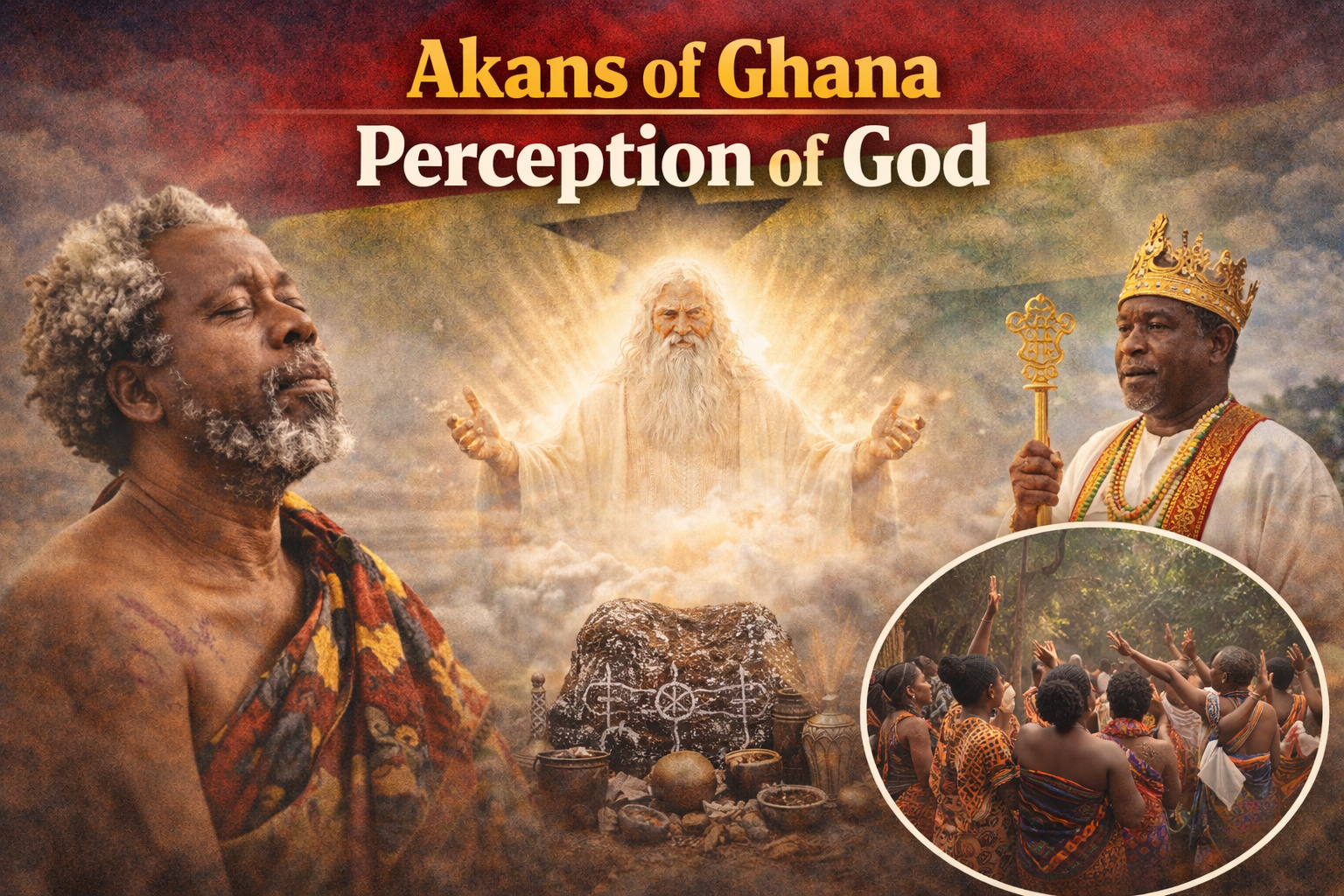
Akan perceptions of God can be discerned from the rich array of names and appellations used to describe the Supreme Deity. Among the Akan, the name for God is Nyankopɔn (Onyankopɔn), the Supreme Being. Etymologically, the term is often explained as deriving from “Onyame koro a ɔyɛ pɔn,” meaning “the one God who is supreme and great.” This name captures the Akan understanding of God as singular, transcendent, and unsurpassed.
The Akan conception of God is that of a great and all-sufficient deity. God is perceived as one whose recognition brings fulfillment and contentment. The name Nyame is sometimes interpreted as “nya me,” meaning “attain me.” Embedded in this idea is the expression “wo nya me a na w’amee,” which conveys the belief that when one comes to recognize and acknowledge God’s worthiness, one finds satisfaction. In Akan usage, “ma mee” denotes a state of satisfaction or satiety, particularly after food or drink, symbolizing completeness and sufficiency.
Akans also refer to their Supreme Deity as Ɔbotantim, a term meaning “an immovable, solid rock.” This appellation reflects the belief that God is unshakable, steadfast, and eternally reliable—an enduring foundation upon which life may securely rest.
Closely related to this image of divine permanence is the name Tete Nyame, meaning “the ancient God.” The term emphasizes God’s existence from time immemorial. An even stronger expression, Teteete Nyame, meaning “the very ancient God,” underscores the Akan belief that God predates all creation and has existed from the remotest past.
The Akan do not conceive of God as distant or inactive. Rather, God is understood as a living and ever-present being, deeply concerned with the daily affairs of human life. This belief is captured in the name Ɔteasefo Nyankopɔn, meaning “the living God.” God is not asleep or indifferent; He is alert, responsive, and engaged with His people.
Living largely in forested regions, the Akan are intimately familiar with the strength, endurance, and usefulness of great trees. It is therefore unsurprising that they refer to God as Ɔdupon, meaning “the mighty tree.” This image conveys ideas of protection, shelter, and sustenance.
Although Akans, like all humans, have not seen God, they envision Him as great and powerful, leading them to call Him Ɔkɛseɛ, meaning “the great one” or “the mighty one.”
Another powerful metaphor appears in the name Twereduampon, which likens God to a mighty tree against which one may lean without falling. The term expresses deep trust in God as a dependable source of support and stability in times of weakness and distress.
Finally, Akans understand God as a deliverer and liberator. For this reason, they call Him Ɔgyefo, a term that translates as “Savior,” “Redeemer,” or “Deliverer.” This name reflects the belief that God actively intervenes in human affairs to rescue, protect, and restore His people.
Taken together, these names reveal an Akan theology that views God as supreme, ancient, living, steadfast, powerful, protective, and compassionate—a mighty spiritual being who cares deeply for humanity and acts on behalf of His people to save and deliver them.